

Maddy summaryThe Paycheck Fairness Act aims to reduce gender-based pay disparities by strengthening protections against wage discrimination. It modifies the "bona fide factor" defense to require employers to prove pay differences are based on job-related factors rather than sex, prohibits reliance on salary history when making hiring decisions, and requires employers with 100+ employees to collect and report pay data disaggregated by sex, race, and ethnicity. The bill enhances penalties for violations, including compensatory and punitive damages, and strengthens non-retaliation protections for employees discussing wages. These changes directly affect employers, employees, and prospective employees, with particular focus on addressing pay gaps that disproportionately impact women and women of color. The act also creates a National Award for Pay Equity in the Workplace to recognize employers making progress in eliminating pay discrimination.
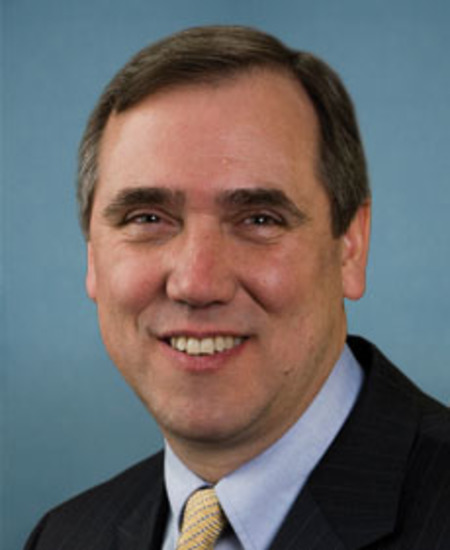
Sen. Jeff Merkley
Sponsored bills
Maddy summaryThe Richard L. Trumka Protecting the Right to Organize Act of 2023 strengthens workers' rights to organize and bargain collectively by amending key labor laws. It clarifies that multiple employers can be held accountable for labor practices (joint employer definition), makes it harder for employers to misclassify workers as independent contractors, and prohibits employers from permanently replacing workers who strike. The bill requires employers to provide detailed voter lists for union elections, strengthens protections against anti-union discrimination, and increases penalties for unfair labor practices (up to $100,000 for repeat violations). It directly affects workers seeking union representation, employers who must comply with new requirements, and labor organizations conducting organizing campaigns. The bill aims to make it easier for workers to form unions and negotiate better wages and working conditions.
Maddy summaryThis concurrent resolution recognizes that the climate crisis disproportionately harms children's health, economic opportunities, and fundamental rights. It expresses Congress's sense that the U.S. urgently needs to develop a national climate recovery plan to phase out fossil fuel emissions, protect natural carbon sinks, and reduce atmospheric carbon dioxide to below 350 parts per million by 2100. The resolution emphasizes the need for a science-based, equitable approach that addresses climate impacts on vulnerable communities, including children in environmental justice areas. While not a law, it urges federal agencies to prioritize climate action as a matter of protecting children's future.
Maddy summarySRES 296 designates July 2023 as "Plastic Pollution Action Month" to raise public awareness about plastic pollution. The resolution recognizes the environmental and health impacts of plastic waste but does not create new laws or funding. It encourages all U.S. individuals to voluntarily reduce plastic use and support cleanup efforts during July 2023 and year-round. This is a symbolic, non-binding resolution focused on public engagement, not policy changes.
Maddy summaryThe VET PFAS Act provides healthcare benefits to veterans and their family members exposed to PFAS chemicals at military installations. Veterans who served at installations with PFAS contamination (including through contaminated water wells) become eligible for treatment of specific health conditions like testicular cancer, kidney cancer, and thyroid disease without needing to prove direct service connection. Family members who resided at these contaminated installations or were in utero during such residence also gain eligibility for covered treatments. The bill creates a presumption of service connection for these conditions, meaning the VA must treat them as related to military service. Annual reports will track how many veterans and family members receive care under this law.
Maddy summaryS 2299 prohibits the federal government from imposing or carrying out the death penalty for any violation of federal law after the bill's enactment date. It also requires that any person already sentenced to death for a federal offense before enactment be resentenced. The bill directly affects all individuals currently facing or convicted of federal crimes that carry the death penalty under current law. This legislation would eliminate the federal death penalty as a sentencing option and mandate new sentencing hearings for existing death row cases.
Maddy summaryThis bill (SJRES 37) requires the President to obtain either Senate approval (with a two-thirds vote) or new legislation from Congress before suspending, terminating, or withdrawing the U.S. from the North Atlantic Treaty (NATO). It blocks federal funding for any such action until Congress passes a joint resolution approving withdrawal by a two-thirds vote or enacts new law. The President must also consult with congressional foreign affairs committees and notify them 180 days in advance of any withdrawal plans. Congress can authorize its legal counsel to sue to block unauthorized withdrawal attempts, ensuring judicial challenges can be pursued. The bill directly affects the executive branch's authority to act on NATO commitments without congressional consent.
Maddy summaryThis bill prohibits defendants from using a victim's LGBTQ+ sexual orientation or gender identity as a legal defense to excuse or reduce punishment for violent crimes. It directly affects criminal trials in federal courts where defendants claim such characteristics provoked their violent actions against LGBTQ+ individuals. The law amends Title 18 of the U.S. Code to ban this specific "panic defense" while allowing courts to consider evidence of the defendant's past trauma under standard evidence rules. It also requires the Attorney General to annually report on federal prosecutions involving bias-motivated violence against LGBTQ+ people.
Maddy summaryS 1954, the *Improving Whole Health for Veterans with Chronic Conditions Act*, establishes a 4-year pilot program to provide comprehensive dental care to veterans diagnosed with type 1 or type 2 diabetes or ischemic heart disease who are enrolled in VA health care but currently ineligible for dental services. The program will operate at VA medical centers, community clinics, and test mobile/home-based dental units in rural areas, while also evaluating dental therapists and tele-dentistry. It includes a student loan repayment program for dentists, hygienists, and oral surgeons to support staffing, with reimbursement caps of $100,000 for dentists and $25,000 for hygienists. The VA must report on costs, outcomes, and the effectiveness of different service models, including impacts on veterans' health care access and chronic disease management.
Maddy summaryS 928, the "Not Just a Number Act," requires the Department of Veterans Affairs (VA) to publish an annual report on veteran suicide rates starting 18 months after enactment. The report must include detailed data broken down by age, gender, and race/ethnicity, plus comparisons between veterans who used VA health services (like Vet Centers or mental health care) versus those who did not, and veterans engaged with VA benefits programs (such as education assistance, disability compensation, or housing loans). The bill also mandates a toolkit for state/local coroners to better identify and report veteran suicides, and a study on creating a dedicated VA suicide prevention office. These requirements aim to improve data collection, analysis, and reporting on veteran suicide trends to inform prevention strategies.