

Maddy summaryThis bill increases the excise tax on fuel used for private jets and non-commercial aviation from 21.8 cents per gallon to 35.9 cents plus $1.589 per gallon (adjusted for inflation after 2024), effective January 2024. The tax revenue funds a new "Clean Communities Trust Fund" to support environmental projects in underserved areas. Specifically, 50% of the funds must go to environmental justice communities - defined as low-income, communities of color, or Tribal/Indigenous communities disproportionately impacted by air pollution - for air quality monitoring, public transit expansion near airports, and improved bus services. Exceptions for emergency use (e.g., medical evacuations) apply until 2026.
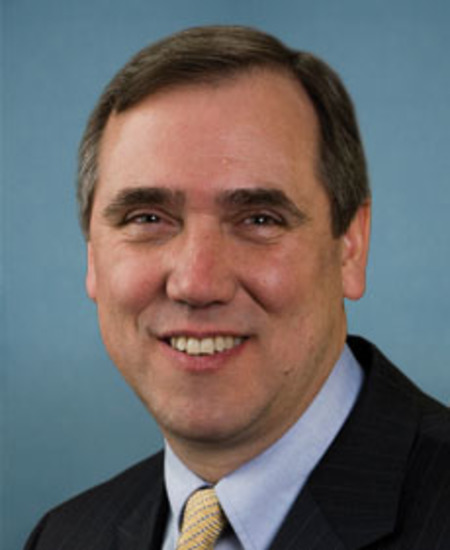
Sen. Jeff Merkley
Sponsored bills
Maddy summaryThe WATCH Act requires foreign laboratories receiving U.S. federal funds for animal research to undergo quarterly inspections to ensure compliance with U.S. animal welfare standards. It directly affects overseas labs conducting NIH-funded studies involving animals, mandating regular checks of their animal care committees, treatment reviews, and record-keeping. Labs must maintain certification of compliance, with public access to these certificates, and face potential suspension of funding if they fail to correct violations after a warning. The bill establishes a process for U.S. authorities to coordinate inspections with foreign governments while upholding U.S. research standards.
Maddy summaryThis bill allows the President to declare a "smoke emergency" when wildfire smoke causes significant air quality deterioration across one or more states, following a request from a state governor. If declared, the federal government (via FEMA and other agencies) can provide direct assistance to affected states and communities, including grants for smoke shelters, air purifiers, and air monitoring equipment. It also authorizes Small Business Administration grants for small businesses that suffer significant revenue loss due to smoke in declared emergency areas. The bill ensures funding for these specific smoke emergency assistance programs is exempt from standard budget adjustment rules. (3 sentences)
Maddy summaryS 2372, the Accelerating Kids’ Access to Care Act, streamlines enrollment for out-of-state healthcare providers who treat Medicaid-eligible children under 21 with medically complex conditions. It requires states to adopt a process allowing these providers to join state Medicaid/CHIP programs without extra state-level screening, provided they already meet federal Medicare or home-state program requirements and pose low fraud risk. The bill establishes a 5-year enrollment period for eligible providers, directly affecting children needing specialized care across state lines and the providers serving them. Key provisions remove barriers to interstate care coordination while maintaining federal oversight standards.
Maddy summaryThe Smoke and Heat Ready Communities Act of 2023 establishes a new federal grant program to help communities prepare for wildfire smoke and extreme heat. It provides funding for air pollution control agencies to support activities like monitoring air quality, deploying monitoring equipment, equipping public buildings with air filtration, and distributing protective masks. The bill also creates four research centers at higher education institutions to study health impacts and develop community response strategies, and funds competitive grants for states, tribes, and local governments to develop collaborative community plans. These provisions directly affect communities vulnerable to poor air quality from wildfire smoke and extreme heat events, focusing on concrete preparedness measures rather than regulatory changes.
Maddy summaryThe Water for Conservation and Farming Act (S 2102) establishes a new Bureau of Reclamation Infrastructure Fund that will provide $300 million annually from 2035-2065 for water infrastructure projects, including $100 million for water reclamation projects, $100 million for agricultural water management grants, and $100 million for dam safety modifications. The bill also creates a new program that will provide up to $3.5 million annually for fiscal years 2024-2029 to compensate agricultural producers in Reclamation states for creating or maintaining waterbird and shorebird habitats. Additionally, it requires the development of drought plans for critically important fisheries every three years, incorporating strategies such as habitat restoration, hatchery management, and voluntary water transfers. The legislation reauthorizes several existing programs including watershed management, fisheries restoration, and climate change water programs, with increased funding levels for many of these initiatives.
Maddy summaryThis bill amends the Siletz Reservation Act to clarify and preserve the 1980 Siletz Agreement governing hunting, fishing, trapping, and gathering rights for the Confederated Tribes of Siletz Indians. It states the agreement remains in effect until replaced by new government-to-government agreements between the Tribes and Oregon, but prohibits new agreements from granting exclusive rights outside the 1855 reservation boundaries or expanding fishing in the Columbia or Willamette Rivers. The bill also requires courts to review challenges to the 1980 Consent Decree on the merits, without considering legal defenses like res judicata. This directly affects the Tribes' management of resource rights and Oregon's state regulatory role.
Maddy summaryS 2337, the Plastic Pellet Free Waters Act, prohibits plastic pellets and pre-production plastic materials from being discharged into waterways through wastewater, spills, or runoff. It directly affects plastic production facilities, molding plants, and companies that package or transport plastic pellets. Within 60 days of enactment, the EPA must issue rules banning these discharges and updating all relevant wastewater, stormwater, and performance permits to reflect this requirement. The law applies to facilities regulated under existing EPA rules for plastic manufacturing and handling.
Maddy summary# Summary of Comprehensive Election Reform Bill This document is a comprehensive voting rights and election reform bill containing multiple titles with various provisions designed to: 1. **Restore voting rights** for citizens with criminal convictions (Democracy Restoration Act) - Restores voting rights for citizens not serving felony sentences in correctional institutions - Requires states to notify individuals of restored voting rights upon release or probation - Establishes enforcement mechanisms through civil actions 2. **Strengthen voter identification requirements** - Establishes a broad list of acceptable identification documents - Requires states to provide government-issued identification at no cost - Allows for provisional ballots with sworn statements for those without ID - Includes provisions for electronic documents and copies 3. **Prohibit voter caging and improper voter list maintenance** - Bans the use of "voter caging" documents or lists as evidence for challenging voter eligibility - Establishes strict conditions for removing voters from registration lists - Requires objective and reliable evidence for removals - Mandates notification procedures for voters removed from lists 4. **Enhance election integrity protections** - Prohibits interference with voter registration (including hindering, interfering with, or preventing registration) - Restricts removal of local election administrators to cases of inefficiency, neglect, or malfeasance - Protects election workers from intimidation and harassment - Bans deceptive practices regarding election information within 60 days of an election - Establishes criminal penalties for deceptive election practices 5. **Provides enforcement mechanisms** - Establishes private rights of action for violations - Includes civil and criminal penalties for violations - Requires reports to the Department of Justice for removals of election administrators - Sets specific timeframes for notification and corrective actions The bill aims to expand voting access while maintaining election integrity, with provisions designed to protect voting rights, prevent discrimination, and ensure fair administration of elections for Federal office.
Maddy summaryThe Healthy Families Act requires most employers (with 15 or more employees) to provide workers with up to 56 hours of paid sick leave annually, earned at a rate of 1 hour for every 30 hours worked. Employees can use this leave for their own illness, medical care, caring for family members with health conditions, or addressing domestic violence, sexual assault, or stalking situations. The law prohibits employers from retaliating against workers who use this leave and mandates that employers post notices about the policy. Smaller employers (with fewer than 15 employees) may provide up to 56 hours of unpaid sick leave instead of paid leave. The Act includes enforcement mechanisms allowing employees to file complaints with the Department of Labor and seek damages for violations.