

Native American Housing Assistance and Self-Determination Reauthorization Act of 2021 This bill provides federal housing assistance to Indians and Native Hawaiians. Specifically, the bill reauthorizes through FY2032 and otherwise revises the Indian Housing Block Grant program and the Native Hawaiian Housing Block Grant program. Among other revisions to these programs, the bill expands allowable housing activities under the Indian program to include education-related stipends, college housing assistance, and other education-related assistance for low-income college students. Next, the bill authorizes the Department of Housing and Urban Development (HUD) to guarantee housing loans for Indians and Native Hawaiians through FY2032. HUD may make grants to eligible recipients of block grants for use in eliminating drug-related and violent crime. Additionally, the bill provides statutory authority for the Tribal HUD-VASH program, which provides rental assistance and supportive services to Indian veterans who are homeless or at risk of homelessness and living in or near an area where a tribe or tribally designated housing entity provides assistance for affordable housing. HUD must use at least 5% of rental assistance amounts under the HUD-VASH program, which provides housing assistance to homeless veterans, for the Tribal HUD-VASH program. The Tribal HUD-VASH program must be carried out by HUD in conjunction with the Department of Veterans Affairs. Under the program, grants must be made to entities eligible for housing assistance block grants. HUD may make renewal grants to entities that have received prior program grants.
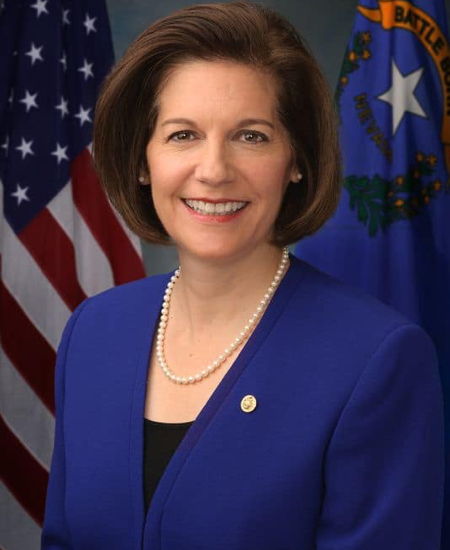
Sen. Catherine Cortez Masto
Sponsored bills
This resolution supports the designation of February 2022 as Career and Technical Education Month to celebrate career and technical education across the United States.
Maddy summarySRES 516 designates the week of February 7-11, 2022, as "National School Counseling Week." The resolution encourages the public to observe this week with activities that raise awareness about school counselors' role in supporting students' academic, social, and emotional development. It does not create new laws or alter funding but highlights existing challenges like the high student-to-counselor ratio (424:1 nationally) and counselors' contributions to student well-being. The resolution applies broadly to all U.S. schools and communities, aiming to increase recognition of counseling professionals' work.
Maddy summarySRES 510 is a Senate resolution designating January 25, 2022, as "National Poll Worker Recruitment Day." It recognizes the vital role of poll workers in elections and encourages eligible citizens to volunteer for the 2022 elections. The resolution does not create new laws or requirements but serves as a symbolic call to action to address poll worker shortages. It directly aims to engage the public in supporting election infrastructure through voluntary service.
Violence Against Women Act Reauthorization Act of 2022 This bill modifies and reauthorizes through FY2027 programs and activities under the Violence Against Women Act that seek to prevent and respond to domestic violence, sexual assault, dating violence, and stalking. The bill also authorizes new programs, makes changes to federal criminal laws, and establishes new protections to promote housing stability and economic security for victims of domestic violence, sexual assault, dating violence, and stalking.
Eliminating Abusive and Rampant Neglect of Interactive Technologies Act of 2022 or the EARN IT Act of 2022 This bill revises the federal framework governing the prevention of online sexual exploitation of children. The bill establishes the National Commission on Online Child Sexual Exploitation Prevention. The commission must develop best practices for interactive computer services providers (e.g., Facebook and Twitter) to prevent, reduce, and respond to the online sexual exploitation of children. Additionally, the bill limits the liability protections of interactive computer service providers with respect to claims alleging violations of child sexual exploitation laws. The bill replaces various statutory references to child pornography and material that contains child pornography with child sexual abuse material . Finally, the bill makes changes to the reporting requirements for electronic communication service providers and remote computing service providers (providers) who report apparent instances of crimes involving the sexual exploitation of children to the National Center for Missing and Exploited Children. Among the changes, the bill requires providers to report facts and circumstances sufficient to identify and locate each minor and each involved individual. The bill also increases the amount of time that providers must preserve the contents of a report.
Ruby Mountains Protection Act This bill withdraws approximately 309,272 acres of federal land and interests in identified land located in the Ruby Mountains subdistrict of the Humboldt-Toiyabe National Forest in Nevada from operation under the mineral leasing laws; and approximately 39,926.10 acres of federal land and interests in identified land located in the Ruby Lake National Wildlife Refuge in Nevada from operation under the mineral leasing laws, except the withdrawal shall not apply to noncommercial refuge management activities by the U.S. Fish and Wildlife Service.
Gas Prices Relief Act of 2022 This bill provides for a temporary exemption through 2022 from the excise tax on gasoline (other than aviation gasoline) and from the Leaking Underground Storage Tank Trust Fund financing rate. The Department of the Treasury must transfer from the general fund to the Highway Trust Fund and the Leaking Underground Storage Tank Trust Fund amounts resulting from the exemption provided by this bill. The bill also expresses congressional policy that consumers immediately receive the benefit of this exemption.
Telehealth Extension and Evaluation Act This bill expands and otherwise modifies coverage of telehealth services under Medicare until two years after the end of the COVID-19 public health emergency. Specifically, the bill (1) allows federally qualified health centers and rural health clinics to serve as the distant site (i.e., the location of the health care practitioner), (2) allows for Medicare payment of outpatient critical access hospital services consisting of telehealth behavioral therapy, (3) conditions payment for certain high-cost laboratory tests and durable medical equipment that are ordered via telehealth on at least one in-person visit during the preceding 12-month period, and (4) allows Schedule II through V controlled substances to be prescribed online if a practitioner has conducted a telehealth evaluation with video. The bill also generally extends any Medicare telehealth flexibilities that were granted during the COVID-19 public health emergency until two years after the emergency ends. The Centers for Medicare & Medicaid Services (CMS) must report on the effects of changes that were made during the emergency period with respect to the provision or availability of telehealth services under Medicare. The CMS must also award grants to state Medicaid programs to allow them to report on similar information.
This resolution expresses support for observing National Trafficking and Modern Slavery Prevention Month during the period of January 1-February 1, 2022.