

Maddy summaryThis bill creates an Office of Urban Agriculture within the USDA to provide technical assistance for urban farmers on zoning, business operations, and conservation techniques. It authorizes $50 million annually (2024-2028) for competitive grants to support urban farms, community gardens, rooftop farms, hydroponics, and other innovative production methods in areas with limited fresh food access. The bill also requires the USDA to collect and report biennially on data about urban agriculture facilities, including their locations and operator demographics. These provisions directly benefit urban farmers, community organizations, and local governments in underserved areas seeking to expand access to fresh food through innovative farming methods.
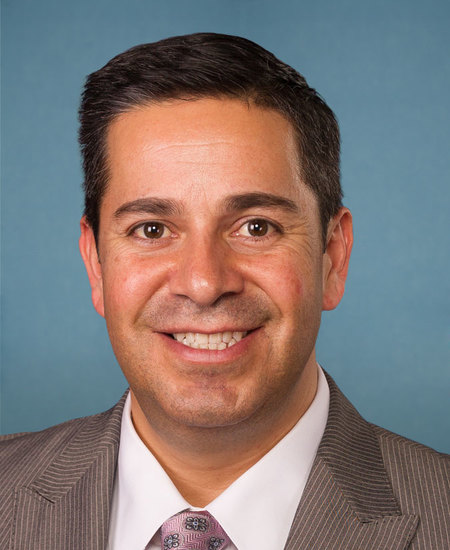
Sen. Ben Ray Luján
Sponsored bills
Maddy summaryThis bill establishes a new program to support peer-to-peer technical assistance for farmers, ranchers, and forest owners through "farmer-to-farmer networks." It creates cooperative agreements with eligible groups (like nonprofits, tribes, local governments, and agricultural organizations) to build these networks, prioritizing historically underserved producers including beginning, veteran, socially disadvantaged, and limited-resource farmers. Key provisions require funded networks to facilitate mentorship, provide language access for non-English speakers, and organize local events to share conservation practices. The program aims to increase access to practical, science-based farming support through community-led learning rather than direct government service.
Maddy summaryThis bill amends Section 249 of the Immigration and Nationality Act to change eligibility criteria for a specific immigration provision. It replaces the previous requirement of having entered the U.S. before July 1, 1924, or January 1, 1972, with a new rule requiring applicants to have entered at least 7 years prior to their application date. This change would directly affect long-term residents who entered after 1972 but have lived continuously in the U.S. for at least 7 years, making them eligible under this provision. The amendments take effect 60 days after the bill is enacted.
Maddy summaryThis bill creates the Office of the Farm and Food System Workforce within the Department of Agriculture to improve access to USDA programs for farm and food system workers. The office, led by a Coordinator, will coordinate outreach, develop language-accessible communications, and provide recommendations to improve services for workers in food production, processing, transportation, and related fields. It establishes an Advisory Committee with worker representation and an Interagency Council to coordinate across federal departments. The office will issue annual reports on worker demographics, health outcomes, and barriers to accessing USDA programs. The bill terminates the existing Farmworker Coordinator position once the new office is fully operational.
Maddy summaryThis bill modifies federal crop insurance rules to help farmers in counties repeatedly hit by severe drought. It changes the "1-in-4 rule" to a "1-in-5 rule" for prevented planting insurance eligibility in counties experiencing extreme drought (D3 or worse) for three consecutive years, as tracked by the U.S. Drought Monitor. Farmers in these designated counties would only need to have planted a crop once in the past five years (instead of four) to qualify for prevented planting coverage during droughts. The change directly affects farmers in eligible counties by making insurance more accessible during prolonged dry periods. The policy adjustment is limited to drought-affected areas meeting specific, measurable criteria.
Maddy summaryS 2618 (Office of Technology Assessment Improvement and Enhancement Act) renames the Office of Technology Assessment to the Congressional Office of Technology throughout federal law. It updates the office's core functions to provide timely briefings, technical assistance, and policy options to Congress on science and technology issues without requiring Board review. The bill requires the office to balance assessment requests from both political parties when possible and mandates coordination with the Congressional Research Service and Government Accountability Office to avoid duplicated work. These changes directly affect how the Congressional Office of Technology serves members of Congress and supports legislative decision-making on technology-related matters.
Maddy summaryThis bill requires the USDA to improve data collection and reporting on equity in its programs, directly affecting farmers and ranchers from historically marginalized groups. It mandates the agency to compile and analyze data on participation trends, set measurable goals for improvement, and assess whether funding aligns with communities needing services. Key provisions include adding equity-focused performance evaluations for USDA leaders, creating uniform customer feedback systems (with multilingual access and compensation for input), and requiring staff cultural competency training. The bill also obligates the USDA to notify Congress when lacking authority or resources to address equity gaps in its programs.
Maddy summaryThe REAP Modernization Act of 2023 updates the Rural Energy for America Program (REAP) to prioritize projects that reduce greenhouse gas emissions, directly affecting rural farmers, ranchers, and small businesses by requiring the Secretary to promote such reductions in funded projects. It expands eligibility for grants to include producer cooperatives and nongovernmental organizations, allows limited case-by-case assistance for rural electric cooperatives, and streamlines applications for renewable energy and efficiency projects. The bill mandates technical assistance for applicants, requires a study on renewable energy systems sharing land with farming (e.g., solar panels on farmland), and sets a two-year deadline for a congressional report on expanding such projects. Additionally, it reserves 15% of annual funds for underutilized renewable technologies and clarifies that shared energy metering (e.g., farms and nearby residences) does not require specific energy usage thresholds.
Maddy summaryThe EQIP Water Conservation Act of 2023 modifies the Environmental Quality Incentives Program (EQIP) to streamline payments for water conservation practices. It allows the Secretary to waive certain payment limits for contracts focused on water conservation or irrigation efficiency, directly affecting farmers and agricultural entities participating in EQIP. The key provision establishes a new formula to calculate maximum payments, ensuring they don't exceed a set amount based on the number of producers served and excluding prior payments received by those producers or the contracting entity. This change aims to simplify program administration while maintaining fiscal responsibility for water conservation incentives.
Maddy summaryThe AG RESEARCH Act (S 2589) provides funding to modernize agricultural research facilities at schools of agriculture and the Agricultural Research Service (ARS). It creates a competitive grant program to cover up to 100% of costs for construction, renovation, or equipment at schools of agriculture, requiring equitable distribution across geographic regions, institution types, and facility sizes while limiting any single state to 20% of funds. Additionally, it allocates $200 million annually (2023-2027) for direct payments to address deferred maintenance at ARS facilities, prioritizing the most critical structures based on a 2012 strategy. The bill is funded by mandatory annual transfers of $1 billion for schools of agriculture and $200 million for ARS, with no new appropriations required.