

Maddy summaryThis bill increases civil penalties for violations of the Consumer Product Safety Act. It raises the maximum penalty per violation from $100,000 to $250,000 and requires annual adjustments for inflation using the Consumer Price Index. These changes directly affect manufacturers and sellers of consumer products who face safety violations. The key mechanism is an automatic inflation adjustment process that updates penalty amounts each year, rounded to the nearest $1, based on the previous year's Consumer Price Index data.
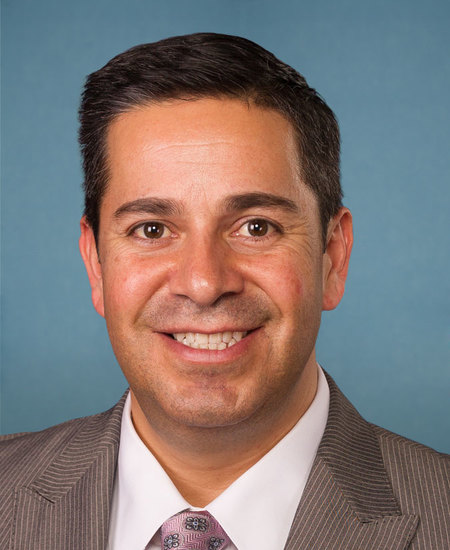
Sen. Ben Ray Luján
Sponsored bills
Maddy summaryThis bill updates the Agricultural Foreign Investment Disclosure Act (AFIDA) to strengthen reporting requirements for foreign ownership of U.S. agricultural land. It requires foreign individuals or entities holding at least 1% interest (directly or through multiple ownership layers) to report holdings, and directs the Farm Production and Conservation Business Center (FPAC-BC) to validate data and ensure compliance. The bill also mandates coordination with the Committee on Foreign Investment in the U.S. (CFIUS), updates the Farm Service Agency handbook using GAO recommendations, and analyzes streamlining electronic reporting. These changes aim to improve transparency and national security oversight of foreign agricultural land investments.
Maddy summaryThis bill increases the Child and Dependent Care Tax Credit for eligible taxpayers. It raises the maximum credit rate from 35% to 50% (with income phaseouts), doubles the annual dollar limits from $3,000/$6,000 to $8,000/$16,000 for one/two or more dependents, and makes the credit refundable for qualifying taxpayers. The credit becomes refundable, meaning families can receive payments even if they owe no income tax. The bill also includes automatic annual inflation adjustments starting in 2025 to maintain the credit's value. It directly benefits working families with childcare costs, particularly those earning between $125,000 and $400,000 in adjusted gross income.
Maddy summaryThis bill requires the National Oceanic and Atmospheric Administration (NOAA) and the Department of Energy (DOE) to collaborate on research using advanced computing techniques like AI and high-performance computing to improve weather and climate models. It mandates a competitive funding process for research partnerships with National Laboratories, universities, and other entities, and authorizes up to three "centers of excellence" at DOE National Labs focused on developing these models. The bill also requires annual reports to Congress on progress, collaboration, and future opportunities, with the program set to expire after five years. It directly affects NOAA, DOE, National Labs, and academic institutions participating in the research initiatives.
Maddy summarySRES 523 is a Senate resolution honoring the late Senator Herb Kohl of Wisconsin. The resolution expresses the Senate's sorrow at his death, directs the Secretary of the Senate to communicate it to the House of Representatives and send a copy to his family, and instructs the Senate to adjourn as a mark of respect. This procedural resolution does not create new laws or affect policy, but formally commemorates Kohl's service and legacy. It was introduced by a bipartisan group of Senators and passed unanimously on January 11, 2024.
Maddy summaryThis bill establishes a federal right for patients to access fertility treatments without unreasonable restrictions, protects health care providers who offer these services, and requires insurance coverage for such treatments. It guarantees patients the right to continue ongoing treatments under written agreements and retain control over reproductive materials. States cannot impose requirements that are more burdensome than those for comparable medical procedures or that don’t significantly advance safety. Violations can be challenged in federal court by the government, patients, or providers, while states may still enforce health/safety regulations that are necessary and least restrictive.
Maddy summaryThis bill creates federal grants to help states establish or improve Seal of Biliteracy programs for high school students. It requires states to recognize students who demonstrate proficiency in both English and a second language (including Native American languages, American Sign Language, or classical languages) through speaking and writing skills. The program must ensure equitable access for English learners, students with disabilities, and Native language speakers, including those in tribal schools. States receiving grants must use funds for program administration, outreach, and subsidizing testing for low-income students, with $10 million authorized annually from 2024-2028.
Maddy summaryThe Stop Fentanyl at the Border Act allocates $6.3 billion in federal funding for border security operations focused on intercepting fentanyl and related drug trafficking. It directs $3.4 billion to U.S. Customs and Border Protection (CBP) for hiring additional personnel (including border agents and processing coordinators), mental health support, and infrastructure upgrades. An additional $1.09 billion funds advanced scanning technology at ports of entry to detect drugs, while $285 million enhances outbound inspections for firearms and currency. The bill also allocates $511 million to ICE, DEA, and DOJ to expand fentanyl interdiction efforts and disrupt transnational criminal networks along the border. These provisions directly affect CBP, ICE, DEA, and DOJ personnel responsible for border enforcement and drug interdiction operations.
Maddy summaryS 993, the Combating Illicit Xylazine Act, makes the illicit distribution and use of xylazine illegal under federal drug laws. The bill defines xylazine broadly (including multiple chemical variants) and prohibits all human use or non-lici distribution, while allowing only veterinary and pharmaceutical uses approved under existing regulations. It requires the DEA and FDA to report to Congress within a year on xylazine's spread and impacts, with a follow-up report four years later. This directly affects drug traffickers and distributors adding xylazine to illicit drugs like fentanyl, aiming to address a public health threat linked to severe health consequences including necrosis.
Maddy summaryThe Affordable Connectivity Program Extension Act of 2024 allocates $7 billion in federal funding for the Affordable Connectivity Program (ACP) in 2024. The ACP provides internet subsidies to help low-income households afford service, directly supporting millions of qualifying families. This funding ensures the program can continue operating throughout 2024, with the money remaining available until fully spent.