

Maddy summaryS 3572, the Creative Workforce Investment Act, creates a new federal grant program to fund arts and creative workforce initiatives, directly supporting creative workers (like artists, writers, musicians, and cultural educators) and the organizations employing them. The bill authorizes $300 million for fiscal years 2024-2026 to award competitive grants to states, nonprofits, and community groups for programs that employ creative workers to create public-facing arts projects - such as community events, public art installations, or documenting marginalized histories - while requiring grantees to maintain union agreements and avoid outsourcing. Grantees must report annually on employment outcomes, including how many workers transitioned to unsubsidized jobs and their earnings after program completion. This program aims to strengthen local creative economies through direct employment in the arts, with strict requirements to protect worker rights and ensure public access to the resulting cultural work.
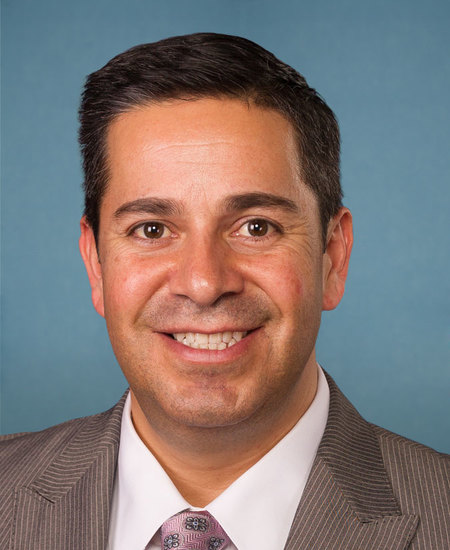
Sen. Ben Ray Luján
Sponsored bills
Maddy summaryThis bill requires the Federal Communications Commission (FCC) to issue detailed reports after major disasters when its Disaster Information Reporting System activates for at least 7 days. The reports must document outages in broadband, mobile services, and 911 systems, include public hearings with affected communities and providers, and recommend improvements to network resilience. It also directs the Office of Management and Budget to reclassify public safety telecommunicators as "protective service occupations" in federal job statistics. Additionally, the FCC must report on compliance with Kari’s Law, which mandates direct 911 access in multi-line phone systems. These provisions aim to improve disaster communications transparency and response coordination without creating new funding or regulatory requirements.
Maddy summaryS 3522 requires the Attorney General to produce three detailed reports to Congress within 270 days of enactment. These reports will analyze data gaps related to attacks on officers (including ambushes), non-criminal aggressive incidents against officers, and mental health resources available to law enforcement. The bill mandates examining current reporting systems, training programs, and disparities in data collection across federal, state, and local levels. It also seeks recommendations for improving data collection methods and mental health support systems for officers. This legislation directly affects federal agencies (like the FBI and DOJ) and state/local law enforcement by establishing new data collection requirements.
Maddy summaryS 3519, titled "Tyler’s Law," requires the U.S. Department of Health and Human Services (HHS) to study how often hospital emergency departments test for fentanyl during overdose cases, along with the costs, patient benefits/risks, and impacts on privacy and patient-physician relationships. Based on this study, HHS must issue guidance within six months on whether emergency departments should routinely test for fentanyl, how to inform clinicians about testing protocols, and how such testing might affect future overdose risks and health outcomes. The bill directly affects hospitals operating emergency departments and patients experiencing overdoses. It does not mandate testing but establishes a framework for HHS to provide evidence-based recommendations to healthcare providers.
Maddy summaryThe Predatory Lending Elimination Act (S 3549) would extend the military lending rate cap - currently protecting service members and their families - to most consumer credit products, including credit cards, while exempting residential mortgages, car loans used solely for vehicle purchases, and Federal credit union loans. It sets a maximum interest rate and restricts certain fees on credit cards, such as those for credit insurance and ancillary products, to prevent hidden costs. States may enforce these rules through their attorneys general or regulators within three years of a violation, and the Consumer Financial Protection Bureau must issue implementing rules within one year that align with existing military lending protections. This bill directly affects creditors offering consumer credit and aims to limit predatory lending practices across most credit markets.
Maddy summarySRES 500 is a Senate resolution designating November 8, 2023, as "National First-Generation College Celebration Day." It recognizes first-generation college students - those whose parents did not earn a bachelor's degree - and commemorates the anniversary of the 1965 Higher Education Act, which established key support programs like Federal TRIO and Pell Grants. The resolution urges all Americans to celebrate this day, acknowledge the contributions of first-gen students to the future workforce, and honor the Higher Education Act's role in expanding access to higher education. This is a symbolic designation with no new funding or policy changes.
Maddy summaryThis bill establishes a federal committee to study how to improve the transmission of accurate location information for calls to the 988 Suicide and Crisis Lifeline, particularly affecting people in rural or small communities who may struggle to get emergency responders to their exact location. The committee, composed of representatives from telecom companies, crisis centers, public safety agencies, and state/local governments, will examine privacy concerns, technical standards for sending location data, and potential costs for service providers. It must submit a report within one year with recommendations for potential future legislation to address these location challenges. The bill itself does not change current law but sets up a study to inform future policy.
Maddy summaryS 3488 creates a formal program allowing NASA to temporarily exchange employees with private sector companies for up to two years (renewable to a total of three years). It directly affects NASA civil servants and private sector workers in fields like technology or cybersecurity, requiring NASA employees to return to government service for twice the assignment duration. Key provisions include strict written agreements covering confidentiality, prohibitions on using government information for private gain, and limits (capping participation at 2% of NASA's workforce). The bill mandates annual reporting to Congress on participation numbers, assignment details, and workforce impacts, with a GAO review after three years.
Maddy summaryThis bill makes it illegal to use automated tools ("bots") to bypass website purchase limits or inventory controls, and to sell products obtained through such violations. It directly affects individuals and businesses using bots to circumvent online purchase restrictions (e.g., for limited-edition products like sneakers or concert tickets). Key provisions prohibit both the circumvention of security measures and the resale of goods acquired via those violations, with enforcement by the FTC and state attorneys general. The law aims to prevent bots from hoarding scarce items, promoting fairer access for regular consumers.
Maddy summaryThe Children and Teens' Online Privacy Protection Act (S 1418) strengthens privacy protections for children under 13 and teens aged 12-17 online. It requires websites, apps, and connected devices that target children or teens, or are reasonably likely to be used by them, to obtain verifiable consent from parents for children and from teens themselves for those aged 12-17 before collecting personal information. The bill prohibits targeted marketing to children and teens, establishes a "Digital Marketing Bill of Rights for Teens," and creates a Youth Privacy and Marketing Division within the Federal Trade Commission to enforce these rules. It also sets out specific Fair Information Practices Principles requiring transparency, data accuracy, security, and proper data disposal for children's and teens' personal information.