

Maddy summaryThis bill, S 2695 (Parity for Tribal Law Enforcement Act), grants tribal law enforcement officers who contract federal law enforcement functions under the Indian Self-Determination Act the authority to enforce federal law within tribal jurisdiction. To qualify, tribal officers must complete Bureau-approved training, pass equivalent background checks, and receive certification from the Bureau of Indian Affairs, while tribes must adopt policies meeting federal standards. The bill deems these tribal officers as federal law enforcement officers for key legal purposes, including protections under Title 18 (criminal law), Title 5 (federal employee benefits), and the Federal Tort Claims Act. It requires the Secretary to establish certification procedures within two years and includes a Bridge Program for officers using state training. The bill directly affects tribal officers and tribes operating under federal law enforcement contracts.
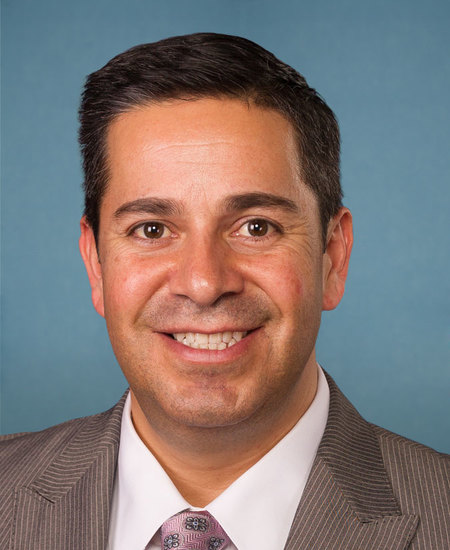
Sen. Ben Ray Luján
Sponsored bills
Maddy summaryThis resolution designates September 2024 as "National Voting Rights Month" to highlight historical and ongoing voting rights issues in the U.S. It encourages all Americans to support voting access and urges Congress to pass specific voting rights legislation, including the Freedom to Vote Act and the Democracy Restoration Act. The resolution also recommends that schools teach about voting history, voter suppression, and current voting restrictions. As a symbolic measure, it does not create new laws but aims to raise awareness about voting rights challenges.
Maddy summarySRES 823 is a symbolic Senate resolution recognizing Hispanic Heritage Month (September 15-October 15, 2024) and celebrating the cultural contributions and achievements of Latinos in the United States. It does not create new laws or affect specific groups; instead, it urges the public to observe the month through activities honoring Latino heritage. The resolution highlights Latinos' economic impact (e.g., $3.4 trillion purchasing power), demographic significance (19.5% of U.S. population), and historical military service, but these statistics serve as context, not policy changes. As a ceremonial resolution, it has no legal force and is intended to raise awareness, not alter government programs or funding.
Maddy summarySRES 815 designates the week beginning September 9, 2024, as "National Hispanic-Serving Institutions Week" to recognize institutions that serve a significant Hispanic student population. It specifically refers to degree-granting colleges and universities with at least 25% Hispanic undergraduate enrollment, which collectively serve over 5 million students nationwide. The resolution calls for the public and organizations to observe this week with ceremonies and activities honoring these institutions' role in expanding access to higher education, particularly for low-income and underserved students. This is a ceremonial resolution with no funding or regulatory changes; it simply provides national recognition during Hispanic Heritage Month.
Right to IVF Act This bill provides a statutory right to access fertility treatments (e.g., in vitro fertilization). Specifically, under the bill, individuals have the right to access fertility treatments and to make decisions about the use of their reproductive genetic material (e.g., embryos) without limitation or interference. Health care providers and insurers have the right to provide and cover these services, respectively. Manufacturers of applicable drugs or devices also have the right to provide these drugs or devices. The bill supersedes state laws that limit or otherwise interfere with the provision of fertility treatments as set out under this bill, including laws that require medically unnecessary procedures or services in conjunction with fertility treatments or that restrict the ability of individuals to receive fertility treatments based on marital status or sex (including sexual orientation or gender identity). The bill does not affect state health and safety regulations for medical facilities or health care providers that are in accordance with widely accepted and evidence-based medical standards and for which the purpose cannot be achieved in another, nonrestrictive manner. The Department of Justice may bring civil actions against states, individuals, or entities that implement or enforce limitations or requirements that violate this bill. Individuals and health care providers may also bring civil actions. In addition, the bill provides for coverage of fertility treatments under Medicare and Medicaid and for members of the uniformed services and veterans. It also requires private insurers that cover obstetrical services to also cover fertility treatments.
Maddy summaryThe Fire Ready Nation Act of 2024 establishes a coordinated fire weather services program within the National Oceanic and Atmospheric Administration (NOAA) to improve wildfire prediction, response, and recovery. It requires development of advanced weather models, enhanced observational systems (including satellite and drone technologies), and impact-based decision support tools for emergency personnel. The bill creates an Incident Meteorologist Service to provide on-site weather support during wildfires and authorizes $15 million for fiscal year 2025, increasing to $50 million by 2029. This legislation directly affects Federal agencies, State and local emergency responders, and communities in wildfire-prone areas.
Maddy summaryThe Autism CARES Act of 2024 reauthorizes and updates federal autism programs through 2029, increasing annual funding for research and services from $23.1 million to $28.1 million. It requires new reports on developmental-behavioral pediatrician shortages and transitions for young adults with autism from school to adult services. The bill modernizes language to be more inclusive (e.g., "culturally and linguistically appropriate" instead of "culturally competent") and expands technical assistance for communication tools. These changes directly affect individuals with autism spectrum disorder, healthcare providers, and state/tribal agencies administering federal autism programs.
Maddy summaryS 4973, the "No Kings Act," removes presidential and vice presidential immunity from federal criminal prosecution, requiring such cases to be handled in federal district courts with appeals limited to the D.C. Circuit. The bill specifically bars the Supreme Court from reviewing cases involving claims of presidential immunity for official acts, including dismissals of indictments or overturning convictions. It directly affects current and former presidents and vice presidents by subjecting them to the same federal criminal accountability as all other citizens. Key provisions prevent courts from considering whether alleged crimes were part of official duties unless Congress specifies otherwise, and clarify that state criminal laws remain applicable.
Maddy summarySRES 800 is a symbolic Senate resolution introduced on August 1, 2024, by a bipartisan group of senators. It condemns the July 13, 2024, attempted assassination of Donald J. Trump at a Butler, Pennsylvania, rally and honors three individuals affected: Corey D. Comperatore (who died shielding his family), David Dutch (critically injured), and James Copenhaver (critically injured). The resolution calls for national unity and civility following the violent incident. As a non-binding resolution, it does not create new laws or policies but expresses the Senate's stance on the event.
Maddy summaryThis bill amends the Workforce Innovation and Opportunity Act (WIOA) to improve tribal employment and training programs. It directly affects Native American, Alaska Native, and Native Hawaiian communities by updating eligibility rules (allowing individuals previously covered under the Job Training Partnership Act to participate), permitting up to 15% of funds for administrative costs, and requiring performance measures that consider tribal community needs. Key provisions include updating legal references to tribal laws (e.g., 25 U.S.C. 5301), establishing an annual meeting requirement with a Native American Employment and Training Council, and clarifying how unobligated funds can be carried forward. The changes aim to strengthen federal support for tribal workforce programs while aligning with tribal self-governance principles.