

Maddy summaryThe Community Solar Consumer Choice Act of 2024 requires non-tribal electric utilities to offer community solar programs providing equitable access to all ratepayers, including low-income households, businesses, nonprofits, and state/local/Tribal governments. It mandates utilities to establish these programs within two years of enactment, with the Department of Energy providing technical assistance, data support via National Laboratories, and alignment with existing low-income energy programs. The bill also expands federal grant/loan programs to include community solar and requires state regulators to evaluate compliance with these standards. This directly affects electric utilities and their customers, particularly increasing access for underserved communities through standardized program requirements.
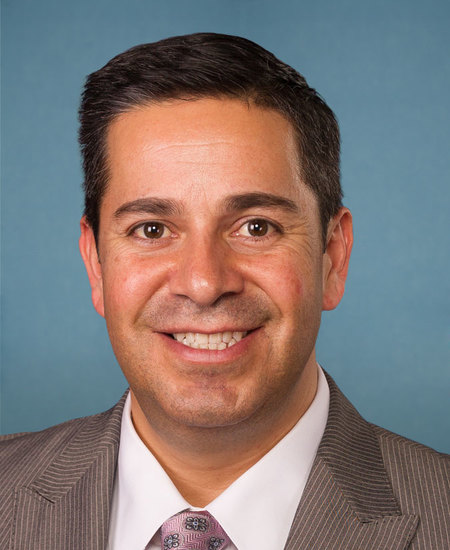
Sen. Ben Ray Luján
Sponsored bills
Maddy summaryThe High Court Gift Ban Act (S 5268) would prohibit federal judges from accepting gifts from individuals or organizations that have, or are likely to, appear before them in court. It sets a limit of $50 per gift and $100 total annually from a single source, with exceptions for items paid at fair market value, gifts from relatives, honorary degrees, and certain professional events. The bill requires the Supreme Court and Judicial Conference to create implementing regulations within 180 days. Violations could trigger civil penalties up to $50,000 or criminal charges, including fines and up to one year in prison.
Maddy summaryThis bill requires expanded non-intrusive inspections of cargo at U.S. transportation points to detect illicit synthetic drugs like fentanyl. It mandates that Customs and Border Protection inspect 50% of cargo at land ports, air cargo, and maritime cargo within 5 years, increasing to 100% over time. The bill creates grant programs for state and local law enforcement to acquire detection technology and canines, along with training requirements to ensure inspections are conducted lawfully and efficiently. It also establishes a public-private task force to improve information sharing about drug trafficking through transportation networks. The bill aims to disrupt drug smuggling while minimizing disruptions to legitimate commerce and ensuring Fourth Amendment protections.
Maddy summaryThis bill authorizes a Congressional Gold Medal to honor the "Hello Girls" - 223 women who served as Army Signal Corps telephone operators in WWI. They connected 26 million calls in France, worked 12-hour shifts under combat conditions, and were denied veteran benefits for 60 years despite wearing uniforms and facing combat hazards. The medal recognizes their pioneering military service, devotion to duty, and the decades-long struggle for recognition as soldiers. It directs the Treasury to strike the medal and place it in the Smithsonian for public display at institutions like the National WWI Museum.
Maddy summarySRES 851 is a Senate resolution designating November 2, 2024, as National Bison Day. It encourages the American public to observe the day with ceremonies and activities to recognize bison's cultural, historical, and economic significance. The resolution highlights bison's role in Indigenous traditions, conservation efforts, and U.S. heritage, as detailed in its preamble. It does not create legal obligations but serves as a symbolic acknowledgment of bison's importance.
Maddy summaryThe End Tuberculosis Now Act of 2024 establishes a U.S. government policy to accelerate global efforts to eliminate tuberculosis (TB), focusing on countries with the highest TB burden. It requires the President to set specific goals aligned with the World Health Organization's End TB Strategy, aiming to reduce TB deaths by 95% and TB incidence by 90% by 2035. The bill mandates annual reporting on U.S. TB assistance programs, including diagnostics, treatment, and prevention efforts, while requiring coordination with international partners like the World Health Organization and Stop TB Partnership. It emphasizes research for new TB diagnostics, treatments, and vaccines, and ensures TB programs can serve as platforms for responding to future respiratory pandemics.
Maddy summaryThis Senate resolution (SRES 833) calls for multi-stakeholder action to counter disinformation, propaganda, and misinformation in Latin America and the Caribbean. It urges social media companies to improve detection of Spanish-language disinformation, expand partnerships with local fact-checkers, and boost digital literacy efforts, while also encouraging governments in the region to strengthen media independence and coordinate regional responses. The resolution specifically highlights threats from foreign actors like China, Russia, and Venezuela, and requests U.S. agencies to increase support for independent media and information integrity initiatives in the region.
Maddy summaryThe SAFE Lending Act of 2024 aims to protect consumers in small-dollar lending by implementing several key protections. It prohibits financial institutions from creating checks without a consumer's written authorization, requires small-dollar lenders (those offering credit under $5,000, adjusted annually for inflation) to register with the Consumer Financial Protection Bureau, and bans certain fees for prepaid accounts like overdraft charges. The bill also restricts how sensitive financial information can be collected for small-dollar credit applications, requiring transparency and direct provision of credit by the entity collecting the information. Additionally, it mandates a study on small-dollar credit's impact on Native American tribes and requires the Bureau of Consumer Financial Protection to issue implementing rules within one year.
Maddy summaryThis bill requires the federal government to evaluate state and tribal protocols for handling children missing from foster care and provide technical assistance to improve these systems. It mandates the Secretary to assess how effectively states identify and respond to missing youth, identify obstacles, and share best practices for tracking and recovery. Additionally, it directs the Secretary to assist states in implementing mandatory screenings for sex trafficking risks when youth return to foster care after going missing, including documentation and appropriate service referrals. The bill directly affects states, tribes, and tribal organizations administering foster care programs under federal law.
Maddy summaryThis Senate resolution recognizes September 20, 2024, as "National LGBTQ+ Veterans Day" to honor the service of lesbian, gay, bisexual, transgender, and queer (LGBTQ+) veterans who served despite historical discrimination. It formally acknowledges past harmful policies - including the "Don't Ask, Don't Tell" era and bans on transgender service - that led to discharges and denied benefits to LGBTQ+ veterans. The resolution urges the Department of Veterans Affairs and Defense to continue addressing past injustices, improving access to benefits, and ensuring transgender veterans receive full healthcare, including gender-affirming care.