

Maddy summaryThis bill extends the Secure Rural Schools program, which provides payments to counties and states with federal land, through 2026. It also adjusts related deadlines for special projects on federal land and county fund expenditures, pushing them to 2028 and 2029 respectively. Additionally, the bill adds a pilot program allowing regional foresters to appoint resource advisory committee members, set to end on October 1, 2028. These changes maintain funding stability and administrative flexibility for rural communities dependent on federal land management.
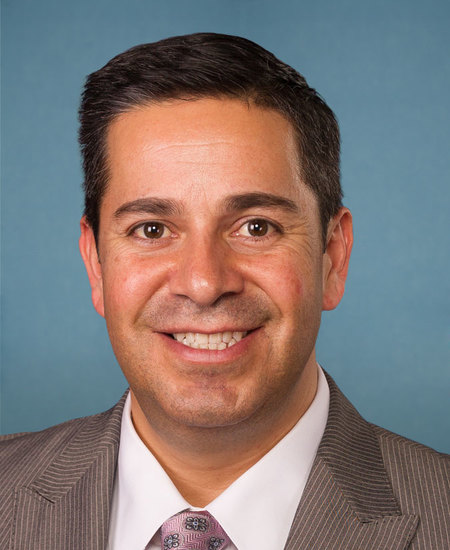
Sen. Ben Ray Luján
Sponsored bills
Maddy summaryThis bill, S 3406, makes technical corrections to three existing water rights settlement acts. It authorizes specific interest payments to three water funds: $6.36 million for the Navajo Nation Water Resources Development Trust Fund, $7.79 million for the Taos Pueblo Water Development Fund, and $4.31 million for the Aamodt Settlement Pueblos’ Fund. These payments correct reference errors in prior legislation and cover costs related to water facilities and systems. The bill directly affects the Navajo Nation, Taos Pueblo, and the Aamodt Settlement Pueblos by securing funding for their water infrastructure. It is a procedural correction, not new policy, ensuring existing settlement funds are properly allocated.
Maddy summaryThis bill requires the National Institutes of Health (NIH) Director to submit an annual budget estimate for Alzheimer's research initiatives to the President for transmission to Congress, starting in fiscal year 2024. It specifically mandates including estimates of personnel needs alongside funding projections, based on recommendations from the National Alzheimer's Project Act. The law directly affects NIH operations by establishing a formal, recurring reporting requirement for Alzheimer's-related funding. This is not a new funding measure but a procedural change to improve transparency and accountability in budget planning for these initiatives. The bill amends Section 2 of the National Alzheimer's Project Act to add this annual reporting obligation.
Maddy summarySRES 888 is a ceremonial Senate resolution honoring the late James Ralph Sasser, a former U.S. Senator from Tennessee (served 1976-1993). It formally expresses the Senate’s "profound sorrow" over his death and requests the Secretary of the Senate transmit the resolution to his family. The resolution has no policy impact or direct effect on any individuals or entities - it is solely a commemorative gesture. As a procedural resolution, it does not create new laws or alter existing policies.
Maddy summaryThe Poison Control Centers Reauthorization Act of 2024 extends federal funding for poison control centers through fiscal year 2029. It updates three key provisions in the Public Health Service Act to renew funding periods for the national toll-free number (Section 1271), public awareness campaigns (Section 1272), and grant programs supporting centers (Section 1273). This reauthorization ensures continued operation of existing poison control services without altering program structure or eligibility. The bill directly affects poison control centers nationwide and the public who rely on these centers for immediate assistance with poison exposures.
Maddy summaryThis bill authorizes the awarding of a Congressional Gold Medal to tennis legend Billie Jean King in recognition of her lifelong advocacy for gender equality in sports and society. The legislation specifically acknowledges her pivotal role in advancing women's rights, including her work leading to the passage of Title IX and her efforts to establish equal prize money in tennis. Under the bill, the Secretary of the Treasury would strike a gold medal featuring an image and inscription of Billie Jean King, with bronze duplicates available for sale to cover costs. The medal would be presented by congressional leaders as a formal recognition of her contributions to American society. This is a commemorative honor, not a policy that creates new legal requirements or funding.
Maddy summaryThis concurrent resolution (SCONRES 42) symbolically recognizes the persistent wage gap affecting Latina women in the U.S. labor force. It designates October 3, 2024, as "Latina Equal Pay Day" to highlight that Latina women earn, on average, 51 cents for every dollar earned by White, non-Hispanic men working full-time. The resolution cites data showing this disparity results in Latina women losing over $1.2 million in lifetime earnings and emphasizes the broader economic and personal impacts of unequal pay. As a non-binding statement, it does not create new laws or funding but formally acknowledges the issue and reaffirms congressional support for closing the gender wage gap.
Maddy summaryThis resolution (SRES 887) is a symbolic Senate expression of support for designating October 7-12, 2024, as "National 4-H Week." It does not create new laws or funding but formally recognizes the 4-H youth development program, which serves nearly 6 million young people nationwide through community-based projects in health, science, and leadership. The resolution highlights 4-H’s role in fostering youth leadership and its partnership with land-grant universities and the USDA. It directly affects the 4-H organization, its 500,000 volunteers, and the youth members participating in the program.
Maddy summaryThis bill adjusts the premium tax credit program under the Affordable Care Act to make health insurance more affordable for lower-income households. It establishes a new sliding scale for the percentage of income people pay toward premiums based on household income relative to the federal poverty line (ranging from 150% to 400% of the poverty line). For example, households earning 150-200% of the poverty line would pay 0-2% of income, while those earning 300-400% would pay 6-8.5%. The changes apply to tax years beginning after December 31, 2025, and directly affect individuals purchasing health insurance through marketplace plans who qualify for these tax credits.
Maddy summaryS 5262, the BABIES Act, provides federal funding to expand access to birth centers in underserved areas and tests new Medicaid payment models for low-risk maternity care. It authorizes $5 million (2025-2029) for grants up to $500,000 per birth center to cover facility renovations, equipment, or accreditation, prioritizing centers in maternity care shortage areas. The bill also creates a 4-year Medicaid demonstration program ($24 million total) to develop payment systems for birth centers meeting strict safety and care coordination standards, focusing on low-risk pregnancies. This directly affects birth centers seeking accreditation, Medicaid recipients in underserved communities, and states testing new payment approaches for maternity services.