

Maddy summaryThe Health Workforce Innovation Act creates a federal grant program to fund community-driven training initiatives for allied health professionals in underserved and rural areas. Eligible applicants include community health centers, rural clinics, and vocational schools that train healthcare workers. Grants support partnerships with schools, pre-apprenticeships, culturally competent training, and expanded internships to increase the healthcare workforce, while prohibiting use for construction or replacing existing funding. Each grant is capped at $2.5 million and must run for at least three years.
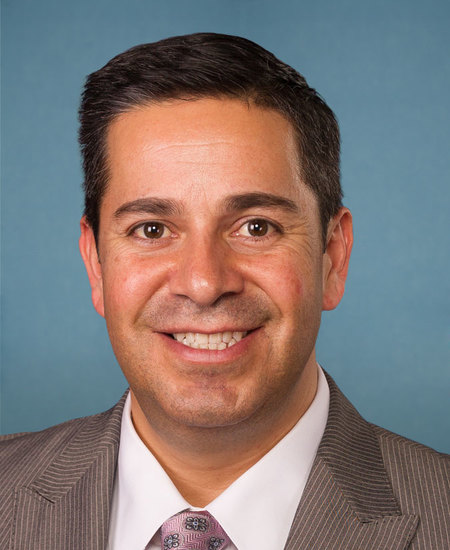
Sen. Ben Ray Luján
Sponsored bills
Maddy summaryThe NO BAN Act (S 4961) expands federal anti-discrimination protections in immigration law to explicitly prohibit discrimination based on national origin or religion for nonimmigrant visa holders, refugees, and other temporary travelers. It reforms Section 212(f) of immigration law by requiring the President to provide specific, credible evidence to Congress within 48 hours before restricting entry, mandating narrow tailoring of such restrictions, and requiring waivers for family/humanitarian cases. The bill also creates detailed reporting requirements for all entry restrictions, including quarterly updates to Congress and public reports on visa denials, waivers, and refugee admissions. This directly affects travelers, visa applicants, and refugees impacted by presidential entry bans or restrictions, while adding new procedural checks on executive authority.
Maddy summaryThe Wildlife-Agriculture Disease Prevention Act of 2024 creates a new "Agriculture-Wildlife Disease Coordinator" position within the U.S. Fish and Wildlife Service to improve coordination between federal agencies (like Agriculture, Interior, and CDC) and state/Tribal governments. The coordinator will facilitate information sharing about diseases spreading between wildlife, livestock, and humans, help states access funding for disease monitoring, and develop best practices for prevention. This aims to prevent costly outbreaks like the 2022 avian flu crisis (which cost $3 billion) by strengthening collaboration before diseases escalate. The bill directly affects federal agencies, state agriculture and wildlife departments, and Tribal nations managing disease risks.
Maddy summaryThe Digital Integrity in Democracy Act (S 4977) amends Section 230 of the Communications Act to create a new exception: social media platforms with at least 25 million U.S. monthly users must remove *objectively false information* about election timing, location, voter eligibility, or penalties if notified. Platforms must delete such content within 24 hours on election days or 48 hours otherwise, and provide written confirmation of removal. Violations allow the Attorney General, state officials, or candidates to sue for $50,000 per item of unremoved false information. The law explicitly excludes political speech about candidates, officeholders, or parties from this definition.
Maddy summaryThis bill authorizes a Congressional Gold Medal to honor U.S. and Filipino military personnel who defended Bataan, Corregidor, and Attu during World War II, as well as the impacted Saskinax̂ people of Attu who were imprisoned by Japan. The medal, designed by the Secretary of the Treasury, would be presented by congressional leaders and permanently displayed at the Smithsonian Institution's National Museum of American History. Duplicate bronze medals may be sold to cover production costs, with proceeds returned to the U.S. Mint. The bill recognizes historical service through a commemorative medal without creating new benefits or entitlements.
Maddy summaryThis bill directs the National Science Foundation (NSF) to fund competitive research projects developing artificial intelligence (AI) tools for "efficient technologies" - defined as solutions that reduce emissions, conserve resources, improve clean air/water, and support climate resilience. It specifically targets AI applications in smart grids, transportation, agriculture, waste reduction, emissions control, and resource conservation, requiring all funded projects to assess energy consumption impacts. The NSF must prioritize research at EPSCoR institutions (focusing on underfunded regions) and submit two reports to Congress: one within 18 months detailing feasibility and coordination opportunities, and another within 4 years sharing research results. The law directly affects NSF, researchers at eligible institutions, and critical infrastructure sectors integrating these AI technologies.
Maddy summary# Summary of Proposed Employment Rights and Anti-Discrimination Legislation This comprehensive bill proposes significant reforms to address workplace discrimination and harassment, with several key provisions: ## Key Provisions 1. **Expanded Protections**: - Extends protections to independent contractors, interns, volunteers, and trainees (Section 301) - Explicitly prohibits discrimination based on sex, sexual orientation, gender identity, and other protected characteristics 2. **Nondisclosure and Nondisparagement Agreements**: - Prohibits employers from requiring nondisclosure or nondisparagement clauses that cover harassment or discrimination claims (Section 302) - Establishes specific requirements for valid settlement agreements (21-day consideration period, written advice to consult attorney, 7-day revocation period) - Requires enforcement against employers who attempt to enforce prohibited clauses 3. **Arbitration Restrictions**: - Bans mandatory pre-dispute arbitration agreements for work disputes (Section 303) - Requires specific disclosures and waiting periods for post-dispute agreements - Allows civil actions for violations with attorney's fees 4. **Federal Contractor Requirements**: - Requires federal contractors to disclose labor and civil rights violations (Section 304) - Mandates periodic updates on compliance status - Establishes Labor Compliance Advisors within executive agencies 5. **Grant Programs**: - Creates national grants for preventing and addressing discrimination (Section 411-413) - Establishes legal assistance grants for low-income workers (Section 421-423) - Funds state advocacy systems to protect workers' rights (Section 431-436) ## Significance This legislation would substantially increase protections for workers by: - Making it easier to report harassment and discrimination - Preventing employers from silencing victims through restrictive agreements - Creating stronger enforcement mechanisms - Expanding access to legal assistance for vulnerable workers - Holding federal contractors accountable for labor violations The bill represents a major shift in workplace rights law, with implications for nearly all employers in the United States and significant changes to how discrimination claims are handled through legal processes.
Maddy summaryThis Senate resolution (SRES 782) designates August 4-10, 2024, as "National Farmers Market Week" to symbolically recognize the role of farmers markets. It directly affects farmers markets across the U.S., which support local economies, connect urban and rural communities, and provide access to fresh food - particularly for low-income populations using nutrition benefits. The resolution highlights their economic impact ($1.7 billion in 2020), growth (8,771 markets in 2019), and contribution to sustainable farming and community health, without creating new laws or funding.
Maddy summaryThe Families Care Act amends the Older Americans Act to expand support for family caregivers. It adds peer support services to existing counseling programs and requires states to consider the unique needs of different caregivers, including children and older relatives affected by substance use disorders like opioid addiction. The bill also changes reporting requirements, directing the Assistant Secretary to regularly prepare and publish program data instead of making it available by specific deadlines. This directly affects family caregivers nationwide, particularly those supporting loved ones with substance use disorders. The changes focus on improving access to tailored support services and transparency in program implementation.
Maddy summaryThis bill requires federal agencies to track and reduce delays in processing broadband infrastructure permit applications. It mandates agencies to develop data systems for accurate processing time tracking, analyze delay causes in real-time, and report annually to specific congressional committees. The bill also sets a $5 million minimum investment threshold for broadband projects requiring environmental review under NEPA (National Environmental Policy Act), meaning projects exceeding this cost must undergo standard environmental assessment. These provisions directly affect federal agencies managing permits and broadband infrastructure developers seeking federal approvals.