

Maddy summaryThis bill, S 317 (Charitable Act), creates a new federal income tax deduction for charitable contributions for individuals who do not itemize deductions (the majority of taxpayers). It allows these taxpayers to deduct up to one-third of their standard deduction amount for charitable gifts in 2026 and 2027. The bill also eliminates penalties related to charitable deduction errors under tax code sections 6662 and 6664. The changes apply to tax returns filed for 2026 and 2027 tax years.
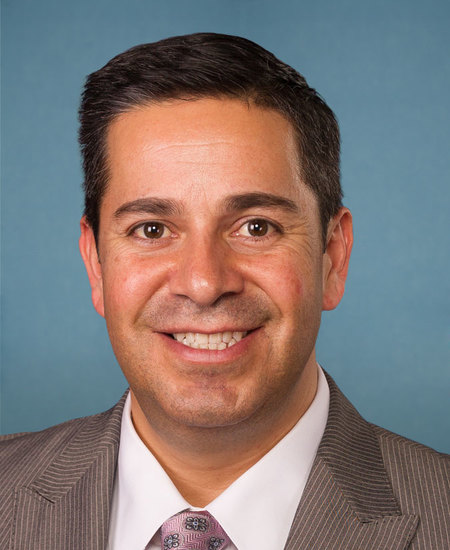
Sen. Ben Ray Luján
Sponsored bills
Maddy summaryS 319 requires the Secretary of Agriculture to contract with a land-grant or non-land-grant college of agriculture to review the Cattle Fever Tick Eradication Program within one year of the bill's enactment. The review must assess the program's effectiveness, benefits and compliance burdens for cattle producers, treatment protocols, and funding allocation. The Secretary must then submit a report to Congress within one year of the contract, including review results and recommendations to improve the program, particularly to reduce compliance burdens on cattle producers. This bill directly affects cattle producers through program requirements and the agencies managing the program (USDA and Texas Animal Health Commission). The legislation focuses on evaluating the existing program rather than changing its core operations.
Maddy summaryThis Senate resolution (SRES 42) is a symbolic expression of disapproval by the Senate for pardons granted to individuals convicted of assaulting Capitol Police officers. It does not change any laws or affect legal outcomes but formally condemns those pardons as inconsistent with the Senate's position. The resolution directly addresses the Senate's stance toward those who received pardons for violent acts against law enforcement during the January 6, 2021, Capitol breach.
Maddy summaryS 280, the Global Health, Empowerment and Rights Act, removes barriers for foreign nongovernmental organizations (NGOs) seeking U.S. aid under the Foreign Assistance Act. It directly affects foreign NGOs providing health services (like counseling) with non-U.S. funds, ensuring they cannot be denied aid solely for offering such services if they comply with local laws and U.S. federal standards. The bill prohibits denying aid based on health services provided with non-U.S. funds and stops applying stricter rules on non-U.S. funds for advocacy to foreign NGOs compared to U.S. NGOs. This changes how the U.S. government evaluates eligibility for aid, making the process more consistent for foreign health-focused organizations.
Maddy summaryThe Radiation Exposure Compensation Reauthorization Act (S 243) extends and expands the existing Radiation Exposure Compensation Act (RECA) through 2031. It creates new compensation for people exposed to Manhattan Project waste (covering specific ZIP codes in Missouri, Tennessee, Alaska, and Kentucky), increases compensation to $100,000 for leukemia and other specified diseases, and expands eligibility for uranium mining workers. The bill extends the claim filing deadline from 2 to 5 years, allows up to three resubmissions of denied claims, and establishes a grant program to study uranium mining's health impacts. This legislation directly affects individuals who lived downwind of nuclear tests, worked in uranium mining, or were exposed to Manhattan Project waste.
Maddy summaryThis resolution designates January 23, 2025, as "Maternal Health Awareness Day" to highlight maternal health challenges in the U.S. It focuses on raising public awareness about maternal mortality (with statistics showing 800 annual pregnancy-related deaths) and disparities (such as Black women facing nearly 3x higher mortality rates than White women). The resolution encourages federal, state, tribal, and local entities to take action on improving maternal care and reducing inequities, though it does not create new laws or funding. As a symbolic designation, it has no binding effect but aims to promote existing efforts like maternal mortality reviews and community-based care models.
Maddy summaryS 199 would create special tax rules for "qualified residents of Taiwan" with income from U.S. sources. It would lower tax rates on interest, dividends, and royalties from 30% to 10% (15% for some dividends), provide tax relief for certain wages paid to Taiwan residents working in the U.S., and exempt income from entertainment or athletic activities up to $30,000. The bill establishes specific requirements for entities to qualify for these benefits, including ownership and income criteria. It also creates a process for the U.S. to negotiate a formal tax agreement with Taiwan to further address double taxation concerns.
Maddy summaryS 228, the "Acequia Communities Empowered by Qualifying Upgrades for Infrastructure Act," expands disaster assistance for farmers and ranchers who rely on acequia systems (traditional community water infrastructure in New Mexico) by requiring the USDA to cover all losses from drought or disasters, rather than limited aid. It removes the requirement for special permits for routine maintenance and minor repairs of acequias on federal land, allowing community members (like water rights holders or their representatives) to manage infrastructure without federal approval. The bill also mandates a USDA report to Congress within two years, detailing the number of acequia-dependent farmers, the disaster aid they received, and program accessibility. These provisions directly support New Mexico's acequia communities and their water governance systems, which are vital for agriculture, watershed health, and cultural heritage.
Maddy summaryThis bill prohibits businesses from using pricing algorithms that rely on nonpublic competitor data (like unpublicized prices or terms). It requires companies to disclose when algorithms set prices for customers or workers, and mandates audits of such algorithms upon request by the FTC or Justice Department. Violations could trigger daily fines of up to $10,000. The bill also presumes collusion if algorithms are shared between competitors, potentially leading to joint liability.
Maddy summaryThe CONSTRUCTS Act of 2025 establishes a federal grant program to fund training programs for residential construction careers at rural community colleges and similar institutions. It prioritizes serving rural communities and underserved populations - including low-income individuals, veterans, and groups with historically low construction industry employment - through competitive grants. Grantees must create or expand training in specific trades (like carpentry, plumbing, and electrical work), form partnerships with construction businesses to ensure fair wages, and offer flexible scheduling and job placement support. The program authorizes $20 million annually from 2025 to 2029 to increase skilled construction workers and support affordable housing development.