Federal Adjustment of Income Rates Act or the FAIR Act This bill modifies pay rates for federal employees in 2026. Specifically, the bill increases rates under the statutory pay systems and for prevailing rate employees by 3.3% and increases locality pay by 1%.
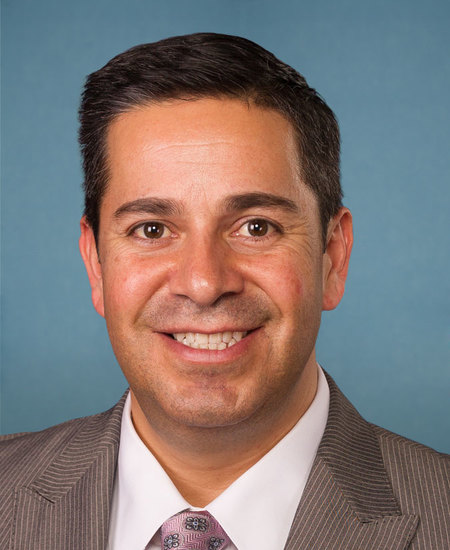
Sen. Ben Ray Luján
Sponsored bills
Saving the Civil Service Act This bill generally prohibits changes to the classification of positions in the competitive service and excepted service unless certain conditions are met. (Competitive service positions are subject to competitive examination while excepted service positions are appointed under one of five schedules. Competitive service positions have notice and appeal requirements for adverse actions that are not applicable to most excepted positions, including those of a confidential, policy-determining, policy-making, or policy-advocating character under Schedule C.) On October 21, 2020, President Donald Trump issued an executive order that placed executive agency positions that are of a confidential, policy-determining, policy-making, or policy-advocating character, and that are not normally subject to change as a result of a presidential transition, under a new Schedule F in the excepted service. The order was subsequently revoked by President Joe Biden. The bill prohibits executive agency positions in the competitive service from being placed in the excepted service, unless such positions are placed in a schedule in the excepted service as in effect on September 30, 2020. The bill also prohibits positions in the excepted service from being placed in any schedule other than the aforementioned schedules. Additionally, agencies may not (1) transfer occupied positions from the competitive or excepted service into Schedule C without the consent of the Office of Personnel Management, or (2) transfer employees in the excepted service to another schedule or transfer employees in the competitive service to the excepted service without employee consent.

Maddy summaryThis bill authorizes Congress to award a single Congressional Gold Medal to wildland firefighters collectively, recognizing their service in protecting forests, grasslands, and communities. It directs the Secretary of the Treasury to strike the medal with input from the National Interagency Fire Center, with the medal to be displayed at that center for public access and research. The bill also permits the sale of bronze duplicates at cost to cover production expenses, but does not create new benefits or policy changes for firefighters. The medal honors all federal, state, local, and contract wildland firefighters who serve in high-risk conditions, including those who have died or been injured in service.
Chiropractic Medicare Coverage Modernization Act of 2025 This bill expands Medicare coverage of chiropractic services to include all services provided by chiropractors, rather than only subluxation corrections through manual manipulation of the spine.
Maddy summaryS 94, the "Miracle on Ice Congressional Gold Medal Act," authorizes three congressional gold medals for the 1980 U.S. Olympic Men's Ice Hockey Team members. The bill directs the Secretary of the Treasury to strike the medals, with one medal displayed at each of three locations: the Lake Placid Olympic Center, the U.S. Hockey Hall of Fame Museum in Minnesota, and the U.S. Olympic & Paralympic Museum in Colorado Springs. The legislation also permits the sale of bronze duplicates to cover costs, with proceeds going to the U.S. Mint. This is a commemorative measure recognizing the team's 1980 Olympic victory, not a policy change affecting current legislation or constituents.
Maddy summarySRES 19 is a Senate resolution honoring former President Jimmy Carter's life and legacy, commending his decades of public service, humanitarian work, and diplomatic achievements including the Camp David Accords and founding The Carter Center. The resolution specifically recognizes his Nobel Peace Prize, efforts to combat diseases like Guinea worm, and 30+ years of Habitat for Humanity homebuilding. It formally mourns his passing and extends condolences to his family, while highlighting his role in establishing U.S.-China diplomatic relations and creating the Departments of Education and Energy. As a symbolic resolution with no policy impact, it directly affects no individuals or entities but serves as a formal Senate tribute to Carter's historical contributions.
Maddy summaryThis bill adjusts tax credit rules for health insurance under the Affordable Care Act to make coverage more affordable for lower-income households. It replaces a flat income threshold with a sliding scale, reducing the percentage of income people pay for premiums based on their household income relative to the poverty line (e.g., 0% for incomes up to 150% of poverty, rising to 8.5% at 400%+). The change directly affects individuals buying insurance through health insurance marketplaces who qualify for tax credits. It takes effect for tax years beginning after 2025, modifying how the IRS calculates subsidy eligibility.
Maddy summaryThe Washington, D.C. Admission Act would admit Washington, D.C. as a new state called "Washington, Douglass Commonwealth," granting it full representation with two U.S. Senators and one U.S. Representative. The bill would establish the new state's boundaries, with the area serving as the seat of government (the "Capital") remaining under federal jurisdiction for specific purposes. It would repeal the District of Columbia's congressional delegate position and its participation in presidential elections, while providing for a transition period overseen by a Statehood Transition Commission to handle the shift from district to state governance.
Maddy summaryThis bill adds new federal district court judgeships to address growing case backlogs. It authorizes 66 permanent judgeships to be appointed starting in 2025 (with an additional 34 in 2029) across specific districts in Arizona, California, Texas, Florida, Georgia, New York, and others, based on current caseload data. It also creates temporary judgeships for Oklahoma districts (Eastern and Northern) that expire after five years if vacancies occur. The bill aims to reduce the average of 491 cases per judgeship by increasing staffing in overburdened courts, as identified by the Judicial Conference.
Maddy summaryThe Truth and Healing Commission on Indian Boarding School Policies Act of 2024 would establish a federal commission to investigate and document the historical impacts of Indian boarding school policies on American Indian, Alaska Native, and Native Hawaiian communities. The Commission would hold public hearings for survivors, families, and tribal representatives, work to locate unmarked graves and document records from these schools, and develop recommendations for healing and preventing similar practices today. It would include 10 diverse members representing tribal communities, experts in boarding school history, and healing practitioners, with an Advisory Committee composed of tribal organizations and survivors. The Commission would issue an initial report within three years and a final report within five years, making recommendations for federal action to address historical trauma and support mental health and cultural healing. This bill focuses on documenting the government's role in cultural termination and developing concrete steps for acknowledgment and healing.