

Maddy summaryThis bill requires federal agencies to track and reduce delays in processing broadband permit applications. It mandates agencies to analyze delay causes, address them, and report annually to specific congressional committees. The law sets a 270-day deadline for processing permits for projects costing over $5 million that involve broadband infrastructure construction and require environmental review under NEPA. This directly affects broadband providers and communities seeking permits, aiming to streamline approvals for large-scale broadband projects.
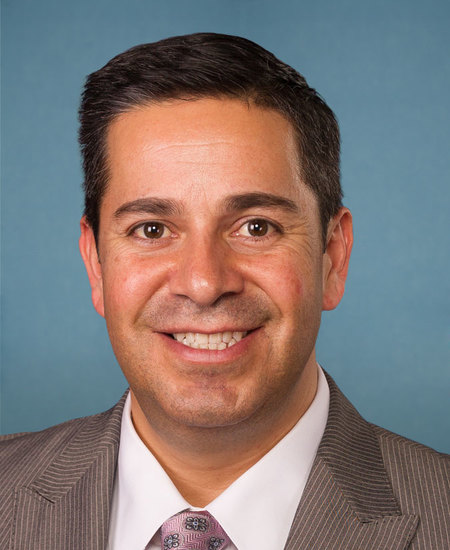
Sen. Ben Ray Luján
Sponsored bills
Broadcast Freedom and Independence Act of 2025 This bill prohibits the Federal Communications Commission (FCC) from taking action against or imposing certain conditions on individuals on the basis of viewpoints broadcast or disseminated by the individuals or their affiliates. Specifically, the FCC may not revoke a license or authorization of, or otherwise take action against, an individual or entity on the basis of viewpoints broadcast or otherwise disseminated by the individual or entity or an affiliate thereof. Further, the FCC may not impose conditions on its approval of certain transactions on the basis of viewpoints broadcast or otherwise disseminated by the individual or entity seeking approval of the transaction, or an affiliate thereof. Under the bill, the FCC retains its authority to take action or impose conditions on the basis of (1) violations of certain existing laws regarding lottery information, fraud, and obscene language; or (2) the broadcast or other dissemination of content that constitutes incitement under the First Amendment.
Maddy summaryThis bill amends the Navajo-Gallup Water Supply Project to expand water delivery to additional Navajo Nation communities in New Mexico and Arizona, and to the Jicarilla Apache Nation. It establishes a Deferred Construction Fund to manage costs for project facilities that may be deferred, with specific rules for how these funds can be used. The bill increases authorized funding to $2.175 billion through fiscal year 2029 and updates tax rules for project facilities, clarifying that construction, operation, and maintenance on trust land will be subject to Navajo Nation taxation. It also modifies trust funds related to water rights and operations, including a new deadline for funding deposits. The primary beneficiaries are Navajo Nation and Jicarilla Apache Nation communities that will gain access to the expanded water supply.
Maddy summaryThis bill establishes a water rights settlement for the Pueblos of Acoma, Laguna, Jemez, and Zia in New Mexico, ratifying agreements that resolve long-standing water rights claims in the Rio San José Stream System and Jemez River Stream System. It creates trust funds with specific funding amounts ($296 million for Acoma, $464 million for Laguna, $290 million for Jemez, and $200 million for Zia) to manage water rights, support infrastructure development, and fund water-related projects. The bill prohibits forfeiture of water rights, allows pueblos to lease water rights for up to 99 years, and requires environmental compliance for all projects. It includes waivers of claims against the United States in exchange for recognition of these water rights, with implementation required by July 1, 2030.
Maddy summaryThis bill establishes a final settlement of water rights claims for the Navajo Nation in the Rio San José Stream System, resolving a decades-long legal dispute in New Mexico's Thirteenth Judicial District Court. It ratifies an agreement between the Navajo Nation, the State of New Mexico, and other parties, creating a $223.27 million trust fund to support water infrastructure, management, and implementation of the settlement. The settlement recognizes the Navajo Nation's water rights, prevents forfeiture through non-use, and includes waivers of historical claims in exchange for the settlement. It preserves water rights for individual allottees (Native American landholders) while allowing the Nation to manage water use on and off tribal lands, including leasing water rights for up to 99 years. The settlement becomes effective on the "Enforceability Date," requiring multiple conditions including court approval, full funding, and execution of waivers.
Maddy summarySRES 105 is a Senate resolution condemning the February 2025 mass terminations of 2,400 Department of Veterans Affairs (VA) employees by Secretary Doug Collins, without justification or analysis of impacts on veterans. The resolution states the Senate opposes these terminations - specifically noting the lack of transparency about effects on critical services like mental health care, claims processing, and cybersecurity - and calls for all affected employees to be reinstated. This resolution does not change VA policy but expresses the Senate’s formal disapproval of the terminations and demands accountability. It was introduced by 30 Senators on March 4, 2025.
Maddy summaryThe Digital Integrity in Democracy Act (S 840) amends Section 230 of the Communications Act to create a limited exception to social media platform liability protection. It requires large platforms (with ≥25 million U.S. monthly users) to remove "false election administration information" within 24-48 hours after receiving a valid complaint - defined as objectively incorrect facts about election timing, location, voter eligibility, or penalties, but excluding political speech about candidates or parties. Platforms face $50,000 fines per violation for failing to remove such content, with enforcement by the Attorney General, states, or candidates. The law applies only to factual misinformation about election administration, not opinions or political advocacy.
Maddy summaryThe SHOPP Act of 2025 amends the Gus Schumacher Nutrition Incentive Program to expand eligible items for low-income SNAP participants. It adds fresh frozen fruits and vegetables to the list of qualifying produce and includes legumes (like beans and lentils) in place of the previous "fruits and vegetables" requirement. This change directly affects SNAP recipients using nutrition incentive programs at farmers' markets or participating retailers. The key provision allows participants to receive incentives for purchasing frozen produce and legumes, increasing year-round access to affordable healthy foods. The bill modifies existing program rules without changing funding levels or eligibility criteria.
Maddy summaryThis bill establishes a federal research program to improve the identification, plugging, and repurposing of abandoned oil and gas wells. It directs the Secretary to create a program focused on developing better remote sensing technologies, understanding methane emissions from wells, and finding cost-effective methods for plugging and repurposing wells (like for geothermal energy). The program requires coordination with universities, national labs, and private companies, and authorizes $30 million in 2026 increasing to $35 million by 2030. It directly affects federal agencies managing energy and environmental programs, and aims to address environmental risks from wells no longer in use.
Maddy summaryThis bill prohibits the slaughter of horses, ponies, and other equines for human consumption by amending existing federal law. It directly affects businesses or individuals currently involved in slaughtering equines for food, making such activity illegal under the Agriculture Improvement Act of 2018. The key change updates a provision that previously banned slaughtering dogs and cats to now include equines, expanding the existing prohibition. This is a concrete policy change that bans a specific practice under federal law.