

Maddy summaryThis bill exempts small-scale meat processors from a federal regulation that restricts certain ownership ties between meat packers and market agencies. It directly affects small meat processors with daily slaughter capacities under 2,000 cattle/sheep or 10,000 hogs, and market agencies that have financial or operational relationships with these processors. The key provision requires market agencies to disclose the name of any packer they sell livestock to and the nature of their relationship. This change aims to reduce regulatory barriers for smaller processors while maintaining transparency in livestock sales.
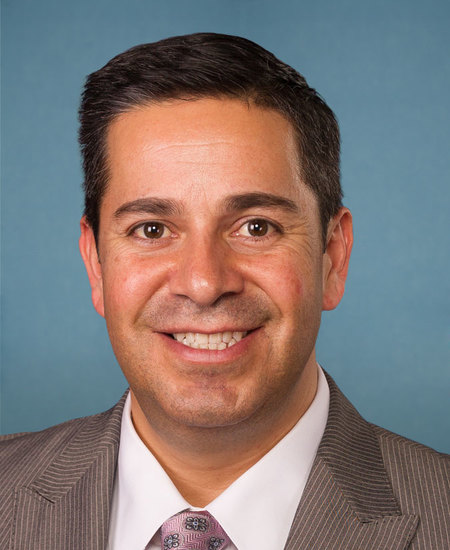
Sen. Ben Ray Luján
Sponsored bills
Maddy summaryThe SAFE Lending Act of 2025 aims to protect consumers from abusive lending practices in small-dollar credit transactions. It prohibits unauthorized remotely created checks (checks not created by the consumer's bank and without their signature), requires written consumer consent for such checks (which can be revoked anytime), and bans fees for overdrafts on prepaid accounts. The bill also establishes a registration requirement for small-dollar lenders (those offering credit under $5,000 with specific repayment terms) and restricts lead generation activities that collect sensitive financial information without directly providing credit. Additionally, it mandates a study on small-dollar credit availability and impact on Native American Tribal members.
Maddy summaryThis bill requires the Office of Special Counsel to increase transparency in enforcing the Hatch Act against noncareer federal employees (political appointees). It mandates annual reports to Congress detailing investigations and outcomes for these employees, including anonymized demographic data on race, gender, and other factors. The Special Counsel must also publicly explain decisions not to file complaints against noncareer employees, except for certain high-level appointees. These requirements aim to improve accountability in Hatch Act enforcement without altering the underlying prohibitions on political activities for federal workers.
This resolution recognizes Black History Month as an opportunity to reflect on U.S. history and to commemorate the contributions of African Americans. It calls for the United States to (1) honor the contribution of pioneers who helped to ensure its legacy; and (2) move forward as a nation "indivisible, with liberty and justice for all."
Maddy summaryThis bill creates a streamlined process for out-of-state healthcare providers to enroll in Medicaid or CHIP (Children's Health Insurance Program) in a state. It directly affects children under 21 enrolled in these programs and healthcare providers located in other states who already meet low fraud risk standards. The key provision requires states to adopt a simplified enrollment process using only basic provider information (like name and National Provider Identifier), granting eligible providers a 5-year enrollment period without repeated screening. This reduces administrative barriers for providers serving out-of-state children under 21 who qualify for Medicaid or CHIP coverage.
Maddy summaryThis bill extends a Medicaid payment floor ensuring primary care services (like check-ups and vaccinations) are paid at no less than 100% of Medicare rates for children. It directly affects Medicaid-eligible children by expanding access to care from a broader range of providers, including pediatricians, family doctors, nurse practitioners, certified nurse-midwives, and rural health clinics. Key provisions require managed care plans to meet these payment standards and mandate a study tracking enrollment changes, provider participation, and payment rates across states. The study will compare Medicaid payment rates to Medicare benchmarks and analyze state-level variations over time.
Maddy summaryS 703 (CATCH Fentanyl Act) establishes pilot projects at U.S. border ports to test non-intrusive inspection technologies - such as AI, machine learning, and quantum sensing - to improve detection of contraband, drugs, and threats in cargo and vehicles. The bill requires testing at least five technology types from specified categories, prioritizing those that enhance detection accuracy, reduce wait times, integrate with existing systems, and demonstrate cost-effectiveness. It mandates reports analyzing pilot results, privacy safeguards for data collected during inspections, and recommendations for nationwide implementation, with no new funding authorized. The legislation directly affects U.S. Customs and Border Protection (CBP) at land border ports and aims to modernize inspection processes without altering existing legal frameworks.
Maddy summaryS 726, titled "Ethan's Law," requires gun owners to store firearms securely in homes where minors (under 18) or individuals ineligible to own guns (per federal/state law) reside. It makes unsecured storage unlawful if a person "knows or reasonably should know" access is possible, with exceptions for gun safes, secure locations, or carrying firearms on one's person. Violations incur $500 fines per offense, and enhanced penalties apply if injury or death occurs. The bill also creates a federal grant program to support states with similar secure-storage laws and states that non-compliance constitutes negligence. This law directly affects households with minors or prohibited individuals, aiming to reduce accidental shootings, youth access, and firearm thefts.
Maddy summarySRES 89 is a symbolic Senate resolution designating February 15-22, 2025, as "National FFA Week." It recognizes the National FFA Organization’s role in developing student leadership through agricultural education and celebrates two milestones: the 90th anniversary of New Farmers of America (a historically Black agricultural youth group) and the 75th anniversary of the Federal charter for Future Farmers of America (signed by President Truman in 1950). The resolution does not create new laws or obligations but formally expresses congressional support for these observances. It affects no specific group or policy, serving solely as a ceremonial acknowledgment.
Maddy summaryThe Regional Leadership in Wildland Fire Research Act of 2025 establishes seven regional research centers at colleges and universities across specific U.S. regions (Alaska, California, Northern Rockies, Pacific Northwest, Pacific Islands, Southeast, and Southwest) to advance wildland fire research. These centers will coordinate with federal fire management agencies, develop predictive tools for fire behavior and smoke impact, and create open data-sharing protocols following FAIR principles (findability, accessibility, interoperability, reusability). The law authorizes $60 million to $64 million annually for the centers from 2026-2030, plus $1 million yearly for a National Center Coordination Board that oversees research priorities and avoids duplication. It requires annual reports to Congress on research progress and establishes advisory boards with representation from tribal organizations, state agencies, and fire management professionals. This law directly affects land-grant universities, federal fire management agencies, Tribal organizations, and state wildfire management entities.