

Maddy summaryThe Tariff Transparency Act of 2025 requires the U.S. International Trade Commission to investigate and report on the economic impacts of tariffs imposed on imports from Mexico and Canada, including the 25% duties on general goods and 10% duties on Canadian energy imports. The report must assess how these tariffs affected consumer prices for everyday items like food, energy, medical goods, and vehicles, as well as the consequences of retaliatory tariffs from Mexico and Canada on U.S. consumers, farmers, and small businesses. It also evaluates how ongoing tariff uncertainty impacts business investment, job creation, and operations across key sectors like manufacturing and agriculture. The Commission must submit this detailed report to Congress within one year of the bill’s enactment, excluding confidential business information.
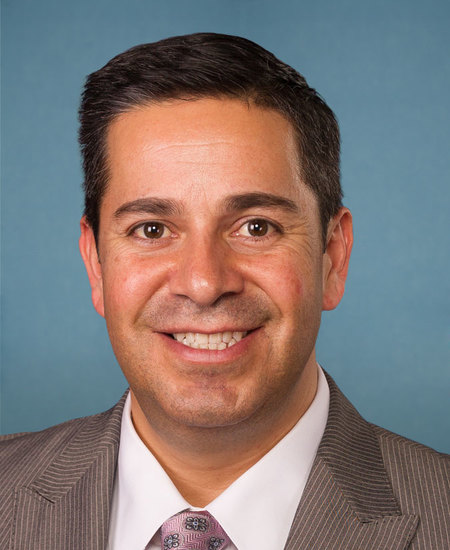
Sen. Ben Ray Luján
Sponsored bills
Maddy summaryS 957, the Honor Our Living Donors Act, amends federal law to protect living organ donors by requiring reimbursement programs to ignore the income of the organ recipient when calculating donor payments. The bill specifically prohibits grant programs from considering the recipient's income when reimbursing donors for eligible costs, ensuring donors aren't disadvantaged based on who receives the organ. It also mandates an annual report by the Secretary of Health and Human Services by December 31 each year, detailing whether funding covered all donor expenses and estimating shortfalls. This bill directly affects living organ donors participating in federal grant programs and the agencies administering those programs.
Maddy summaryThe Tech to Save Moms Act expands access to telehealth for pregnant and postpartum individuals in underserved communities by allowing remote screening and management of pregnancy complications through digital tools. It authorizes $6 million annually (2026-2030) for grants to train maternal health providers on reducing racial disparities, using telehealth during emergencies, and addressing social health risks. The grants prioritize health professional shortage areas, rural communities, and populations with high maternal mortality rates, requiring grantees to evaluate outcomes and develop best practices. The bill also mandates a study on AI and monitoring devices to address racial biases in maternal health technology.
Maddy summaryThe Space National Guard Establishment Act of 2025 creates a Space National Guard as a reserve component of the Space Force, composed exclusively of existing units from seven states: Alaska, California, Colorado, Florida, Hawaii, New York, and Ohio. It transfers specific Air National Guard units (like the 213th Space Warning Squadron in Alaska and the 137th Space Warning Squadron in Colorado) to the new Space National Guard without adding new personnel or facilities. The bill mandates that the Space National Guard must operate within existing military infrastructure, prohibiting new construction or modifications to accommodate it. It also amends military law to formally define the Space National Guard and its role within the Space Force structure.
Maddy summaryThe Downpayment Toward Equity Act of 2025 would create a federal program providing downpayment assistance to first-generation homebuyers purchasing primary residences. The program would allocate $100 billion to states and eligible organizations to cover downpayment, closing costs, and mortgage rate reductions, with assistance capped at $20,000 or 10% of the home's purchase price. To qualify, applicants must be first-generation homebuyers (neither they nor their parents previously owned a home), meet income limits, and complete homeownership counseling. The program includes reporting requirements to track demographic data and ensure fair housing outcomes, with funds available until expended.
Maddy summaryThis Senate resolution (SRES 122) recognizes the contributions of AmeriCorps members, alumni, and AmeriCorps Seniors volunteers to communities across the United States. It formally acknowledges their service - over 200,000 volunteers annually at 40,000 locations - through educational support, disaster response, environmental protection, and community strengthening. The resolution, passed during AmeriCorps Week (March 9-15, 2025), encourages public appreciation and volunteerism but does not create new policies, funding, or legal obligations. It is a symbolic gesture of Senate recognition, not a legislative change.
Maddy summaryThis bill requires major websites and online services (excluding small businesses) to provide a simplified, accessible summary of their terms of service within 360 days. The summary must clearly explain what sensitive data they collect (e.g., health, location, financial info), user rights (like arbitration waivers), data breach history, and estimated reading time, and must be placed prominently on their sites. It also mandates a graphic diagram showing how user data is shared with third parties and an interactive format for full terms. Violations can be enforced by the FTC or state attorneys general acting on behalf of residents.
Maddy summaryS 904 expands disaster assistance for livestock producers by broadening eligibility to include ranchers with federal permits for grazing on public lands or leases for state/local land. It allows permanent infrastructure like water wells and pipelines to qualify for emergency payments during droughts, replacing temporary fixes. The bill streamlines applications by waiving public comment periods and accepting existing environmental reviews during drought emergencies. It also creates an interagency working group to improve drought monitoring data used for assistance decisions. These changes directly affect ranchers and farmers managing livestock on public or leased lands during drought conditions.
Maddy summaryThis bill, the Richard L. Trumka Protecting the Right to Organize Act of 2025, aims to strengthen workers' rights to organize and bargain collectively. It would make it harder for employers to classify workers as independent contractors by changing the definition of "employee," restricts employers from threatening to permanently replace workers who strike, and prohibits them from requiring employees to give up their right to pursue class or collective claims. The bill also changes election procedures to make it easier for workers to form unions, requires employers to post notices about workers' rights in conspicuous locations, and increases penalties for unfair labor practices. It directly affects employers and workers across various industries by altering the landscape of labor organizing and collective bargaining.
Maddy summaryThis bill expands tax exclusions for homeowners by adding water conservation, storm water management, and wastewater management rebates to the existing tax-free treatment for energy efficiency subsidies. It directly affects residents receiving rebates from public utilities, local governments, or storm water providers for qualifying installations like low-flow fixtures, rain barrels, or septic system upgrades (with wastewater rebates limited to principal residences). Key provisions redefine "water conservation measure" and "storm water management measure" to clarify eligible upgrades and explicitly include water utilities and storm water providers under tax-exclusion rules. The changes apply to rebates received after December 31, 2021, without altering tax treatment for prior rebates.