

Maddy summaryThe Cattle Price Discovery and Transparency Act of 2023 requires large cattle packers to report detailed information about their cattle purchases and contracts to improve market transparency. The bill establishes mandatory minimums requiring packers to purchase a certain percentage of cattle through transparent pricing mechanisms like negotiated deals, rather than private contracts. Packers must also report daily slaughter schedules and carcass weights more frequently, and create a public library of all cattle purchase contracts. These requirements directly affect major cattle packers and aim to give cattle producers more information about market prices.
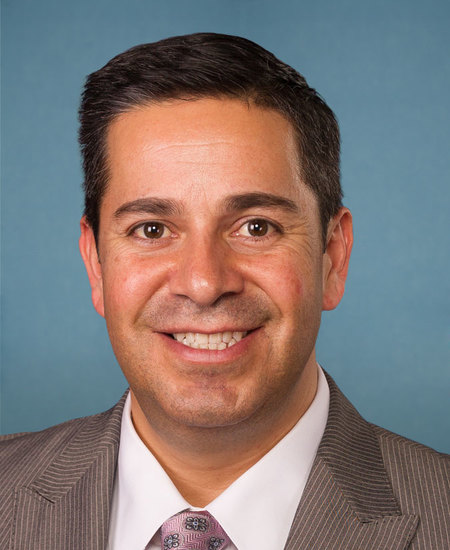
Sen. Ben Ray Luján
Sponsored bills
Maddy summaryS 260, the Promoting Access to Diabetic Shoes Act, amends Medicare rules to allow nurse practitioners and physician assistants to certify coverage for specialized diabetic shoes for beneficiaries with diabetes. This change directly affects Medicare patients requiring diabetic footwear by expanding the healthcare providers authorized to meet documentation requirements. The key provision updates Section 1861(s)(12) of the Social Security Act to include these providers where "physician" is currently listed. This simplifies access to covered footwear without altering Medicare benefits or costs.
Maddy summaryThis bill amends the Family and Medical Leave Act to create a new eligibility standard for education support professionals (ESP) in public schools, such as paraeducators, secretaries, custodians, and food service workers. It allows these employees to qualify for leave if they’ve worked at least 60% of their expected monthly hours from the previous school year, rather than requiring full-time hours. Employers must maintain records of each employee’s expected monthly hours for review by the Secretary. The change directly affects school support staff in public K-12 schools and institutions of higher education funded by state taxpayers.
Maddy summaryThis bill improves two federal conservation programs for agricultural producers and forest landowners. It expands eligible emergency conservation work to include repairs to farmland structures beyond fencing, and allows farmers to receive upfront payments (75% for replacements, 50% for repairs) before completing work. For forest landowners, it adds an option for advance payments (up to 75% of costs) for emergency forest restoration, requiring repayment if funds aren't used within 60 days. The bill specifically clarifies that wildfire damage qualifies for payments even if the fire spread naturally or was caused by the Federal Government. These changes directly affect farmers and forest landowners facing disaster-related conservation needs.
Maddy summaryThe JOBS Act of 2023 expands Federal Pell Grant eligibility to short-term job training programs that provide 150-600 clock hours (8-15 weeks) of instruction aligned with in-demand local industries. It directly affects students enrolled in eligible career-focused programs at institutions of higher education, requiring programs to offer industry-recognized credentials and meet validation standards from employers or sector partnerships. Key provisions include mandatory industry validation of program quality, institutional credit articulation for noncredit programs, and lowering the minimum Pell Grant percentage from 10% to 5% for qualifying students. The bill ensures these programs count toward students’ total Pell Grant eligibility period while maintaining standard Pell Grant terms and conditions.
Maddy summaryS 173, "Ethan's Law," requires firearm owners to store guns securely in homes where minors (under 18) or individuals ineligible to own firearms might access them. It amends federal law to make non-compliant storage an offense punishable by a $500 fine per violation, with enhanced penalties (up to 5 years in prison) if injury or death results. The bill creates a federal grant program to support states with laws matching its secure storage requirements, offering funding incentives for states that enact similar measures. It directly affects homeowners with firearms in households containing minors or prohibited persons, aiming to reduce accidental child access and firearm-related injuries.
Maddy summaryThe PART Act (S 154) requires all new vehicles to have catalytic converters marked with unique VINs using durable, high-visibility stamping (via die/pin stamping and theft-deterrent paint) within 180 days of enactment. It creates a $7 million federal grant program to help dealers, repair shops, law enforcement, and nonprofits mark converters at no cost to vehicle owners, prioritizing high-theft areas. The bill also mandates sellers of catalytic converters to retain buyer identification and vehicle details for two years and adds criminal penalties (up to 5 years in prison) for stealing or trafficking in converters. Directly affecting manufacturers, dealers, repair shops, and sellers, the law targets converter theft through standardized marking, record-keeping, and new criminal offenses.
Maddy summaryThe Rural Internet Improvement Act of 2023 updates the USDA's ReConnect Program to expand rural broadband access. It raises minimum broadband speed requirements from 10/1 Mbps to 25/3 Mbps for new projects (later increasing to 100/20 Mbps for future grants), directly affecting rural broadband providers applying for USDA grants, loans, or loan guarantees. Key provisions simplify applications by reducing required data, allowing bond ratings instead of full financial documentation, and preventing duplication of existing broadband infrastructure projects. The bill also requires annual public reports on project distribution, locations served, and service levels to ensure transparency.
Maddy summaryThis bill, the FAIR Act (S 124), increases federal employee pay raises for calendar year 2024. It mandates a 4.7% base pay increase for all federal employees covered by statutory pay systems (most positions) and prevailing rate systems (based on local wages), effective January 2024. It also sets a 4.0% increase for locality-based pay adjustments under existing law. The bill directly affects all federal civilian employees whose pay is determined by these specific statutory systems.
Maddy summaryThe Better Care Better Jobs Act (S 100) aims to improve access to home and community-based services (HCBS) for Medicaid beneficiaries by providing federal funding to states for developing improvement plans and implementing an HCBS Infrastructure Improvement Program. The bill offers enhanced federal funding (a 10 percentage point increase in Medicaid matching rates) to states that meet requirements including maintaining or expanding HCBS access, improving direct care worker wages and training, and implementing quality measurement systems. States must develop detailed plans assessing current HCBS availability, workforce conditions, and barriers to access, and then report annually on progress toward specific benchmarks. The bill also makes permanent certain Medicaid provisions related to spousal impoverishment protection and extends the Money Follows the Person program, directly affecting Medicaid beneficiaries and direct care workers.