

Maddy summaryThis resolution designates February 3-7, 2025, as "National School Counseling Week" to recognize the role of school counselors. It encourages nationwide observance through ceremonies and activities highlighting counselors' work in supporting students' academic, social, emotional, and career development. The bill does not create new policies or funding but aims to increase public awareness of counselors' contributions to school communities. It directly affects school counselors, students, and schools by promoting recognition of their vital support services.
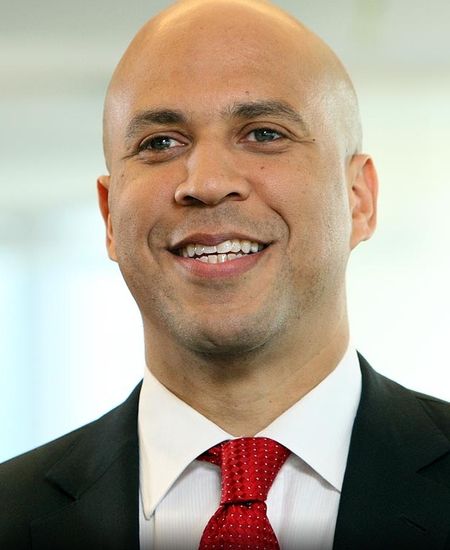
Sen. Cory A. Booker
Sponsored bills
Maddy summaryThis bill authorizes the posthumous presentation of a Congressional Gold Medal to Fred Korematsu, a Japanese American civil rights advocate who challenged the WWII internment of Japanese Americans. The medal, designed by the Treasury Secretary and displayed at the Smithsonian Institution, commemorates his lifelong fight against racial discrimination and his role in exposing government deception regarding the internment. The bill creates no new legal obligations or policy changes - it solely establishes a symbolic honor recognizing Korematsu's legacy of justice and equality.
Nancy Gardner Sewell Medicare Multi-Cancer Early Detection Screening Coverage Act This bill allows, beginning in 2028, for Medicare coverage and payment for multi-cancer early detection screening tests that are approved by the Food and Drug Administration and that are used to screen for cancer across many cancer types, if the Centers for Medicare & Medicaid Services determines such coverage is appropriate. Coverage is limited to those under a certain age (age 68 in 2028, increased by one year every year thereafter) and to one test every 11 months.
Maddy summaryThis bill designates an annual "African Diaspora Heritage Month" to honor the contributions of the African diaspora community in the United States, which includes approximately 50 million people. It requires the President to issue a yearly proclamation designating a month for this observance and encourages state and local governments, schools, and communities to hold related programs and activities. The bill does not create new funding or alter existing policies, but formally establishes an annual recognition period to highlight the community's cultural, economic, and historical significance.
Maddy summaryThis bill mandates increased federal funding for two key education programs. It requires annual appropriations for Title I of the Elementary and Secondary Education Act (which supports schools serving disadvantaged students) and the Individuals with Disabilities Education Act (IDEA, which funds special education) starting in 2026. The bill sets specific, rising annual funding levels - based on a 2025 baseline and national per-student spending - to gradually reach 40% of the national average per-pupil expenditure for IDEA by 2035. These funds directly affect school districts receiving Title I support and those providing special education services under IDEA. The funding is made mandatory, not discretionary, ensuring consistent annual support for these programs.
Maddy summaryThe American Music Fairness Act (S 326) requires terrestrial radio stations to pay royalties for public performances of music, a change from the current system where they do not pay. It establishes tiered royalty rates for small broadcasters: $10 annually for stations with under $100,000 in revenue, $100 for public broadcasters with $100,000-$1.5 million revenue, and $500 for other stations in that revenue range. The bill explicitly protects songwriters’ existing royalty rights and requires the Copyright Royalty Judges to consider how radio promotion affects music sales when setting rates. These changes amend copyright law to treat terrestrial radio similarly to internet streaming services for royalty purposes.
Maddy summaryThe Mentoring to Succeed Act of 2025 creates a federal grant program to fund structured mentoring initiatives for eligible youth. It authorizes competitive grants to community-based organizations and partnerships that provide mentoring programs designed to help youth develop cognitive and social-emotional skills, prepare for high school success, and transition to postsecondary education or employment. Programs must serve youth from underserved communities, include trauma-informed mentor training, coordinate with local schools and employers, and report annually on outcomes like academic achievement, employment, and social-emotional development. The bill also requires a study on effective mentoring practices to inform future program design.
Maddy summaryThis bill establishes a federal grant program to fund the co-location of affordable housing and licensed child care facilities, primarily benefiting low-income families in areas with insufficient child care access ("child care deserts"). It provides up to $10 million per grant to eligible entities (like housing developers, community organizations, or tribal entities) for designing, building, or retrofitting facilities where housing residents can access on-site or nearby child care. Priority is given to projects in low-income, rural, or underserved communities that serve very low-income families or partner with child care providers certified for federal assistance. The program requires grantees to avoid evicting residents, engage housing residents in planning, and use funds strictly for facility-related activities, with annual reporting on outcomes like child care slots created and resident demographics.
Maddy summaryThis Senate resolution (SRES 42) is a symbolic expression of disapproval by the Senate for pardons granted to individuals convicted of assaulting Capitol Police officers. It does not change any laws or affect legal outcomes but formally condemns those pardons as inconsistent with the Senate's position. The resolution directly addresses the Senate's stance toward those who received pardons for violent acts against law enforcement during the January 6, 2021, Capitol breach.
Maddy summaryS 280, the Global Health, Empowerment and Rights Act, removes barriers for foreign nongovernmental organizations (NGOs) seeking U.S. aid under the Foreign Assistance Act. It directly affects foreign NGOs providing health services (like counseling) with non-U.S. funds, ensuring they cannot be denied aid solely for offering such services if they comply with local laws and U.S. federal standards. The bill prohibits denying aid based on health services provided with non-U.S. funds and stops applying stricter rules on non-U.S. funds for advocacy to foreign NGOs compared to U.S. NGOs. This changes how the U.S. government evaluates eligibility for aid, making the process more consistent for foreign health-focused organizations.