

Maddy summaryThis Senate resolution (SRES 40) commemorates January 27, 2025 - the 80th anniversary of the liberation of Auschwitz by Allied Forces - and designates it as International Holocaust Remembrance Day. It calls on all U.S. citizens to remember the 1.1 million victims murdered at Auschwitz during the Holocaust, honor Holocaust survivors, and commit to combating antisemitism and promoting tolerance. As a symbolic resolution, it does not create new laws or directly affect any group but formally recognizes historical events and urges continued education about the Holocaust's lessons.
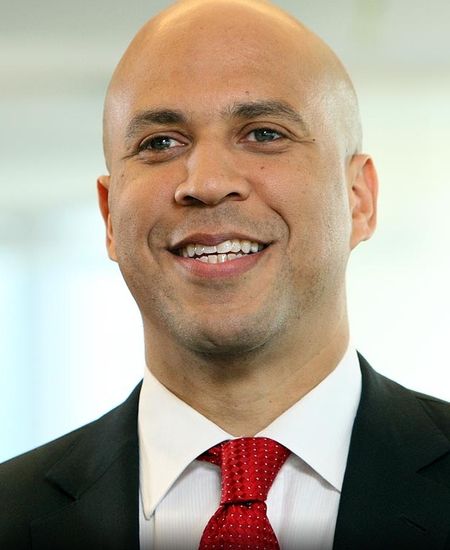
Sen. Cory A. Booker
Sponsored bills
Maddy summaryThe FAIR Act of 2025 would reform civil forfeiture laws by requiring all property forfeitures to proceed through judicial process rather than administrative decisions, eliminating nonjudicial forfeitures entirely. The bill would change the burden of proof required for forfeiture from "preponderance of evidence" to "clear and convincing evidence" in most cases, and would reduce the government's timeframe to identify property owners from 60 to 7 days after seizure. It would also require courts to consider factors like the seriousness of the offense, the property's connection to the crime, and hardship to the owner when determining forfeiture. This legislation would apply to all pending and future civil forfeiture cases starting from its enactment date.
Maddy summarySRES 36 is a non-binding Senate resolution expressing the Senate's support for the United States working with states, cities, Tribal nations, businesses, and institutions to achieve the goals of the Paris Agreement on climate change. It urges federal, state, and local policies to reduce emissions and align with the Paris Agreement's objectives. The resolution highlights existing climate actions by states, cities, and businesses (like renewable energy commitments and the Inflation Reduction Act) but does not create new laws or funding. It serves as a symbolic statement of bipartisan support for climate action, noting the U.S. has submitted updated emissions targets to meet Paris goals.
Maddy summaryThis bill makes permanent Medicare coverage for telehealth-based cardiopulmonary rehabilitation services (including cardiac, intensive cardiac, and pulmonary rehab) provided in patients' homes. It removes geographic restrictions for these services after January 1, 2026, allowing Medicare to cover home-based telehealth visits for eligible patients. The law requires the Health Secretary to establish standards for home-based rehab programs by 2026. It directly affects Medicare beneficiaries needing ongoing heart or lung rehabilitation, ensuring they can access these services remotely without location-based limitations. The bill codifies pandemic-era flexibilities into permanent policy for these specific healthcare programs.
Maddy summaryThis resolution designates January 23, 2025, as "Maternal Health Awareness Day" to highlight maternal health challenges in the U.S. It focuses on raising public awareness about maternal mortality (with statistics showing 800 annual pregnancy-related deaths) and disparities (such as Black women facing nearly 3x higher mortality rates than White women). The resolution encourages federal, state, tribal, and local entities to take action on improving maternal care and reducing inequities, though it does not create new laws or funding. As a symbolic designation, it has no binding effect but aims to promote existing efforts like maternal mortality reviews and community-based care models.
Maddy summarySRES 33 is a symbolic Senate resolution designating January as "Muslim-American Heritage Month" to honor the contributions of Muslim Americans to U.S. society. It formally supports this designation, recognizes Muslim Americans' historical and contemporary roles in fields like business, science, sports, and public service, and urges the public to observe the month with educational activities. The resolution does not create new laws or funding but serves as a ceremonial acknowledgment of Muslim Americans' diverse heritage and experiences. It directly affects Muslim Americans by affirming their cultural presence in the United States, though it has no legal or financial impact. The Senate passed this resolution to promote awareness of their contributions, including figures like Nobel laureates, athletes, and military veterans.
Maddy summaryThe Neighbors Not Enemies Act repeals the Alien Enemies Act, a 19th-century law that allowed the president to detain or deport non-citizens during wartime. This removes a historical legal authority that targeted non-citizens based on nationality during declared wars. The repeal affects how the government could act against non-citizens in wartime scenarios but does not change current immigration or detention policies in peacetime. The bill makes no other policy changes beyond this specific repeal.
Maddy summaryThis Senate resolution (SRES 28) honors women who have served in combat roles in the U.S. Armed Forces. It recognizes their contributions, bravery, and sacrifices, specifically highlighting their service since 9/11 - including over 3,000 women earning combat badges - and acknowledges the Department of Defense opening all military roles to women in 2015. The resolution has no binding policy effect; it is a symbolic gesture to celebrate their service and inspire future generations.
Maddy summaryThis bill would strengthen antitrust enforcement by revising the standard for evaluating mergers to consider more than just price increases, including quality, choice, innovation, and entry barriers. It establishes a new Office of Competition Advocate within the Federal Trade Commission to monitor competition and recommend enforcement actions, and it allows the Department of Justice and Federal Trade Commission to seek civil monetary penalties for antitrust violations. The bill also creates stronger whistleblower protections for employees reporting anticompetitive conduct and requires companies to report on the competitive effects of acquisitions. These changes aim to address growing market concentration and anticompetitive practices by large corporations.
Maddy summaryS 103, the "Extend the TikTok Deadline Act," extends the deadline for TikTok to address national security concerns under existing law. It amends the Protecting Americans from Foreign Adversary Controlled Applications Act by changing the required timeframe from 270 days to 540 days. This directly affects TikTok, giving the company an additional six months to comply with the law’s requirements. The bill makes no new policy changes but only delays the implementation timeline for an existing provision.