

Maddy summaryS 391, the Access to Counsel Act of 2025, requires U.S. Customs and Border Protection to provide certain immigrants access to legal counsel during immigration inspections at ports of entry or during deferred inspection. It directly affects individuals including lawful permanent residents returning from travel, visa holders, refugees, asylees, and parolees. The bill mandates that immigration officers ensure a meaningful opportunity for counsel consultation within one hour of inspection starting, including phone access, and allows counsel to present evidence to officers. Special rules require lawful permanent residents to receive legal advice before signing a form abandoning their status, unless they voluntarily waive this right in writing. The law takes effect 180 days after enactment and does not override existing rights to counsel under other immigration laws.
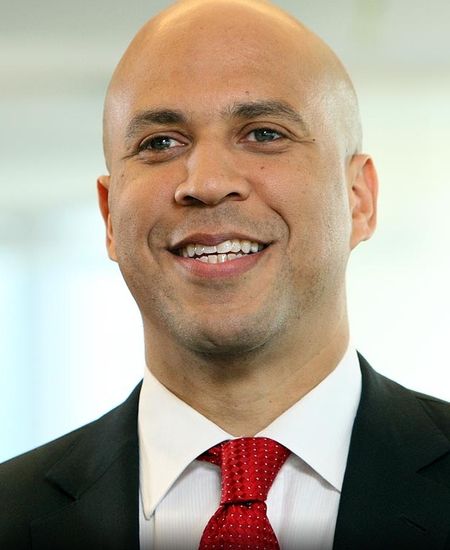
Sen. Cory A. Booker
Sponsored bills
Small Business Disaster Damage Fairness Act of 2025 This bill increases from $14,000 to $50,000 the threshold loan amount over which the Small Business Administration (SBA) may require collateral for a disaster loan. The Government Accountability Office must report on the performance, including the default rate, of such loans. Additionally, the SBA must (1) distinguish between rural and urban communities in the outreach and marketing for disaster loans, and (2) incorporate actions to mitigate challenges encountered by rural communities in accessing such loans.
Maddy summaryThe NO BAN Act (S.398) amends U.S. immigration law to prohibit discrimination based on national origin, religion, or other protected categories when processing nonimmigrant visas or immigration benefits. It explicitly bans entry restrictions that target specific nationalities or religions, requiring the President to justify any such restrictions with specific evidence, narrow tailoring, and congressional notification under Section 212(f). The bill mandates detailed public reporting on visa denials, waivers, and refugee admissions for affected countries, and requires ongoing 30-day updates if entry restrictions are implemented. This directly affects nonimmigrant visa applicants, refugees, and commercial airlines subject to enforcement provisions.
Maddy summarySRES 51 is a symbolic Senate resolution expressing that the United States Agency for International Development (USAID) is essential for advancing U.S. national security. It states USAID helps mitigate foreign threats before they reach U.S. shores, promotes global stability, addresses the root causes of migration and extremism, and counters China's influence. The resolution does not change laws or funding - it only affirms the Senate’s view on USAID’s role. It was introduced by 38 Senators and refers to existing laws requiring congressional input for USAID changes.
Maddy summaryThis bill authorizes Congress to award Muhammad Ali a Congressional Gold Medal in recognition of his life and legacy. The medal, designed by the Treasury Secretary, will be presented by congressional leaders and given to Ali's widow, Lonnie Ali, following his death. The legislation is purely ceremonial, with no new policy or funding impacts beyond the medal's creation and presentation.
Maddy summaryThe Stop Arming Cartels Act of 2025 bans the civilian sale, transfer, or possession of rifles capable of firing .50 caliber ammunition, directly affecting individuals and businesses handling these weapons. It includes exceptions for government use and rifles owned before the law's enactment, and requires owners to register such rifles with the federal registry within 12 months without fees. The bill also adds new liability for sellers who knowingly transfer these rifles to foreign narcotics traffickers or individuals designated under the Foreign Narcotics Kingpin Act. Additionally, it expands firearm sales reporting to include rifles and creates a new federal prohibition on firearm transfers to designated foreign traffickers.
Maddy summaryThis bill amends the Higher Education Act to expand the Federal Work-Study program, allowing colleges to use funds for student-led after-school programs at public K-12 schools. It directly affects colleges participating in the work-study program and public elementary/secondary schools that partner with them. Key provisions require colleges to prioritize schools in low-income communities, cover student compensation (including training/travel) for these after-school activities, and allow federal funding to exceed 75% of costs. The Secretary must establish a registration process for schools within 180 days of enactment.
Maddy summaryS 375, the Transition-to-Success Mentoring Act, creates a federal program to establish school-based mentoring for at-risk middle school students transitioning to high school. The bill requires grantees to assign each eligible student a "success coach" who develops a personalized plan with the student, parents, and school staff, including academic, college, and career goals. Success coaches must meet monthly with students and quarterly with parents/teachers to track progress, and programs must prioritize schools in high-poverty, high-crime, or rural areas. Grantees must report annually on student outcomes like academic achievement, attendance, and postsecondary enrollment, with the Secretary submitting final reports to Congress after five years. The program targets students in middle schools served by eligible entities, such as school districts or nonprofit partnerships.
Maddy summaryThis bill allows the USDA or FDA to request microbial sampling at large livestock facilities (concentrated animal feeding operations) during foodborne illness investigations. Facilities must provide reasonable access for sampling animals, water, plants, and the environment to help identify outbreak causes, but can set practical conditions like timing. It does not change existing food safety rules for meat, poultry, or egg products under other federal laws. The goal is to improve outbreak investigations through coordinated data sharing with public health agencies.
Maddy summaryThis resolution designates January 30, 2025, as "Fred Korematsu Day of Civil Liberties and the Constitution" to honor civil rights activist Fred Korematsu. It commemorates his lifelong fight against racial discrimination, including his legal challenge to the WWII internment of Japanese Americans and his warnings against post-9/11 civil liberties violations. The resolution has no binding effect - it is a symbolic recognition encouraging reflection on protecting constitutional rights during national security crises. It does not create new policies or directly affect any individuals or groups. Several states already observe this day, and the Senate resolution aligns with their commemorative efforts.