

Maddy summaryThe Social Security Expansion Act (S 770) increases benefits for Social Security recipients by raising the first bend point percentage from 90% to 95% and adding an 18% increase for those eligible after 2025. It establishes a new Consumer Price Index for Elderly Consumers (CPI-E) to calculate cost-of-living adjustments and increases minimum benefits for lifetime low earners based on years worked, with benefits ranging from 16.25% to 125% of poverty guidelines. The bill also extends benefit eligibility for children who are full-time students until age 22 (instead of 19) and introduces new taxes on high earners, including a payroll tax on income between the contribution base and $250,000, a tax on self-employment income above $250,000, and raises the investment gains tax from 3.8% to 16.2%. The legislation consolidates Social Security's trust funds into a single Social Security Trust Fund.
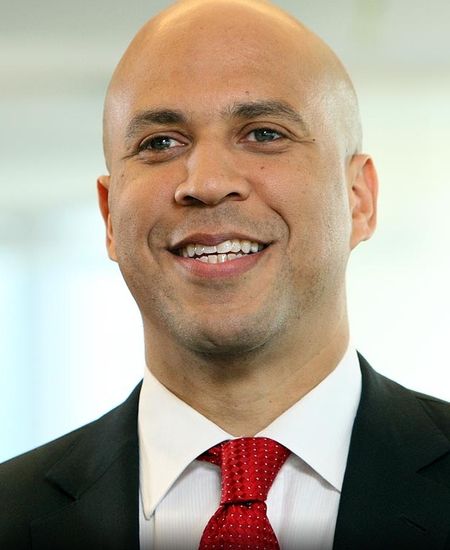
Sen. Cory A. Booker
Sponsored bills
Maddy summaryThe SAFE Lending Act of 2025 aims to protect consumers from abusive lending practices in small-dollar credit transactions. It prohibits unauthorized remotely created checks (checks not created by the consumer's bank and without their signature), requires written consumer consent for such checks (which can be revoked anytime), and bans fees for overdrafts on prepaid accounts. The bill also establishes a registration requirement for small-dollar lenders (those offering credit under $5,000 with specific repayment terms) and restricts lead generation activities that collect sensitive financial information without directly providing credit. Additionally, it mandates a study on small-dollar credit availability and impact on Native American Tribal members.
Maddy summaryS 786, the Public Health Funding Restoration Act, restores annual funding for the Prevention and Public Health Fund under the Affordable Care Act to $2 billion starting in fiscal year 2026. This bill directly affects federal health programs at the Department of Health and Human Services (HHS), as well as state, local, tribal, and territorial health departments. The key provision amends the Affordable Care Act to set this specific funding level, reversing prior cuts and ensuring resources for evidence-based prevention programs like immunizations, tobacco cessation, chronic disease prevention, and pandemic preparedness. The restored funding aims to support community health initiatives that have demonstrated cost savings - such as $16.50 saved per $1 spent on childhood vaccines - while strengthening public health infrastructure nationwide.
Maddy summaryS 797, the Family Building FEHB Fairness Act, adds fertility treatment benefits to the Federal Employees Health Benefits (FEHB) program. This bill directly affects federal employees and their families enrolled in FEHB plans by requiring these plans to cover specified fertility treatments, including in vitro fertilization, embryo preservation, genetic testing, and related medications. Key provisions define "fertility treatment" to include procedures like artificial insemination, assisted reproductive technology, and gamete donation, as determined by the Office of Personnel Management and Health and Human Services. The change takes effect one year after the bill is enacted, making these services a standard covered benefit under FEHB.
Maddy summaryThis bill establishes a new Office within the U.S. State Department to monitor and combat Islamophobia abroad, led by a Special Envoy appointed by the Secretary of State. It requires the State Department to include specific, detailed assessments of Islamophobic acts in three annual reports: the Country Reports on Human Rights Practices, the Foreign Assistance Act report, and the International Religious Freedom report. The reports must describe incidents like violence against Muslims or mosques, hate propaganda, government responses, and efforts to promote religious tolerance in foreign countries. This policy change directly affects how the U.S. government documents and tracks Islamophobia internationally, without altering existing laws or imposing new sanctions.
Maddy summarySJRES 10, introduced by Senators Kaine and Heinrich, would terminate the national emergency related to energy declared by the President on January 20, 2025, under Executive Order 14156. This resolution ends the emergency as authorized by the National Emergencies Act, removing the special legal authorities granted during the emergency period. Upon passage, federal agencies would no longer operate under the emergency framework for energy-related policies, reverting to standard regulatory processes.
This resolution recognizes Black History Month as an opportunity to reflect on U.S. history and to commemorate the contributions of African Americans. It calls for the United States to (1) honor the contribution of pioneers who helped to ensure its legacy; and (2) move forward as a nation "indivisible, with liberty and justice for all."
Maddy summaryThis resolution expresses the Senate's disapproval of the U.S. delegation's February 24, 2025, vote at the United Nations General Assembly against a Ukraine peace resolution (A/ES-11/L.10). It condemns the vote as the first U.S. alignment with Russia on Ukraine since 2014, criticizing the refusal to identify Russia as an aggressor or demand its withdrawal from Ukraine. The resolution has no binding effect but formally urges future UN cooperation with Ukraine and allies while reaffirming support for Ukraine's sovereignty.
Maddy summaryThis bill increases funding and expands the scope of federal efforts to address sickle cell disease. It boosts annual funding for research and treatment programs from $4.455 million (2019-2023) to $8.205 million (2025-2029) and updates language to specifically include "prevention and treatment of complications" alongside disease treatment. The bill also modifies grant procedures to allow more flexible funding mechanisms for organizations working on sickle cell disease and related heritable blood disorders. It directly affects federal health agencies, researchers, and healthcare providers serving patients with sickle cell disease, focusing on concrete policy changes in funding and program scope.
Maddy summaryS 751, the CROWN Act of 2025, prohibits discrimination based on hair texture or style commonly associated with race or national origin. It directly protects people - particularly those of African descent - who wear natural or protective hairstyles like braids, locs, cornrows, twists, or Afros from discrimination in federally funded schools, workplaces, housing, and public accommodations. The law expands existing civil rights protections under the Civil Rights Act of 1964 and Fair Housing Act to explicitly cover hair-based discrimination, requiring that policies prohibiting such hairstyles be reviewed for discriminatory impact. Enforcement follows the same procedures as current civil rights laws, ensuring consistent application.