

Maddy summaryThis bill creates a streamlined process for out-of-state healthcare providers to enroll in Medicaid or CHIP (Children's Health Insurance Program) in a state. It directly affects children under 21 enrolled in these programs and healthcare providers located in other states who already meet low fraud risk standards. The key provision requires states to adopt a simplified enrollment process using only basic provider information (like name and National Provider Identifier), granting eligible providers a 5-year enrollment period without repeated screening. This reduces administrative barriers for providers serving out-of-state children under 21 who qualify for Medicaid or CHIP coverage.
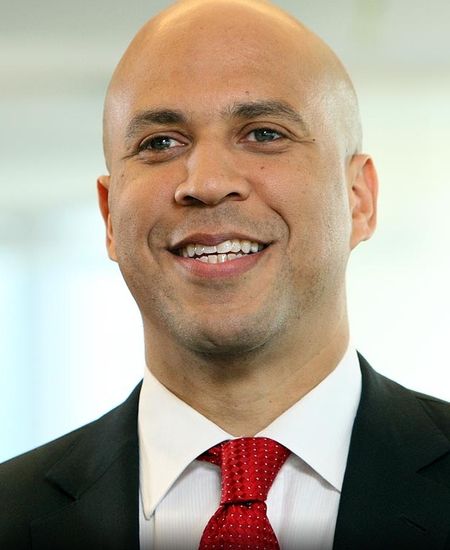
Sen. Cory A. Booker
Sponsored bills
Maddy summaryThis bill extends a Medicaid payment floor ensuring primary care services (like check-ups and vaccinations) are paid at no less than 100% of Medicare rates for children. It directly affects Medicaid-eligible children by expanding access to care from a broader range of providers, including pediatricians, family doctors, nurse practitioners, certified nurse-midwives, and rural health clinics. Key provisions require managed care plans to meet these payment standards and mandate a study tracking enrollment changes, provider participation, and payment rates across states. The study will compare Medicaid payment rates to Medicare benchmarks and analyze state-level variations over time.
Maddy summaryThis bill adjusts the World Trade Center (WTC) Health Program to expand access to mental health evaluations and correct funding mechanisms. It allows licensed mental health providers (not just physicians) to certify mental health conditions for WTC responders and survivors, and extends the timeframe to add new health conditions from 90 to 180 days. The bill also modifies how annual funding is calculated - using a 7% annual increase plus a population-based adjustment - to ensure long-term program sustainability through 2090. Additionally, it removes deceased individuals from enrollment counts to improve program accuracy and clarifies provider credentialing rules for the nationwide health network. These changes directly affect WTC responders and survivors seeking health coverage under the program.
Maddy summaryThis resolution (SRES 93) expresses the Senate's view that the National Institutes of Health (NIH) should not face funding disruptions or operational delays that violate existing law. It specifically highlights the importance of uninterrupted NIH work on research for diseases like cancer, Alzheimer’s, diabetes, and heart disease. The resolution emphasizes that NIH scientists and researchers are essential to medical progress and public health efforts. As a symbolic resolution, it does not change funding laws or create new policies - it solely states the Senate’s position on protecting NIH operations.
Maddy summarySRES 96 is a symbolic Senate resolution designating February 24-28, 2025, as "Public Schools Week" to honor public education. It does not create new laws, allocate funding, or directly affect any specific group - it is a non-binding recognition of public schools' role in U.S. communities. The resolution includes supportive statements about public education's importance but contains no policy mechanisms or requirements. This designation is intended to raise awareness and appreciation for public schools nationwide. As a procedural resolution, it has no legal effect beyond the symbolic recognition.
Maddy summaryThe Helping Heroes Act (S 701) establishes the Veteran Family Resource Program within the Department of Veterans Affairs to directly support veterans and their families - including caregivers and survivors - with basic needs like housing, childcare, and mental health. It requires the VA to appoint family coordinators at each Veterans Integrated Service Network within five years to help families navigate VA benefits and community resources, using evidence-based assessments to connect them to services addressing health, emotional support, and career readiness. The bill mandates annual surveys of disabled veterans and their families to identify unmet needs, particularly for children, and requires the VA to report program outcomes - including demographic data, service costs, and participant satisfaction - to Congress within two years. This focuses on improving family wellness through coordinated care, not on new funding or policy changes beyond existing VA structures.
Maddy summaryThe Empowering and Enforcing Environmental Justice Act of 2025 establishes a new Office of Environmental Justice within the Department of Justice to address environmental disparities in low-income, Tribal, and Indigenous communities. It creates a grant program to fund State, local, and Tribal governments for training staff, hiring personnel, and developing community engagement initiatives related to environmental enforcement. The Office will develop a 5-year strategy, coordinate federal and local enforcement efforts, and define "environmental justice" as ensuring equitable protection from environmental harms and access to a healthy environment for affected communities.
Maddy summaryThis bill creates a new Medicaid health home program specifically for people with sickle cell disease (SCD), beginning January 1, 2026. It requires states to provide dental and vision services to SCD patients enrolled in these health homes, regardless of whether they offer such services generally to other Medicaid beneficiaries. States must also report on care quality, access, and costs for SCD patients using these specialized health homes, and the federal government must publish best practices for implementing the program by June 2026. The bill directly affects Medicaid patients diagnosed with SCD and state Medicaid programs managing these specialized care services.
Maddy summaryThis bill extends the deadline for temporarily scheduling fentanyl-related substances under existing law, changing the date from March 31, 2025, to September 30, 2025. It directly affects federal agencies like the DEA, which use this temporary scheduling to regulate fentanyl analogues while awaiting permanent classification. The key provision is a simple date modification in the Emergency Scheduling Act, maintaining current enforcement authority without altering the substance of the scheduling rules. This extension ensures ongoing regulatory flexibility for fentanyl-related substances without creating new policy.
Maddy summaryS 726, titled "Ethan's Law," requires gun owners to store firearms securely in homes where minors (under 18) or individuals ineligible to own guns (per federal/state law) reside. It makes unsecured storage unlawful if a person "knows or reasonably should know" access is possible, with exceptions for gun safes, secure locations, or carrying firearms on one's person. Violations incur $500 fines per offense, and enhanced penalties apply if injury or death occurs. The bill also creates a federal grant program to support states with similar secure-storage laws and states that non-compliance constitutes negligence. This law directly affects households with minors or prohibited individuals, aiming to reduce accidental shootings, youth access, and firearm thefts.