

Maddy summaryThis bill establishes a federal grant program to help states and tribes implement Extreme Risk Protection Orders (ERPOs), which temporarily restrict firearm access for individuals deemed to pose a danger to themselves or others. To qualify for grants, states and tribes must enact legislation meeting specific requirements, including petition processes, notice and hearing procedures, and standards for issuing ERPOs. The bill requires states to notify federal authorities about ERPOs and update the National Instant Criminal Background Check System, ensuring ERPOs are recognized across state lines. It also mandates training for law enforcement on the safe, impartial use of ERPOs and includes provisions for reporting demographic data on petitioners and respondents. The legislation directly affects states, tribes, law enforcement officers, and individuals subject to ERPOs.
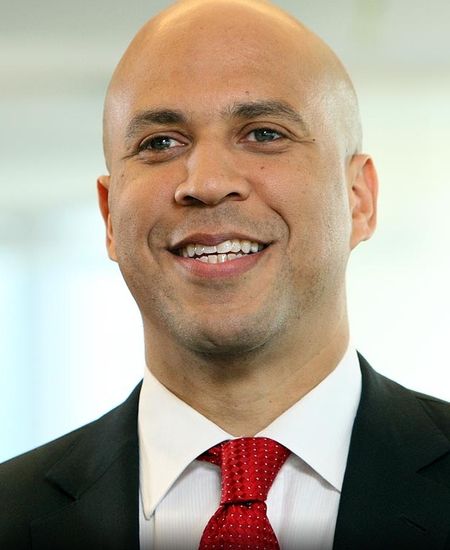
Sen. Cory A. Booker
Sponsored bills
Maddy summaryThis bill amends the Religious Freedom Restoration Act (RFRA) to clarify that RFRA does not block enforcement of key federal laws protecting civil rights and safety. Specifically, it adds an exception preventing RFRA claims from overriding laws that prohibit discrimination (like the Civil Rights Act of 1964), ensure workplace protections (such as the Family and Medical Leave Act), prevent child exploitation, or guarantee healthcare access. The amendment ensures religious freedom arguments cannot be used to challenge these existing legal requirements. It also clarifies that RFRA does not apply to lawsuits against government entities seeking relief for violations of these protections.
Maddy summaryS 897, the Farewell to Foam Act of 2025, bans the sale and distribution of expanded polystyrene food service ware (like single-use cups, trays, and takeout containers), expanded polystyrene loose fill (packing peanuts), and expanded polystyrene coolers starting January 1, 2028. It directly affects food service providers (restaurants, schools, grocery stores), manufacturers, distributors, and retailers who sell or handle these products. The bill excludes coolers used for medical products or drugs and defines covered items to clarify what is prohibited. This policy change aims to reduce non-recyclable foam waste by prohibiting specific foam products in the food service and packaging industries.
Maddy summarySRES 107 is a non-binding Senate resolution supporting the designation of March 3-7, 2025, as "National Social and Emotional Learning Week." It recognizes social and emotional learning (SEL) - which helps students develop skills like self-awareness and relationship management - as critical for academic success, mental wellness, and long-term well-being for students, educators, and families. The resolution encourages expanding access to SEL programs and urges federal agencies to advance these initiatives. As a symbolic gesture, it does not create new laws or allocate funding but highlights research showing SEL improves student outcomes and reduces societal costs.
Maddy summaryThis resolution (SRES 108) is a non-binding Senate statement affirming constitutional principles regarding judicial review. It specifically affirms that Article III establishes federal courts, cites *Marbury v. Madison* as establishing judicial review (where courts interpret the law), and states that the executive branch must comply with federal court rulings. The resolution responds to recent public remarks suggesting the executive branch could disregard court decisions. It does not change laws or affect any specific group; it is a symbolic declaration of support for the judiciary's role in the constitutional system.
Maddy summaryThis bill, the Richard L. Trumka Protecting the Right to Organize Act of 2025, aims to strengthen workers' rights to organize and bargain collectively. It would make it harder for employers to classify workers as independent contractors by changing the definition of "employee," restricts employers from threatening to permanently replace workers who strike, and prohibits them from requiring employees to give up their right to pursue class or collective claims. The bill also changes election procedures to make it easier for workers to form unions, requires employers to post notices about workers' rights in conspicuous locations, and increases penalties for unfair labor practices. It directly affects employers and workers across various industries by altering the landscape of labor organizing and collective bargaining.
Maddy summaryThe Fighter Force Preservation and Recapitalization Act of 2025 increases the minimum required number of Air Force fighter aircraft to 1,900 (from 1,800) and reserve component aircraft to 1,200 (from 1,145) by October 2030, extending the deadline from 2026. It allows temporary reductions in total inventory (down to 1,800) for up to two years to replace older aircraft with new models, requiring congressional notification and detailed quarterly reports on new acquisitions, retirements, and unit assignments. The bill also protects 25 specific Air National Guard fighter squadrons (as of December 2024) from losing aircraft until 2030 and mandates an annual plan for recapitalizing these units, including budget and operational assessments. These provisions directly affect Air Force active, reserve, and Air National Guard units operating fighter aircraft, ensuring a structured transition to newer models like the F-35 and F-16 Block 70.
Maddy summarySRES 105 is a Senate resolution condemning the February 2025 mass terminations of 2,400 Department of Veterans Affairs (VA) employees by Secretary Doug Collins, without justification or analysis of impacts on veterans. The resolution states the Senate opposes these terminations - specifically noting the lack of transparency about effects on critical services like mental health care, claims processing, and cybersecurity - and calls for all affected employees to be reinstated. This resolution does not change VA policy but expresses the Senate’s formal disapproval of the terminations and demands accountability. It was introduced by 30 Senators on March 4, 2025.
Maddy summaryThe Faster Labor Contracts Act requires employers and newly certified unions to begin negotiating an initial collective bargaining agreement within 10 days of a written request. If no agreement is reached within 90 days, the parties may request mediation from the Federal Mediation and Conciliation Service, which must act within 30 days. If mediation fails, the dispute moves to a binding arbitration panel whose decision - based on factors like employer finances, business type, and industry wages - remains enforceable for two years. This law directly affects employees represented by newly certified unions and their employers by reducing delays in securing first contracts, which historically averaged 465 days.
Maddy summaryThis Senate resolution (SRES 104) designates February 27, 2025, as "Rare Disease Day" to formally recognize efforts related to rare diseases. It does not create new laws, funding, or programs, but highlights the importance of raising awareness, improving early diagnosis, and supporting research for conditions affecting millions in the U.S. (estimated at over 30 million people with rare diseases). The resolution serves as a symbolic gesture aligning with the global observance of Rare Disease Day.