

Maddy summaryThis bill prohibits defendants in federal criminal cases from using a victim's LGBTQ+ sexual orientation, gender identity, or expression as a legal excuse for violent crimes like assault or murder. It directly affects defendants who attempt to justify violence by claiming the victim's identity provoked them, and it protects LGBTQ+ victims by preventing their identities from being used to reduce sentences. The law bans such defenses entirely, except when evidence of the defendant's past trauma is admitted under standard federal evidence rules. It also requires the Attorney General to annually report on federal prosecutions involving violence against LGBTQ+ individuals motivated by bias. This is a concrete policy change to end the use of discriminatory defenses in federal court.
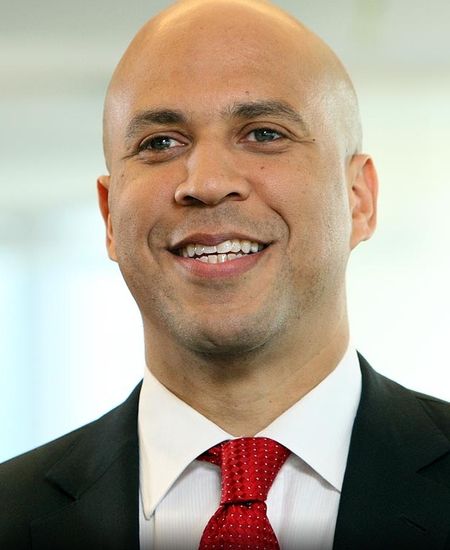
Sen. Cory A. Booker
Sponsored bills
Maddy summaryThe Senate resolution SRES 306 supports designating June 26 as "LGBTQI+ Equality Day" to commemorate three landmark Supreme Court rulings on that date: *Lawrence v. Texas* (2003, ending criminalization of same-sex intimacy), *United States v. Windsor* (2013, striking down DOMA), and *Obergefell v. Hodges* (2015, guaranteeing same-sex marriage). It encourages public celebrations to educate about ongoing LGBTQI+ discrimination while acknowledging these court victories were not enough to eliminate barriers. The resolution is symbolic - non-binding and non-enforceable - focusing on raising awareness rather than creating new laws. It explicitly calls for future legislation to address discrimination in areas like employment, housing, and public accommodations.
Maddy summaryThe Global Respect Act of 2025 requires the U.S. President to publicly list foreign government officials or entities responsible for human rights abuses against LGBTQI individuals based on sexual orientation, gender identity, or sex characteristics. This list - updated every 180 days - makes those individuals ineligible for U.S. visas or entry, and could lead to removal from the U.S. if already present. The bill mandates tracking of violence and discrimination in foreign countries and annual reports to Congress on implementation. It directly affects foreign officials involved in torture, arbitrary detention, or inciting violence against LGBTQI people, with limited waivers possible for national security or international obligations. The law focuses on accountability through visa restrictions, not new U.S. rights or domestic policy changes.
Maddy summaryThis bill prohibits federal agencies from entering contracts with firearm dealers who have been linked to crime through gun tracing. Specifically, dealers with 25 or more firearms traced to crimes within 2 of the last 3 years (as tracked by the ATF) are listed annually and barred from federal contracts for three years. Federal agencies must avoid such contracts, though the Defense or Homeland Security secretaries may request limited national security waivers, which require immediate congressional notification. The law aims to restrict federal spending with dealers frequently involved in crime-linked firearms, without altering gun ownership laws.
Maddy summaryS 2190, the Fair Calculations in Civil Damages Act of 2025, prohibits U.S. courts from using race, ethnicity, sex (including gender identity, sexual orientation, and intersex traits) when calculating future earnings for civil damages in personal injury or employment discrimination cases. It requires the Secretary of Labor to develop inclusive future earnings tables within 180 days that exclude these protected characteristics, and mandates studies on damages data by the Judicial Conference and Administrative Office of the U.S. Courts. The bill also directs the Federal Judicial Center to train judges on implementing these changes. This law directly affects courts, forensic economists, and legal proceedings involving future earnings calculations under federal law.
Maddy summaryThis bill amends federal gun law to prevent individuals under certain court-ordered pretrial restrictions from purchasing firearms. It adds a new definition of "pretrial release order" (a court order restricting release pending trial) and modifies Section 922(d) to explicitly prohibit firearm purchases or possession by anyone subject to such an order. The law directly affects arrested individuals awaiting trial who have a court order banning firearm possession, including those in federal, state, tribal, or local courts. The key change clarifies that firearm transfers to these individuals would violate federal law, strengthening background checks during the pretrial phase.
Maddy summaryThis bill requires the ATF to publish annual reports on firearm trace data, breaking down details like which dealers sold firearms later recovered in crimes. The reports must include data on "time-to-crime" (how quickly firearms are used in crimes), firearm types, locations of recoveries, and whether sales involved multiple firearms. It specifically tracks firearms sold by licensees, privately made guns, and firearms reported lost or stolen, disaggregated by dealer type, state, and crime patterns. The data aims to improve transparency for law enforcement and the public without changing gun laws or regulations.
Maddy summaryS 2195, the WWII Nurses Congressional Gold Medal Act, authorizes a Congressional Gold Medal to honor Army and Navy nurses who served during World War II, recognizing their critical military service and devotion to duty. The medal, to be designed and struck by the Secretary of the Treasury, will be displayed at the Smithsonian Institution and specific locations like the Women in Military Service for America Memorial and the National World War II Museum. The bill also permits the sale of bronze duplicates to cover production costs. This legislation provides formal recognition for nurses who provided medical care under combat conditions, including in field hospitals, prisoner-of-war camps, and evacuation efforts across multiple continents.
Maddy summaryThis bill extends the time for same-sex couples legally married before September 16, 2013, to file for tax refunds they missed because they filed separately instead of jointly. It applies to couples who filed individual returns for tax years ending before that date but could have filed joint returns if same-sex marriage recognition had been in effect. The bill extends the deadline for claiming refunds on those returns until the standard tax filing deadline for the year the bill becomes law. It specifically covers changes to marital status under tax law and does not affect other tax filings or claims.
Maddy summaryThis bill updates the Internal Revenue Code to replace gendered terms like "husband and wife" with neutral language such as "married couple" or "spouse" across 31 tax code sections. It directly affects all married taxpayers filing federal income taxes, as it modernizes terminology in provisions covering joint returns, deductions, estate taxes, and other tax filings. The key mechanism is a comprehensive linguistic revision - amending phrases like "his spouse" to "the individual's spouse" - to ensure the tax code reflects all married couples equally without specifying gender. This is a procedural update to language only, with no changes to tax rates, benefits, or eligibility.