

Maddy summaryThis resolution designates June 19, 2025, as "Juneteenth National Independence Day" to commemorate June 19, 1865 - the date Union troops in Galveston, Texas, delivered news of emancipation to enslaved people in the Southwest, months after the Civil War ended. It recognizes the historical significance of this date, when news of the end of slavery finally reached enslaved people in Texas. The resolution supports nationwide observance of Juneteenth to honor the emancipation of enslaved people and reflect on U.S. history. It does not create new laws or policies but formally acknowledges this date as part of the nation's heritage.
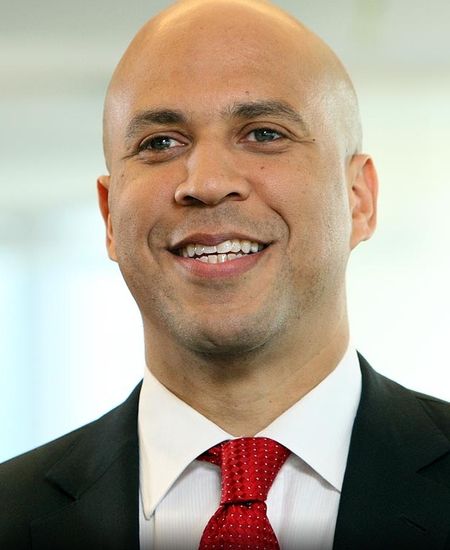
Sen. Cory A. Booker
Sponsored bills
Maddy summaryThe Algorithmic Accountability Act of 2025 requires companies that deploy automated decision systems for critical areas like employment, housing, healthcare, and financial services (known as "covered entities") to conduct impact assessments before and after deployment. These assessments must evaluate fairness, privacy, security, and potential negative impacts on consumers, particularly for protected groups like racial minorities, women, and people with disabilities. Covered entities must document these assessments and submit annual summary reports to the Federal Trade Commission, which will make anonymized versions publicly available in a searchable online repository. The law applies to companies with over $50 million in annual revenue or those handling data for over 1 million consumers. The goal is to increase transparency and accountability around automated decision systems that significantly affect people's lives.
Maddy summaryThis bill prohibits all smoking - including cigarettes, cigars, pipes, and e-cigarettes - in every Veterans Health Administration (VHA) facility, such as medical centers, clinics, and nursing homes. It directly affects all individuals on VHA premises, including veterans, patients, staff, contractors, and visitors. The law explicitly bans all tobacco combustion and electronic nicotine products, defining "smoke" to cover both traditional and e-cigarette use. This replaces existing rules and applies uniformly across all VHA-operated facilities under Department of Veterans Affairs jurisdiction.
Maddy summaryThis bill makes it illegal to distribute online digital instructions (like 3D printer files) that can automatically program a 3D printer to create a firearm or complete a firearm receiver. It directly affects individuals who share such files online, including those creating or distributing "ghost gun" schematics. The key mechanism prohibits the internet distribution of these specific digital files under federal law, aiming to prevent untraceable firearms. This addresses the concern that 3D-printed guns lack serial numbers, making them difficult for law enforcement to trace after crimes.
Maddy summaryThe Kangaroo Protection Act of 2025 bans the commercial import, sale, and distribution of kangaroo products in the United States. It specifically prohibits bringing kangaroos into the U.S. for sale, selling kangaroo products, or transporting them across state lines. The law applies to businesses and individuals involved in these activities, with violations carrying fines up to $10,000 or up to one year in prison per offense. This legislation directly regulates trade in products made from four specified kangaroo species, including eastern grey and red kangaroos.
Maddy summaryS 2154, the Protecting Kids from Gun Marketing Act, prohibits gun manufacturers, dealers, and importers from marketing firearms or firearm-related products to minors (under 18) in ways designed to appeal to them. Key provisions ban marketing tactics like using cartoon characters, offering branded merchandise (e.g., hats, toys) to minors, or designing products specifically for children. The Federal Trade Commission (FTC) must create enforceable rules within one year, and violations will be treated as deceptive practices under existing law. Enforcement includes FTC actions, lawsuits by state attorneys general, and private lawsuits by affected individuals, with the FTC required to report enforcement plans and outcomes to Congress.
Maddy summaryThe Women’s Health Protection Act of 2025 (S 2150) prohibits state laws that impose unnecessary restrictions on abortion access before fetal viability. It directly affects patients seeking abortion care and health care providers (including clinics, hospitals, and medical professionals), banning requirements like mandatory in-person visits, location-based travel barriers, or restrictions on telemedicine that don’t apply to comparable medical procedures. The bill overrides conflicting state laws, requires courts to consider factors like cost and travel burden when evaluating restrictions, and establishes federal enforcement through lawsuits to stop violations. It focuses on ensuring access to abortion services without burdens that hinder care, while allowing post-viability abortions only when necessary to protect a patient’s life or health.
Maddy summaryThis bill (S 2158) amends federal law to prohibit fraudulent firearm sales by adding a new section to the definition of illegal firearm transactions. It makes it a crime for any person to import, manufacture, or sell firearms or ammunition using false pretenses, representations, or promises, and to transmit communications about such fraudulent sales via wire, radio, or television. The law directly affects firearm sellers, manufacturers, and importers who engage in deceptive practices. Penalties for violating this provision would be enforced under existing federal firearm offense penalties.
Maddy summaryThis bill directs FinCEN (the Financial Crimes Enforcement Network) to request specific financial data from banks and other financial institutions within one year. The goal is to develop an advisory identifying how homegrown extremists and domestic terrorists obtain firearms, and how the gun market is exploited to fuel gun violence. FinCEN must consult with the FBI, ATF, and gun sellers before gathering data, and must issue the advisory within 540 days - or if insufficient data is collected, submit a detailed report to Congress explaining the gaps. The bill directly affects financial institutions (by requiring data sharing) and indirectly impacts gun sellers (through consultation).
Maddy summaryThis bill removes immigration status barriers to health care for lawfully present immigrants and those with Federally authorized presence (like deferred action). It requires states to cover all lawfully present individuals in Medicaid and CHIP, expands ACA exchange eligibility for undocumented people with authorized presence, and allows states to opt into covering undocumented children in CHIP. Key provisions amend the Social Security Act to eliminate citizenship requirements for Medicaid/CHIP and treat Federally authorized presence as equivalent to lawfully present for ACA subsidies. The bill does not automatically cover all undocumented people but creates a state option to extend coverage to undocumented individuals meeting income criteria.