

Maddy summaryThis resolution expresses the U.S. Senate's support for designating July 10, 2025, as Journeyman Lineworkers Recognition Day. It honors journeyman lineworkers who maintain the nation’s power grid 24/7, restore electricity during disasters, and work in hazardous conditions. The resolution specifically recognizes the 129th anniversary of Henry Miller, the first president of the International Brotherhood of Electrical Workers, who died while restoring power in 1901. The Senate encourages the public to observe this day to reflect on lineworkers’ contributions and sacrifices. (Note: This is a symbolic resolution with no legal force or funding impact.)
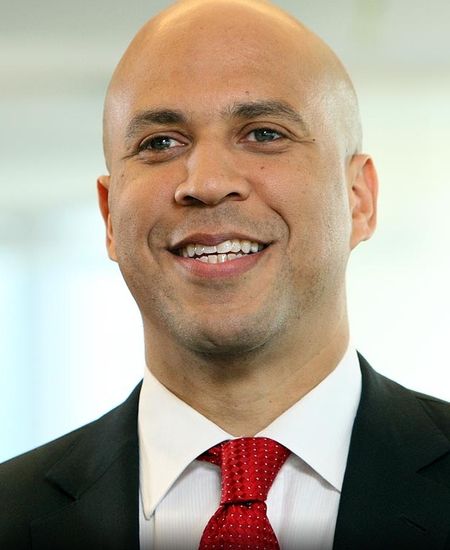
Sen. Cory A. Booker
Sponsored bills
Maddy summaryS 2239, the "Improving Access to Prenatal Care for Military Families Act," allows pregnant service members and their dependents to enroll in TRICARE Select health coverage immediately upon pregnancy, treating it as a qualifying event (like a job change or separation) rather than requiring them to wait for other life events. The bill establishes a 5-year pilot program starting within 180 days of enactment, requiring the Secretary of Defense to implement this change and report annually to Congress on enrollment trends. These reports must detail enrollment changes by month and by specific circumstances, such as separation from duty or pregnancy itself. The bill directly affects military families seeking timely prenatal care under TRICARE Select, aiming to streamline access without altering existing eligibility rules.
Maddy summaryThe Trafficking Survivors Relief Act of 2025 provides a legal process for survivors of human trafficking who were convicted of certain federal crimes to have their convictions vacated or arrests expunged. It allows survivors to file motions with courts to prove their crimes were directly related to their trafficking victimization, requiring courts to consider evidence from anti-human trafficking service providers. The law establishes a "human trafficking defense" in criminal cases, permitting survivors to argue they committed crimes under duress from trafficking. Additionally, it mandates reporting on implementation and tracks how many survivors access this relief through the courts.
Maddy summaryThis bill extends the temporary waiver allowing hospitals to provide acute care at home until 2030, directly affecting hospitals participating in the Acute Hospital Care at Home initiative and the patients receiving care through this program. It requires the Department of Health and Human Services to conduct a detailed study by September 2028, comparing care quality, costs, patient outcomes, and experiences between home-based care and traditional inpatient hospital care. The study must analyze specific metrics like readmission rates, staffing ratios, treatment types, and patient demographics across participating and non-participating hospitals. The findings will be reported to Congress, providing data to inform future policy decisions about home-based hospital care.
Maddy summarySRES 312 is a non-binding Senate resolution designating June 2025 as "LGBTQ Pride Month" to honor the LGBTQ community's historical struggles and contributions to U.S. society. The resolution expresses symbolic support for LGBTQ rights and highlights ongoing challenges like discrimination in housing, employment, and healthcare, without creating new laws or policies. It serves as a formal acknowledgment by the Senate to promote awareness of LGBTQ history and advocacy, but has no legal effect on government actions or individual rights. The resolution was introduced by multiple senators and includes a preamble detailing key milestones in LGBTQ equality efforts.
Maddy summaryThe GLOBE Act of 2025 is a comprehensive bill aimed at advancing LGBTQI rights globally through several key mechanisms. It requires U.S. diplomatic posts to document and respond to violence against LGBTQI people abroad, establishes sanctions against individuals responsible for human rights violations against LGBTQI people, and creates a Special Envoy for LGBTQI rights. The bill also reforms immigration policies to better protect LGBTQI refugees and asylum seekers, and expands U.S. foreign assistance to support LGBTQI rights organizations globally. These provisions directly affect LGBTQI individuals worldwide, U.S. diplomatic personnel, and organizations receiving U.S. foreign assistance.
Maddy summaryThis bill reauthorizes two existing federal diabetes programs through 2027. It provides $160 million annually for fiscal years 2026 and 2027 for the Special Diabetes Program for Type I Diabetes (serving people with Type I diabetes) and the Special Diabetes Program for Indians (serving Native American communities through Indian Health Services). A final $40 million is allocated for October-December 2027 for both programs, with all funds remaining available until expended. The bill extends current funding levels without changing program eligibility or structure.
Maddy summaryS 2212, the VISIBLE Act, requires immigration enforcement officers to visibly display their agency name and either their last name or unique badge number during all public-facing immigration enforcement activities in the United States. This applies to officers from U.S. Customs and Border Protection, U.S. Immigration and Customs Enforcement, and other authorized personnel during actions like stops, arrests, raids, or warrant service. The bill mandates that this identification be clearly legible from 25 feet away on outermost clothing, prohibits non-medical face coverings that obscure it (except in covert operations or hazardous conditions), and requires annual reports to Congress on compliance and disciplinary actions. It aims to increase transparency during immigration enforcement interactions where the public may be present.
Maddy summaryS 2204 (Protecting America’s Diplomatic Workforce Act) sets strict limits on staff reductions at key diplomatic agencies, including the State Department, USAID, and the Peace Corps. It prohibits separating more than 50 employees in a 6-month period without congressional review, requiring agencies to submit detailed justifications covering mission impact, diplomatic engagement, and compliance with civil service rules. The bill mandates a minimum 60-day notice for affected employees and updates procedures for Foreign Service layoffs to prioritize performance and tenure. These changes aim to prevent sudden workforce cuts that could weaken U.S. diplomatic capabilities.
Maddy summaryThe Break the Cycle of Violence Act establishes federal grants to fund community-based violence intervention programs that aim to reduce gun violence through evidence-based strategies. It creates a National Community Violence Response Center to coordinate efforts and provide technical assistance, while directing funding to communities disproportionately affected by violence, particularly those with high homicide rates. The bill includes provisions for hospital-based violence intervention programs, trauma-informed services, and job training programs for opportunity youth (ages 16-25 not in education or employment) to address root causes of violence. Funding for these programs totals $300 million in 2026, increasing to $700 million annually through 2033 for the Department of Health and Human Services, plus $1.5 billion for job training programs through the Department of Labor.