

Maddy summaryThis bill would require health insurance plans that cover obstetrical services to also cover fertility treatment, including procedures like in vitro fertilization, artificial insemination, embryo preservation, and related medications. It applies to private insurance plans, federal employee health benefits, TRICARE, VA benefits, Medicaid programs, and Medicare. The law mandates coverage regardless of whether a patient has been diagnosed with infertility, prohibits cost-sharing exceeding what's applied to other medical services, and requires plans to provide clear notice about the coverage to participants. The goal is to make fertility treatment more accessible and affordable for people who need it.
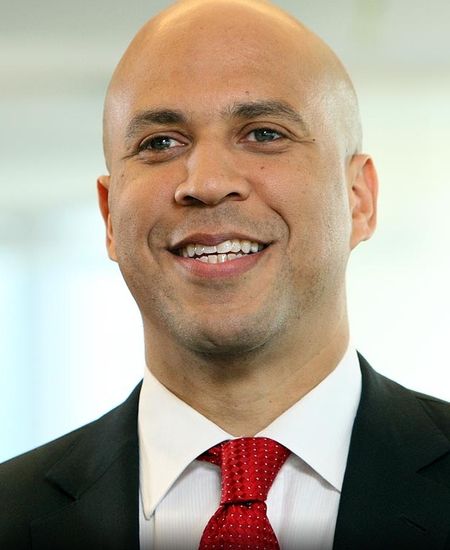
Sen. Cory A. Booker
Sponsored bills
Maddy summaryS 2377, the EACH Act of 2025, requires all federal health programs - including Medicaid, Medicare, the Children’s Health Insurance Program (CHIP), and the Indian Health Service - to cover abortion services without restrictions based on income or insurance type. It repeals the Hyde Amendment (Section 1303 of the ACA), which previously barred federal funds from covering most abortions, and prohibits state or private insurance plans from restricting abortion coverage. This directly affects millions enrolled in federal health programs, particularly low-income individuals, women of color, and young people, who face barriers to abortion access under current laws. The bill mandates that all federally funded health programs provide comprehensive abortion coverage as a standard benefit.
Maddy summaryThis resolution designates June 12, 2025, as "Women Veterans Appreciation Day" to recognize the service and sacrifices of women veterans. It does not create new policies or affect specific programs, but symbolically honors women who have served in the military since the Revolutionary War, including their roles in recent conflicts and current service (18% of active duty personnel as of 2023). The resolution highlights women veterans' contributions and unique challenges, such as military sexual trauma, while encouraging their stories to be shared through the Veterans History Project. It is a commemorative gesture without legislative or financial impact.
Maddy summaryThis bill establishes new requirements for food additives to be deemed "generally recognized as safe" (GRAS) under FDA oversight. Manufacturers must now submit detailed safety data - including evidence showing no carcinogenicity, reproductive toxicity, or developmental toxicity - to the FDA for review, replacing the previous reliance on historical use. The FDA must publicly post submissions, allow 60 days for public comment, and issue written determinations within a set timeline. Additionally, the bill mandates the FDA to reassess the safety of at least 10 food substances every three years, prioritizing those under existing petitions or regulations. It directly affects food manufacturers and the FDA, creating a more rigorous, evidence-based process for food additive safety.
Maddy summaryThis bill creates a public database of residential appraisal data to increase transparency in mortgage lending. It requires major mortgage agencies (Fannie Mae, Freddie Mac, FHA, USDA, VA) to share appraisal data with the Federal Housing Finance Agency, including property details, appraisal methods, and borrower demographics like race and ethnicity. The data will be made publicly available in searchable formats to help identify potential issues in how appraisals are conducted across different communities. It also establishes a process for borrowers to request a review of an appraisal they believe is inaccurate or reflects discrimination.
Maddy summaryThis bill creates the Office of Climate Change and Health Equity within the Department of Health and Human Services to coordinate federal efforts addressing climate change's health impacts, with special focus on environmental justice communities and medically underserved populations. It requires the development of a National Strategic Action Plan within one year of enactment, to be updated annually, that identifies climate-related health risks and outlines strategies to protect vulnerable communities. The bill also establishes a science advisory board of experts and authorizes $10 million annually for the Office through fiscal year 2031 to support activities including tracking climate health risks, developing preparedness plans, and reducing greenhouse gas emissions in the health sector.
Maddy summaryThis bill creates a new legal pathway for individuals injured by pesticides. It allows people harmed by pesticide use - whether to their person or property - to sue the company that registered the pesticide in federal court for monetary damages. The law specifies that recovered damages can include both compensatory and punitive amounts (at the court's discretion), but excludes attorney fees or court costs. Crucially, it clarifies that this federal right of action does not override existing state laws, meaning affected individuals can also pursue claims under state regulations. The bill directly impacts pesticide registrants (companies) and anyone suffering pesticide-related harm.
Maddy summaryThis bill creates a federal grant program to help schools recruit and retain paraprofessionals - school support staff like teaching assistants - who work directly with students but lack full teaching credentials. It allocates funds to states based on prior Title I education funding, requiring states to prioritize schools serving high numbers of low-income students or designated "high-need" schools. Funds can be used for mentoring programs, professional development, credentialing (like special education or English learner certificates), and wage increases or bonuses for paraprofessionals. The program mandates annual reporting on wage baselines, paraprofessional numbers, and how funds were used to address shortages.
Maddy summaryThe Equal Health Care for All Act requires health care providers to collect and report disaggregated health data by race, national origin, sex, disability, and age to identify health disparities. It establishes an Office for Civil Rights and Health Equity within HHS to enforce anti-discrimination measures and creates a Federal Health Equity Commission to monitor implementation. The bill prohibits health care providers from delivering inequitable care based on protected characteristics and provides grants to hospitals to improve equitable care through bias training, translation services, and workforce diversity initiatives. Hospitals would need to incorporate equitable health care measures into value-based purchasing programs starting in 2026. This legislation aims to address systemic health care inequities affecting marginalized communities through data collection, enforcement mechanisms, and targeted support for health care providers.
Maddy summaryThis Senate concurrent resolution (SCONRES 18) expresses Congress's view that Trump administration policies - such as expanding fossil fuel extraction, blocking renewable energy, and suppressing climate science - create a health and safety emergency disproportionately harming children. It specifically criticizes executive orders that increase greenhouse gas emissions, weaken environmental protections, and restrict access to climate data, citing scientific evidence linking these actions to worsened air quality, extreme weather impacts, and long-term health risks for children. The resolution demands the administration reverse these policies, restore the EPA’s mission, and publicly republish climate science data. As a symbolic congressional statement, it does not change law but aims to highlight the disproportionate impact on children’s fundamental rights and health.