

Maddy summaryThe Adjunct Faculty Loan Fairness Act of 2025 expands federal student loan forgiveness eligibility to include more adjunct faculty members. It amends the Higher Education Act to allow loan forgiveness for adjunct, contingent, or part-time faculty who teach at least 9 credit hours per semester (or equivalent weekly hours) at colleges, vocational schools, or Tribal Colleges, provided they are not full-time employees elsewhere. The bill directly affects non-tenured faculty in temporary teaching roles who meet these specific teaching hour requirements. This change modifies existing loan forgiveness criteria to explicitly include these faculty members under the Higher Education Act.
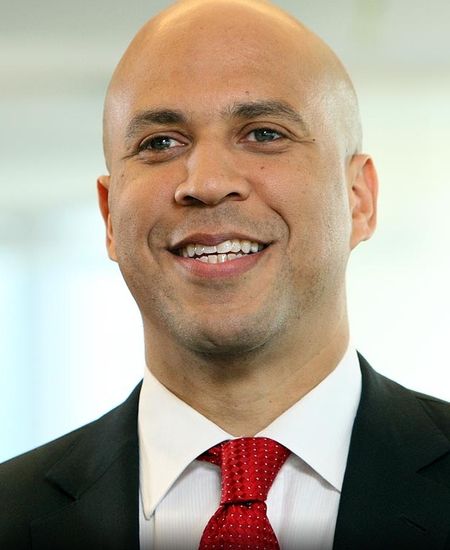
Sen. Cory A. Booker
Sponsored bills
Maddy summarySRES 338 is a non-binding Senate resolution recognizing how the Americans with Disabilities Act (ADA) of 1990 enables independent living and economic self-sufficiency for people with disabilities. It highlights that over one-third of disabled individuals rely on Medicaid for health coverage and community-based care, yet many remain in segregated institutions due to Medicaid limitations and insufficient community services. The resolution calls for bipartisan action to strengthen Medicaid funding, oppose cuts or work-reporting requirements that hinder access to care, and expand home-based services to support employment and community living. It specifically urges federal agencies to improve accessibility in housing, transportation, emergency services, and competitive employment opportunities for people with disabilities, particularly those of color facing systemic barriers. This resolution does not create new law but advocates for policy changes to fulfill the ADA’s promise.
Maddy summaryThe Fighting Fibers Act of 2025 requires all new washing machines sold in the U.S. (both residential and commercial) to include a built-in or included microfiber filtration system that captures fibers smaller than 100 micrometers, starting January 1, 2030, and display a visible consumer label about filter maintenance. It mandates a one-year EPA study on microfibers' environmental presence, health effects, and potential inequitable impacts on environmental justice communities. Manufacturers violating the filtration, labeling, or future EPA standards face civil penalties of up to $30,000 per violation. This law directly affects washing machine manufacturers, retailers, and consumers by setting new product standards and requiring transparency about microfiber reduction.
Maddy summaryThe Resident Physician Shortage Reduction Act of 2025 adds 14,000 new residency training positions over seven years (2027-2033), distributing 2,000 annually through a structured application process. It directly affects hospitals applying for these positions, requiring them to commit to filling the new spots and prioritizing rural hospitals, those serving health shortage areas, and hospitals affiliated with historically Black medical schools. Key mechanisms include seven annual application rounds, rules for carrying over unused positions, and minimum distribution quotas (e.g., 10% to rural hospitals). The bill also mandates a study on increasing diversity in the health workforce, with a report due to Congress within two years.
Maddy summaryThis bill eliminates government subsidies for fossil fuel production by increasing royalties for oil and gas extraction, terminating tax credits for fossil fuel companies, and prohibiting government funding for fossil fuel projects. It repeals recent legislation that provided fossil fuel subsidies, including provisions from the Inflation Reduction Act, and requires a study of additional subsidies. The bill affects fossil fuel companies, government agencies, and financial institutions that support fossil fuel development. Key provisions would take effect for production and tax years beginning after the bill's enactment.
Maddy summaryThe O DAIRY Act of 2025 provides targeted support for organic dairy farmers by extending emergency disaster assistance to cover losses from rising organic feed costs that reduce net income by over 10% annually. It requires the USDA to collect and publish detailed cost-of-production data for organic milk, including regional feed prices and milk sales data through a new monthly "Organic All Milk Prices Survey." The bill also mandates the development of a safety net program prioritizing small organic dairy operations and establishes a $20 million infrastructure funding program to support regional processing facilities, farm aggregation systems, and new organic dairy processing plants serving small producers. Additionally, it creates five-year-funded "Regional Organic Dairy Market Specialists" to research marketing challenges and recommend policies to improve market access and competition.
Maddy summaryThis bill extends tax deferral for company stock sold to employee stock ownership plans (ESOPs) and fixes a rule that previously caused small businesses to lose government benefits after 49% ownership transferred to an ESOP. It creates a new Treasury Department office to provide education and technical assistance for companies adopting ESOPs, and establishes a Labor Department Advocate for Employee Ownership to coordinate federal efforts and promote employee ownership. These changes directly affect S corporations considering ESOPs, current ESOP-owned businesses, and small businesses seeking to maintain eligibility for government programs. The bill focuses on removing barriers to employee ownership through concrete tax, eligibility, and support mechanisms.
Maddy summaryThe Stop the Scammers Act establishes a whistleblower reward program for individuals reporting violations of federal consumer financial law (e.g., scams, fraud). Whistleblowers who provide original information leading to successful enforcement actions by the Consumer Financial Protection Bureau (CFPB) may receive 10-30% of recovered civil penalties (minimum $50,000 if penalties are under $1 million). The bill mandates strong confidentiality protections for whistleblowers, prohibits employers from waiving these rights via contracts, and requires the CFPB to report annually on the program. It directly affects whistleblowers in consumer finance cases and the CFPB’s enforcement process, not the general public.
Maddy summaryThis bill provides federal funding to states, local governments, and tribal entities that have implemented or will implement "right to counsel" laws for low-income tenants. It establishes a $100 million annual fund (2026-2030) to grant money to jurisdictions with existing or planned laws guaranteeing free legal representation for tenants earning at or below 200% of the federal poverty line in eviction cases or housing subsidy terminations. The grants cover costs like attorney training and recruitment, with priority given to jurisdictions that also limit evictions for non-fault reasons, require 30-day notice periods, or offer rental assistance. The bill does not create new legal rights but supports existing state/local programs that provide free legal aid during eviction proceedings.
Maddy summaryThis bill establishes a federal program to help small and emerging manufacturers access capital needed to scale from prototype to commercial production. It creates a "Scale-Up Manufacturing Investment Company Program" that provides leverage (up to $1 for every $1 of private capital raised) to private investment funds focused on technology-intensive manufacturing start-ups. The program requires participating funds to have at least $250 million in private capital and limits total leverage to $500 million per fund and $1 billion overall. The bill also amends other laws, including the Bank Holding Company Act and Community Reinvestment Act, to facilitate these investments and support manufacturing innovation.