

Maddy summaryThis bill permanently extends the enhanced premium tax credit for Affordable Care Act marketplace insurance plans, directly affecting millions of lower-income households (earning 150%-400% of the federal poverty level) who purchase coverage through state or federal marketplaces. It establishes a sliding-scale percentage system where the tax credit reduces monthly premiums based on income, starting at 0% for households earning up to 150% of poverty and increasing to 8.5% for those earning 300%-400% of poverty. The bill replaces temporary provisions with permanent rules, ensuring consistent cost-sharing support for eligible buyers. The changes apply to tax years beginning after December 31, 2025.
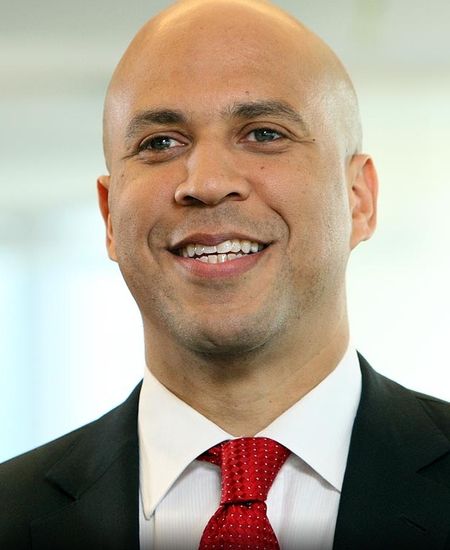
Sen. Cory A. Booker
Sponsored bills
Maddy summaryThe Servicemembers and Veterans Empowerment and Support Act of 2025 improves support for veterans who experienced military sexual trauma by reforming how disability claims are processed and expanding access to care. It establishes specialized teams to review claims, changes evidence standards to include non-military sources like counseling records, and requires VA communications to include trauma resources. The bill expands eligibility for counseling and treatment to all former reserve members, ensures veterans get connected to health care services when submitting claims, and provides care options for those who withdraw from service academies. It also mandates annual accuracy reviews of claim processing and requires improved training for VA staff handling these cases.
Maddy summaryThe All Aboard Act of 2025 provides $83.5 billion over five years to accelerate rail electrification and transition to zero-emission rail systems. It establishes new funding programs for states, Amtrak, and rail carriers to electrify rail corridors, improve rail infrastructure, and support workforce transition plans. The bill sets specific targets including achieving zero emissions for 50% of trains by 2030 and all locomotives by 2047, with priority for projects in environmental justice communities. It requires applicants for rail electrification funding to include community engagement plans, environmental protection measures, and detailed workforce transition plans. The legislation aims to modernize rail infrastructure while addressing environmental justice concerns and supporting rail workers through training and job transition programs.
Maddy summaryThe EATS Act of 2025 (S 2512) expands eligibility for the Supplemental Nutrition Assistance Program (SNAP) to include most college students. It directly affects full-time undergraduate students enrolled at least half-time in recognized higher education institutions by removing their current exclusion from SNAP benefits. The bill revises the definition of "household" under SNAP rules and eliminates the prior requirement that students meet separate conditions to qualify. This change, effective January 2026, would allow millions of students to access food assistance without additional barriers.
Maddy summaryThe John R. Lewis Voting Rights Advancement Act of 2025 strengthens voting rights protections by requiring preclearance for certain voting changes in jurisdictions with a history of discrimination. It establishes new preclearance requirements for changes to election methods, district boundaries, voter ID rules, and polling locations. The bill updates standards for determining when voting practices deny or abridge rights, particularly for racial, ethnic, and language minority groups. It also requires transparency about voting changes through public notices and strengthens enforcement mechanisms for voting rights violations. The bill directly affects states and localities with documented histories of voting discrimination, aiming to protect minority voters' rights.
Maddy summaryS 2500, the Research for Healthy Soils Act, authorizes federal research grants to study microplastics (plastic particles under 5mm) in biosolids applied to farmland. It directs the USDA to fund specific research on microplastic concentrations in agricultural soil, wastewater treatment methods to remove microplastics, impacts on crops and soil health, and microplastic movement in farmland. The bill does not regulate microplastic use but supports scientific understanding of potential agricultural effects. It affects agricultural researchers and institutions receiving these grants, extending related research funding through 2031. The focus is strictly on gathering data and developing solutions, not on policy changes for farmers or regulators.
Maddy summaryThis bill authorizes $50 million annually from 2026 through 2031 for the Centers for Disease Control and Prevention (CDC) to fund research on firearms safety and gun violence prevention. It directly affects the CDC and researchers by providing dedicated funding to study these topics under the Public Health Service Act. The key mechanism is a specific annual funding allocation, added to existing resources, to support new or ongoing research initiatives. The bill does not create new regulations or restrict gun ownership but focuses solely on enabling evidence-based research. This is a funding measure, not a policy change affecting the public directly.
Maddy summaryThe Restoring Essential Healthcare Act repeals a provision that blocked Medicaid payments to certain healthcare providers. Specifically, it removes a restriction from Public Law 119-21 that prevented Medicaid from paying "prohibited entities" for services provided between the law's enactment and this bill's effective date. Payments for those services will now be made retroactively, as if the restriction had never existed. This directly affects Medicaid programs and the healthcare providers previously excluded from receiving these payments.
Maddy summaryBill S 2468 updates a provision in the Immigration and Nationality Act that allows certain long-term residents to apply for a form of legal status (registry). Currently, this provision only applies to people who entered the U.S. before July 1, 1924, or January 1, 1972. The bill changes the requirement to mandate that applicants entered the U.S. at least seven years before submitting their application. This adjustment would expand eligibility to include more individuals who have lived in the U.S. continuously for seven years or longer. The changes take effect 60 days after the bill is enacted.
Maddy summaryThe Buffalo Soldiers Congressional Gold Medal Act of 2025 authorizes Congress to award a gold medal to the Buffalo Soldier regiments - the 9th and 10th Cavalry, and the 24th and 25th Infantry regiments - for their service from 1866 until the Army's desegregation in 1951. The medal, designed by the Secretary of the Treasury, will be displayed at the National Museum of African American History and Culture in the Smithsonian Institution. Duplicate bronze medals may be sold to the public at cost to cover production expenses. This bill is a commemorative measure that formally recognizes the historical contributions of these military units without creating new government programs or altering existing laws.