

Maddy summaryThe Access to Birth Control Act (S 2302) requires pharmacies to provide contraception without delay when available and to help customers obtain it if out of stock - either by referring to another pharmacy or expediting an order. It prohibits pharmacies from intimidating customers, misrepresenting availability, breaching confidentiality, or refusing to return valid prescriptions for contraception. Exceptions allow pharmacists to decline service only if a prescription is missing, the customer cannot pay, or they use professional clinical judgment. Violations may result in civil penalties of up to $1,000 per day or private lawsuits by affected individuals.
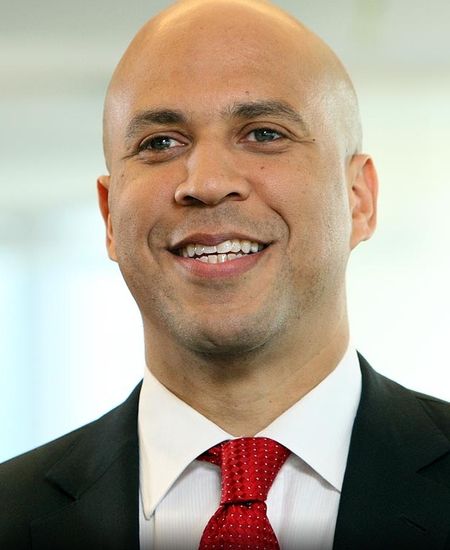
Sen. Cory A. Booker
Sponsored bills
Maddy summaryS 2589, the Expanding the VOTE Act, strengthens language access in elections by updating the Voting Rights Act. It clarifies that "voting materials" include digital and printed content (like ballots and instructions) and requires states to provide these in minority languages when populations meet specific thresholds. The bill adds new notice requirements for states near language access thresholds and creates grants to help jurisdictions provide materials for languages not currently covered under Section 203, while establishing special provisions for American Indian and Alaska Native languages. It also directs a study on lowering language minority thresholds and expanding covered languages. This directly affects states, localities, and language minority communities participating in federal elections.
Maddy summaryThis bill reauthorizes funding for state-level maternal mortality review committees, which analyze pregnancy-related deaths to identify preventable causes. It requires the Health and Human Services Secretary to share annual best practices for preventing maternal mortality with hospitals, medical societies, and maternity care groups. The bill increases annual funding for these programs from $58 million to $100 million, extending support through fiscal years 2026-2030. These changes directly affect state health agencies, hospitals, and medical professionals working on maternal health. The focus is on improving death record accuracy and implementing proven prevention strategies.
Maddy summaryThis bill reforms how Medicare pays for skin substitute products used to treat chronic wounds like diabetic foot ulcers. It establishes a new payment system based on a volume-weighted average of historical prices for all covered skin substitutes (excluding temporary dressings or certain other products), effective January 2026. This replaces current pricing that varied by product type and incentivized expensive options, aiming to contain costs while ensuring all clinically similar products are covered equally. The reform directly affects Medicare beneficiaries requiring wound care, healthcare providers selecting treatments, and Medicare's payment system for these products.
Maddy summaryThe Sustaining Our Democracy Act establishes a federal program to provide funding to states for election-related activities. The Democracy Advancement and Innovation Program allocates funds to states for improving election administration, recruiting and protecting election workers, and increasing voting access for underserved communities including racial minorities, individuals with disabilities, and voters in Indian lands. States must submit approved plans detailing how funds will be used before receiving payments, and the bill prohibits using funds for activities that could diminish voter participation. The legislation creates an Office of Democracy Advancement and Innovation to administer the program and establishes a $2.5 billion annual Trust Fund for fiscal years 2026-2035 to support these election-related activities.
Maddy summaryThis bill requires the U.S. Department of State to produce annual Country Reports on Human Rights Practices that include more comprehensive, fact-based coverage of internationally recognized rights. It mandates specific new reporting requirements, such as describing restrictions on internet freedom, protections for marginalized groups (including LGBTQI+ individuals and indigenous peoples), arbitrary detention, and government corruption's human rights impact. The bill also explicitly prohibits political influence in the reports, ensuring they remain credible tools for holding violators accountable. These changes directly affect how the State Department compiles and publishes its annual human rights reports, which inform U.S. foreign policy and global accountability efforts.
Maddy summaryThe Truth and Healing Commission on Indian Boarding School Policies Act of 2025 establishes a federal commission to investigate the history, impacts, and lasting effects of Indian Boarding Schools on Native American communities, including physical, cultural, and emotional consequences. The commission will document these impacts through research, hold meetings across the country to gather testimony from survivors and tribal representatives, and collaborate with a Survivors Truth and Healing Subcommittee and two advisory committees. The commission will produce an initial report within four years and a final report before terminating six years after enactment, with recommendations for Federal action to address the legacy of these policies. This legislation aims to formally acknowledge historical trauma caused by Indian Boarding Schools and guide future Federal efforts toward healing and reconciliation.
Maddy summaryThe Veteran Families Health Services Act of 2025 would provide fertility treatment and counseling to active duty military members and their spouses, partners, and gestational surrogates without regard to sex, gender identity, sexual orientation, or marital status. It requires the Department of Defense to establish procedures for preserving reproductive genetic material before deployment or hazardous assignments and to coordinate with the Department of Veterans Affairs for seamless care transitions. The bill also extends similar fertility services to veterans through the Department of Veterans Affairs, including adoption assistance with a limit of three covered adoptions. It would amend existing law to include fertility treatment under the definition of medical services for veterans.
Maddy summaryS 2557, the Epstein Files Transparency Act, requires the Department of Justice to make publicly available, within 30 days of enactment, all unclassified records related to Jeffrey Epstein's investigations, associates (like Ghislaine Maxwell), travel logs, immunity deals, and DOJ internal communications. It mandates the release in a searchable format while prohibiting redactions based on embarrassment or political sensitivity. The bill allows limited redactions only for victim privacy, child pornography, active investigations, graphic content, or national security classifications, with detailed justifications required for any withholdings. The Attorney General must also submit a report to Congress listing all released materials, redactions, and names of officials referenced in the documents. This bill directly affects the DOJ's handling of Epstein-related records and provides the public access to previously withheld information.
Maddy summaryS 2549, the Time Off to Vote Act, requires employers with 25 or more employees to provide workers with 2 hours of paid leave during open voting hours for federal elections. This covers voting in person, returning mail ballots, or other voting activities, with employers allowed to set the specific 2-hour window (excluding lunch breaks) but not denying the leave. The law prohibits retaliation against employees who take this leave and authorizes the Department of Labor to enforce it, imposing civil penalties of up to $10,000 per violation for noncompliance. It does not override stricter state voting leave laws but takes effect before the next federal election after enactment.