

Maddy summaryThis bill (SJRES 75) terminates the President's emergency declaration from August 11, 2025, which had allowed federal use of the Metropolitan Police Department in Washington, D.C., under an "emergency" related to crime. It directly affects the District of Columbia's local governance by ending a federal emergency status that had been in place since 2025. The resolution cites declining violent crime (at a 30-year low) and the federal government's prevention of D.C. from spending $1 billion in locally raised funds for public safety and emergency services. It formally ends the emergency under Section 740(b) of the District of Columbia Home Rule Act, without creating new policies or altering funding mechanisms.
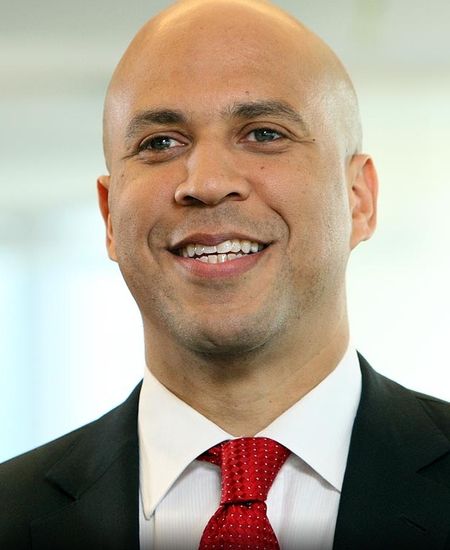
Sen. Cory A. Booker
Sponsored bills
Maddy summaryThis bill repeals a provision allowing the President to assume emergency control of the District of Columbia's police force. It directly affects the District of Columbia government and its police department by removing the federal override power during emergencies. The key mechanism is eliminating Section 740 of the District of Columbia Home Rule Act, which previously permitted the President to take temporary control of DC police operations. The change shifts full emergency management authority over police to local DC leadership. This is a procedural adjustment to the existing Home Rule framework.
Maddy summaryS 2688, the District of Columbia National Guard Home Rule Act, transfers authority over the District of Columbia National Guard from federal officials to the Mayor of Washington D.C. It updates federal and local laws by replacing all references to "President of the United States" or "Commanding General of the District of Columbia National Guard" with "Mayor of the District of Columbia" in provisions governing command, appointments, and operations. This procedural bill directly affects the District's National Guard structure and the Mayor's role in its management. The changes align DC's National Guard governance with its home rule status under the District of Columbia Home Rule Act.
Bankruptcy Administration Improvement Act of 2025 This bill makes several changes to the administration of bankruptcy cases, particularly by increasing certain fees, extending the sunset date of various fees, and extending the term of specified bankruptcy judgeships. The bill increases the fees paid to the trustee in Chapter 7 (liquidation) cases. The bill extends for an additional five years the fees paid quarterly to the U.S. trustee in Chapter 11 (reorganization) cases. The bill also increases the fee percentage for cases with large disbursements, subject to limitations. Finally, temporary bankruptcy judgeships in various districts are extended for an additional five years.
Maddy summaryThe Lowering Electric Bills Act extends federal tax credits for clean energy adoption through 2034, directly affecting homeowners installing solar panels or heat pumps and businesses producing clean electricity. It modifies three key tax provisions: (1) extends the residential clean energy credit deadline from 2025 to 2034, (2) adjusts the clean electricity production credit to expire based on U.S. emissions reaching 25% of 2022 levels or 2032 (whichever comes later), and (3) simplifies the clean electricity investment credit rules. These changes aim to maintain financial incentives for clean energy projects beyond current law, reducing administrative complexity. The bill does not create new programs but prolongs existing tax benefits to support ongoing adoption.
Maddy summaryS 2674, the HARPOON Act, authorizes the Secretary of the Navy and Coast Guard Commandant to establish joint patrols with foreign partners to combat illegal, unreported, and unregulated (IUU) fishing. It directly affects U.S. maritime security agencies by modifying existing authority to include counter-IUU fishing operations. Key provisions require annual reports to Congress detailing partnered regions, resource limitations, program effectiveness, and recommendations for improvement. The bill focuses on enhancing international cooperation to address ocean security threats, with no domestic regulatory changes or direct impact on U.S. citizens.
Maddy summaryThis bill amends the Foreign Assistance Act to require the U.S. Department of State to include detailed reporting on reproductive rights in its annual Country Reports on Human Rights Practices. Specifically, it mandates that reports describe each country’s policies on access to contraception, abortion services, and comprehensive reproductive health care, including rates of pregnancy-related deaths, discrimination against women/LGBTQI+ individuals, and disparities based on race, disability, or other factors. The bill also requires consultation with civil society organizations and experts during report preparation. This affects how the U.S. government documents and assesses reproductive rights policies in other countries, without altering domestic U.S. law or funding.
Maddy summaryThe West Bank Violence Prevention Act of 2025 imposes U.S. sanctions on foreign individuals or entities responsible for specific actions threatening peace in the West Bank. It targets those who commit violence against civilians, threaten violence to force relocation, destroy private property without consent, or engage in terrorism. Sanctions include freezing U.S. assets, banning visas, and restricting entry for designated individuals. Exceptions cover humanitarian aid (food, medicine, agricultural commodities) and activities required for U.S. intelligence or international obligations. The law requires regular reports to Congress on implementation and West Bank violence assessments.
Maddy summaryThe Preventing HEAT Illness and Deaths Act of 2025 establishes a National Integrated Heat Health Information System and an interagency committee to coordinate federal efforts addressing extreme heat health risks. The bill authorizes $20 million annually for the system and $10-$30 million annually for community resilience programs, with at least 40% of funds directed to communities with environmental justice concerns or low-income communities. It requires a strategic plan for improving heat-health data collection and coordination across federal agencies, and mandates a study to identify gaps in heat information and response capabilities. The legislation aims to improve planning, preparedness, and response to extreme heat events, particularly for vulnerable populations who face disproportionate heat risks, including elderly individuals, outdoor workers, and communities of color.
Maddy summaryThe Protecting Small Business Competitions Act of 2025 requires federal agencies to reserve certain government contracts for small businesses. Specifically, for contracts, task orders, or delivery orders exceeding the simplified acquisition threshold, contracting officers must reserve the award for small businesses if they reasonably expect at least two responsible small business offers and can award at a fair market price. This rule directly affects federal procurement decisions and small business contractors competing for government work. It changes how agencies evaluate competition in purchasing goods and services above a set spending threshold.