

Maddy summaryThe Reconciliation in Place Names Act establishes a process to rename geographic features (like mountains and rivers) and federal lands (such as national parks and forests) with names containing racial slurs, honoring individuals who committed atrocities against Native Americans, or perpetuating prejudice. It creates an advisory committee with 17 members - including Native American tribal representatives, civil rights experts, and the public - to gather input, propose new names, and recommend changes to the Board on Geographic Names. The Board must review these proposals within three years, unless a compelling reason exists to reject them, and must rename features if approved. This directly affects federal lands and geographic features with offensive names, aiming to replace them with names that promote equity and respect for all communities.
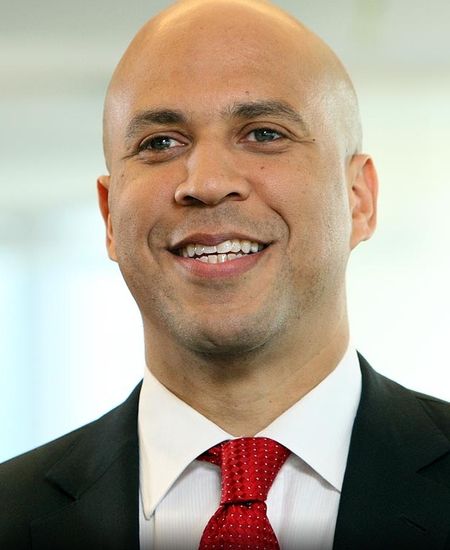
Sen. Cory A. Booker
Sponsored bills
Maddy summaryThis bill requires U.S. colleges and universities to update their anti-harassment policies to explicitly cover online communications (like emails and social media) and all campus activities, including off-campus events and dormitories. It mandates institutions to create clear procedures for reporting harassment based on protected characteristics (such as race, gender identity, or disability), including how they will investigate and respond to incidents. The bill also creates a new $50 million annual grant program to fund schools developing prevention programs, counseling services, or training for students and staff on recognizing and addressing harassment. These requirements supplement existing federal civil rights laws like Title IX but do not replace them.
Maddy summaryThis proposed constitutional amendment would explicitly authorize Congress and state governments to regulate campaign contributions and spending to influence elections, requiring such regulations to be viewpoint-neutral and reasonable. It would also permit states and Congress to establish public financing systems for campaigns, potentially offsetting private spending with public funds. The amendment allows distinctions between natural persons and corporations (including bans on corporate spending in elections) while explicitly protecting press freedom. As a proposed amendment, it would only take effect if ratified by 38 states within seven years.
Maddy summaryThe Protect America’s Workforce Act (S 2837) directly affects federal employees and their labor unions by reversing two executive orders that limited their collective bargaining rights. It nullifies Executive Orders 14251 and 14343, which had excluded certain federal workers from labor-management programs, and prohibits federal funding for any efforts to implement those orders. The bill ensures that all existing collective bargaining agreements between federal agencies and employee unions remain fully enforceable through their original terms, as long as they were in effect as of March 26, 2025. This preserves current workplace agreements without creating new obligations or altering existing labor-management processes.
Maddy summaryThis bill establishes a 6-year Medicare pilot program to provide medically tailored home-delivered meals to high-risk Medicare beneficiaries after hospital discharge. It requires selected hospitals (40 total, meeting quality ratings and program integrity standards) to screen eligible patients with diet-impacted conditions (like diabetes or heart failure), provide 2 tailored meals daily for 12+ weeks, and offer medical nutrition therapy. The program aims to improve health outcomes and reduce readmissions by covering costs without patient copays, using existing Medicare funding with budget-neutral adjustments to hospital payments. Hospitals must submit data on health outcomes and costs for evaluation by Medicare.
Maddy summaryThis bill amends the Foreign Assistance Act to prioritize HIV prevention and treatment in U.S. international aid programs. It specifically adds assistance for HIV pre-exposure prophylaxis (PrEP) medications to the list of covered activities and reclassifies certain HIV prevention efforts as "core life-saving humanitarian assistance." This change ensures U.S. foreign aid funding for HIV prevention, including PrEP, is treated with the same priority as other essential humanitarian programs. The bill directly affects U.S. foreign aid programs targeting HIV/AIDS prevention and treatment in partner countries.
Maddy summaryThis Senate resolution (SRES 390) designates September 2025 as "National Voting Rights Month" to honor voting rights history and encourage civic engagement. It does not create new laws but urges Congress to advance voting rights legislation (like the John Lewis Voting Rights Advancement Act), recommends schools teach about voting history and suppression, and encourages media campaigns to promote voter registration and election awareness. The resolution directly affects all U.S. citizens by highlighting voting access issues and promoting educational efforts, though it has no legal force. It follows historical context about voter suppression and recent voting rights challenges, including the 2013 Shelby County v. Holder Supreme Court decision.
Maddy summarySRES 392 is a Senate resolution designating November 16, 2025, as "National Warrior Call Day." It encourages all U.S. citizens to reach out to active-duty service members and veterans through phone calls or conversations to reduce isolation and connect them with support resources. The resolution specifically highlights the importance of peer-to-peer connections in addressing mental health challenges, citing veteran suicide statistics as context. As a symbolic measure (not a law), it does not create new programs but urges public engagement to support military personnel transitioning from service.
Maddy summaryThe Health Access Innovation Act of 2025 establishes a federal grant program to fund community-based organizations working in medically underserved areas. It authorizes $50 million in 2026, increasing to $70 million by 2030, to expand access to culturally appropriate care and address health inequities. Grants support services like medical screenings, hiring community health workers (including promotores de salud), and tackling barriers like transportation or housing that affect health outcomes. Priority is given to organizations that operated health programs during public health emergencies. The bill directly affects communities disproportionately impacted by chronic health disparities and the organizations serving them.
Maddy summaryThe Register America to Vote Act of 2025 would require states to establish automatic voter registration systems through state motor vehicle authorities. When individuals interact with these agencies (such as when applying for a driver's license), they would be automatically registered to vote unless they decline. The bill would mandate states to send written notices about registration status, protect privacy of voter registration information, and provide federal funding to help states implement these systems. This would affect eligible citizens who interact with state motor vehicle authorities, with exemptions for states that already have automatic registration systems in place.