

Maddy summaryThe Smart Sentencing Adjustments Act creates a federal grant program to help states reduce prison populations by at least 20% over three years. It provides two types of grants: planning grants ($700,000 max) for states to develop reduction strategies, and implementation grants ($70 million max) for states to enact specific changes like eliminating mandatory minimums, expanding early release programs, and improving reentry services. States receiving implementation grants must use funds for evidence-based policies such as diverting people from incarceration, revising sentencing laws retroactively, and expanding community-based support services for formerly incarcerated individuals. All states must submit annual reports tracking prison population changes and racial/socioeconomic impacts, while prohibiting new prison construction or policies that increase incarceration during the grant period.
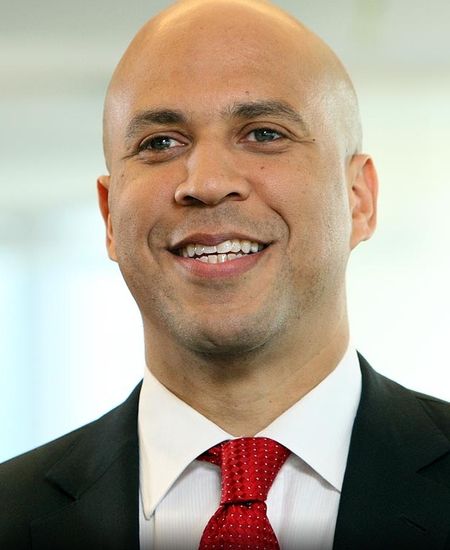
Sen. Cory A. Booker
Sponsored bills
Maddy summaryThis bill expands eligibility for student loan forgiveness under the Higher Education Act by adding specific criteria for adjunct faculty. It directly affects part-time teachers at colleges, vocational schools, or Tribal Colleges who teach at least 9 credit hours per semester (or equivalent weekly hours) and are not full-time employees elsewhere. The key provision modifies existing law to include these teaching hour requirements as a qualifying standard for loan forgiveness. It does not create new programs but adjusts who qualifies under current federal loan forgiveness rules for educators.
Maddy summaryThe New York-New Jersey Watershed Protection Act establishes a federal grant program to fund local restoration projects protecting water quality and wildlife habitats across the New York-New Jersey Harbor watershed. It provides competitive matching grants (up to 90% federal funding for small/rural/disadvantaged communities) to state/local governments, nonprofits, and tribal entities for activities like habitat restoration, stormwater management, and climate resilience projects. The program requires coordination with existing regional plans (such as the Hudson River Estuary Program) and prioritizes projects benefiting communities facing environmental injustice. Funding is authorized at $20 million annually (2024-2029), with at least 75% dedicated to grants, and mandates annual progress reports to Congress.
Maddy summaryThe Naloxone Affordability Act of 2023 requires the Government Accountability Office (GAO) to study how naloxone - a medication that reverses opioid overdoses - is covered by health insurance and the costs patients face when purchasing it. The study will specifically examine whether naloxone should be covered as an over-the-counter product under group health plans, Medicare, and Medicaid, and analyze out-of-pocket expenses for consumers. The GAO must complete this study and submit a report to Congress within one year of the bill’s enactment. This bill does not change current coverage or costs but aims to provide Congress with data to inform future policy decisions about naloxone access.
Maddy summaryThis bill requires the U.S. Department of Defense to develop a strategy for building an integrated maritime security capability in the Middle East, focusing on protecting allies from Iranian naval threats, piracy, and extremist groups. It mandates a 60-day strategy report to Congress detailing threat assessments, existing partnerships (like Combined Maritime Forces), efforts to integrate Israel, and intelligence coordination gaps. The bill also directs a 90-day feasibility study on funding this capability through contributions from Middle Eastern allies. The strategy and study directly affect U.S. military operations in the region and partner nations' security cooperation with the U.S. Navy.
Maddy summaryThe Child Care for Working Families Act establishes a new federal program to provide affordable, high-quality child care for working families with children under age 6. It requires states to implement a sliding fee scale (with no copayment for families earning up to 85% of state median income) and develop a tiered quality system for child care providers, with payment rates that support staff wages comparable to elementary educators. The bill prioritizes access for underserved populations including children with disabilities, children experiencing homelessness, children in foster care, and children from low-income families, while requiring states to improve child care quality and supply through dedicated funding streams. States must submit detailed plans demonstrating how they will meet these requirements to receive federal funding, which will be provided through a combination of direct child care assistance and quality improvement activities.
Maddy summaryThis bill clarifies what counts as a "conviction" for immigration purposes under U.S. law. It excludes dismissed, expunged, or deferred cases, probation without judgment, and appeals from being treated as convictions that could lead to deportation. It also allows sentencing courts to recommend against deportation for certain immigrants with past convictions, after notifying immigration authorities. The law would directly affect immigrants facing removal based on older or resolved legal cases that no longer qualify as "convictions" under this definition.
Maddy summaryThis bill prohibits insurers from denying coverage, canceling policies, or increasing premiums for life, disability, or long-term care insurance solely because someone is a living organ donor, without considering actual health risks. It also updates the Family and Medical Leave Act to include recovery from organ donation surgery as a qualifying condition for leave for private-sector employees and federal workers. Additionally, the bill requires the Health and Human Services Secretary to update public educational materials about living organ donation within six months, covering benefits, risks, and the new insurance protections. These changes directly affect living organ donors, insurers, and employers who must comply with the updated leave and insurance rules.
Maddy summaryThe HELP Copays Act (S 1375) changes how health insurance plans calculate patient cost-sharing. It requires that discounts, financial assistance, or third-party payments (like drug manufacturer coupons) count toward a patient’s deductible, copayment, or out-of-pocket limit. This directly affects individuals enrolled in group or individual health insurance plans who receive such assistance. The bill amends the Public Health Service Act and Affordable Care Act to ensure these payments reduce the actual out-of-pocket costs patients face, rather than being treated as separate expenses.
Maddy summaryThe Forced Arbitration Injustice Repeal Act (S 1376) would prohibit businesses from requiring customers, employees, or small businesses to agree to private arbitration for future employment, consumer, antitrust, or civil rights disputes. It also bans agreements that prevent people from joining class or collective lawsuits in these areas. The bill makes such forced arbitration clauses unenforceable and ensures courts - not arbitrators - decide if the law applies. This directly affects individuals and small businesses in disputes involving workplace discrimination, product issues, unfair competition, or civil rights violations, allowing them to seek justice collectively in court.