

Maddy summaryThis bill establishes the Baltic Security Initiative, requiring the U.S. Secretary of Defense to deepen security cooperation with Estonia, Latvia, and Lithuania (the "Baltic countries"). It authorizes $350 million annually for fiscal years 2024-2026 to enhance military capabilities like missile defense, cyber security, and joint planning, while addressing threats from Russia and China. The initiative mandates a strategy report to Congress within one year of enactment, detailing how the U.S. will achieve these security objectives. The bill directly affects U.S. defense spending and the military cooperation framework with the three Baltic nations.
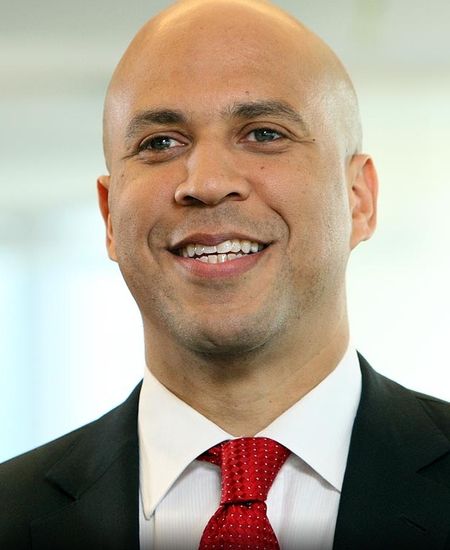
Sen. Cory A. Booker
Sponsored bills
Maddy summaryThe Access Technology Affordability Act of 2023 creates a new federal tax credit for individuals who purchase qualifying access technology for blind family members. It allows taxpayers to claim a credit of up to $2,000 per year (adjusted for inflation after 2024) for hardware, software, or IT that converts visual information into formats usable by blind individuals, such as screen readers or braille displays. The credit applies to the taxpayer, their spouse, or dependent blind family members, with a lifetime limit of $2,000 over any three consecutive years. The credit expires after 2028 and cannot be claimed for expenses already covered by other tax benefits.
Maddy summaryThe Transit to Trails Act establishes a federal grant program to fund transportation connectors (like buses, microtransit, or light rail) that link critically underserved communities to public parks, trails, and recreational areas. It directly benefits communities lacking adequate park access - defined as areas with high populations of people of color, low-income residents, Tribal communities, or those over half a mile from parks - by requiring projects to include culturally appropriate materials and prioritize low-emission vehicles, free/discounted rides for low-income riders, and local hiring. Grants, ranging from $25,000 to $500,000, cover up to 80% of project costs and mandate public reporting on community demographics and project outcomes. The program authorizes $10 million annually for the first two years, scaling to $40 million by year five, to improve mobility to public lands in underserved urban and rural areas.
Maddy summaryThe Haiti Criminal Collusion Transparency Act of 2023 requires the U.S. government to produce an annual report for five years detailing connections between Haitian criminal gangs and Haitian political and economic leaders. The report must identify specific gangs, their activities, and leaders linked to them, including how these ties threaten Haitian civilians and U.S. interests in Haiti. It also mandates that the U.S. identify individuals for potential visa restrictions and sanctions under existing laws, impose those sanctions within 30 days of the report, and publish the list publicly. The law expires five years after enactment.
Maddy summaryThe Sickle Cell Care Expansion Act of 2023 (S 1423) aims to improve sickle cell disease care through three key provisions. It provides $150 million annually for scholarships and loan repayments to medical students and residents who commit to specializing in sickle cell disease treatment (including 1 year of service per year of funding), prioritizing those from disadvantaged backgrounds. It allocates $50 million yearly for community-based grants to organizations improving health literacy, access to services, and advocacy for sickle cell patients and families. Additionally, it authorizes $70 million annually to fund transition programs helping young adults (ages 18-29) move from pediatric to adult care, including dedicated coordinators and mental health support. The bill directly affects medical professionals, community health organizations, and sickle cell patients, particularly in underserved communities.
Maddy summarySRES 188 is a symbolic Senate resolution celebrating the 75th anniversary of Israel's founding on May 14, 2023. It formally recognizes Israel's establishment, reaffirms the U.S.-Israel partnership, and highlights shared democratic values, security cooperation, and diplomatic achievements like the Abraham Accords. The resolution has no policy impact or direct effect on individuals or legislation - it serves solely as a ceremonial expression of support. It was introduced by a bipartisan group of senators and passed without implementing new laws or funding.
Maddy summaryThis bill, the Ending Forced Arbitration of Race Discrimination Act of 2023, prohibits employers from requiring employees to resolve claims of race discrimination through private arbitration. It invalidates any pre-dispute arbitration agreement or waiver for disputes involving discrimination, harassment, or retaliation based on race, color, or national origin under federal, tribal, state, or local law. Employees can now choose to file such claims in court instead of forced arbitration, and courts - not arbitrators - will determine if an arbitration clause applies. The law applies to claims arising after the bill's enactment date.
Maddy summaryThe Citizenship for Essential Workers Act would allow certain essential workers who performed critical jobs during the pandemic to adjust to lawful permanent residence without numerical limits. It covers workers in healthcare, emergency response, sanitation, food services, construction, agriculture, domestic work, and other essential sectors, provided they earned income in these fields during the public health emergency period. The bill includes provisions for background checks, employer documentation requirements, worker protections against retaliation for requesting documents, fee exemptions for low-income applicants, and employment authorization while applications are pending. It also establishes procedures for appeals and judicial review, and waives certain inadmissibility grounds for humanitarian, family unity, or public interest reasons. The Department of Homeland Security would need to issue interim rules within 180 days of enactment.
Maddy summaryThis concurrent resolution (SCONRES 9) expresses Congress's non-binding sense that climate change constitutes an emergency requiring urgent federal action. It urges the President to use existing authorities (like the National Emergencies Act) to mobilize resources for rapid climate mitigation, building on the Inflation Reduction Act's $369 billion climate investments. The resolution emphasizes addressing disproportionate impacts on frontline communities, advancing environmental justice, and accelerating the transition to renewable energy. It does not create new laws or declare a formal emergency but calls for leveraging current powers to scale climate action.
Maddy summarySJRES 4 is a joint resolution that removes the 1972 deadline for states to ratify the Equal Rights Amendment (ERA), which was originally proposed in House Joint Resolution 208. It declares that the ERA is valid as part of the U.S. Constitution if ratified by three-fourths of states (38), regardless of the expired deadline. The resolution directly affects the ERA ratification process, making it possible for states to complete ratification without time constraints. As of 2023, 38 states had already ratified the ERA, and this resolution would finalize its inclusion in the Constitution if enacted.