

Maddy summaryThis bill requires K-12 public schools to integrate Asian Pacific American history into American history and civics curricula. It amends the Elementary and Secondary Education Act to mandate that all American history teaching, teacher training, and national assessments include this content. The law directs the Smithsonian Institution’s Asian Pacific American Center to develop educational resources for teachers and students. It directly affects public school systems, educators, and students nationwide by expanding required historical content. The policy change aims to address historical omissions in standard curricula regarding Asian American and Pacific Islander contributions and experiences.
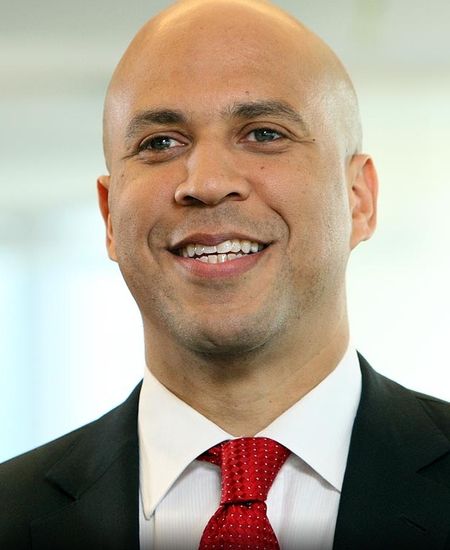
Sen. Cory A. Booker
Sponsored bills
Maddy summaryThe Northern Rockies Ecosystem Protection Act designates over 10 million acres of federal land in Idaho, Montana, Oregon, Washington, and Wyoming as wilderness areas to protect major ecosystems like Yellowstone, Glacier, and Salmon/Selway. It establishes biological connecting corridors that prohibit new roads, mining, and oil and gas development to allow wildlife movement and genetic diversity. The bill also designates numerous rivers as wild and scenic, creates recovery areas for damaged lands, and ensures tribal rights and water rights remain unchanged.
Maddy summaryThis bill amends federal meat and poultry inspection laws to allow businesses to sell State-inspected meat and poultry products online. It permits retail stores, restaurants, and similar establishments to ship these products directly to household consumers via mail or carrier, in normal retail quantities, within the U.S. (excluding exports). The change specifically applies to products inspected under state programs, not federal inspection, and affects small businesses that previously could not legally sell such products online. The law does not change inspection standards but removes a barrier to direct-to-consumer e-commerce for these products.
Maddy summaryThis is a symbolic Senate resolution (SRES 201) supporting National Nurses Week, observed annually from May 6-12. It recognizes nurses' contributions to healthcare, their role as patient advocates, and their status as the largest healthcare profession (over 4.5 million registered nurses in the U.S.). The resolution encourages the public to observe the week with recognition and activities but does not create new laws, funding, or requirements. It has no direct effect on policy or nursing practice.
Maddy summaryThis bill requires the President and Vice President to disclose detailed financial information, including tax returns for the three most recent years, to Congress and the Office of Government Ethics. It mandates divestment of financial interests that could create conflicts of interest by converting them to "conflict-free" investments or transferring them to a "qualified blind trust" within 30 days of taking office. The Office of Government Ethics must annually review these disclosures and report on compliance, with the ability to seek court action for noncompliance. The bill also requires presidential candidates to disclose tax returns after nomination and establishes public availability of these documents, redacting only sensitive personal information.
Maddy summaryThe EATS Act of 2023 would allow full-time college students (enrolled at least half-time in recognized institutions) to qualify for SNAP benefits, removing a current federal exclusion. It amends the Food and Nutrition Act by adding students to the definition of "household" and eliminating the existing rule that barred them from SNAP participation. This change directly affects college students meeting income requirements who are currently ineligible for food assistance due to their student status. The bill would take effect January 2, 2024, if enacted.
Maddy summaryThis Senate resolution (SRES 200) expresses support for designating April 30-May 6, 2023, as "National Small Business Week" to honor small businesses and entrepreneurs across the United States. It recognizes that small businesses (over 33 million nationwide supporting 62 million jobs) are vital to the U.S. economy and highlights their resilience. The resolution specifically calls for celebrating their contributions, acknowledging challenges they face, and supporting efforts to improve access for underserved small businesses. As a symbolic gesture - not a law - it does not create new policies or funding but formally recognizes small business impact.
Maddy summarySenate Resolution 119 recognizes the 202nd anniversary of Greece's independence (celebrated March 25, 2023) and celebrates the shared democratic values between Greece and the United States. The resolution highlights historical ties, including U.S. support during Greece's 1821 independence struggle, Greece's role in World War II, and its current status as a U.S. NATO ally. It also commends Greece's contributions to global security and its support for Ukraine's sovereignty following Russia's invasion. This procedural resolution serves as a symbolic gesture to strengthen bilateral relations without enacting new laws.
Maddy summarySRES 106 is a 2023 U.S. Senate resolution condemning China's implementation of the Hong Kong national security law and related actions. It specifically criticizes the law's use to suppress dissent, target figures like pro-democracy advocate Jimmy Lai and Cardinal Zen, and undermine Hong Kong's autonomy under the "one country, two systems" framework. The resolution urges governments to hold China accountable, supports Hong Kong residents' fundamental freedoms, and calls for dropping all national security law charges against detainees. It does not create new laws or impose direct consequences but serves as a symbolic expression of congressional concern about Hong Kong's political rights and rule of law.
Maddy summaryThis bill removes firearms from an existing exclusion in the Consumer Product Safety Act, meaning firearms would now be classified as consumer products under federal safety regulations. This change directly affects firearm manufacturers and sellers, who would then be subject to the same safety standards enforced by the Consumer Product Safety Commission (CPSC) as other consumer goods. The key mechanism is amending Section 3(a)(5) of the Consumer Product Safety Act to eliminate the specific exemption that previously prevented firearms from being regulated under this law.