

Maddy summaryThe Opportunities in Organic Act of 2023 creates a new federal program to help farmers and food handlers transition to and maintain organic certification. It provides direct cost coverage for organic certification (up to $1,500 per producer, with higher payments allowed for socially disadvantaged farmers or in high-cost regions) and funds eligible nonprofits to offer technical assistance, training, and financial support for organic practices like soil health management and cover cropping. The program specifically targets socially disadvantaged farmers, small farms, and communities near schools or sensitive ecosystems, with $50 million allocated for 2024-2025 and $100 million annually by 2027. Nonprofits administering the program must report on outcomes, including participation rates, barriers faced, and how many farmers achieved organic certification.
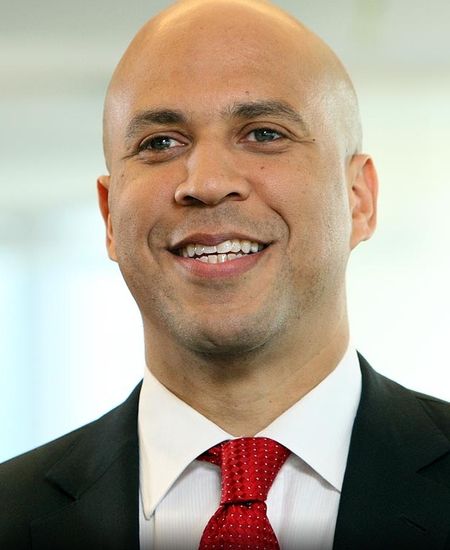
Sen. Cory A. Booker
Sponsored bills
Maddy summaryThe Diversify Act amends the TEACH Grants program to increase funding for future educators. It raises annual grant amounts from $4,000 to $8,000 and lifetime caps from $16,000 to $32,000. The bill expands eligible teaching locations to include high-need early education programs and removes penalties for failing to complete service requirements, replacing them with an electronic completion certificate. It also exempts TEACH Grants from automatic budget cuts (sequestration) under federal law. These changes directly affect teacher candidates pursuing careers in high-need schools and early education.
Maddy summaryThis bill authorizes a Congressional Gold Medal to honor the service of Army and Navy nurses who served during World War II. It directly recognizes approximately 73,000 nurses (including those who died in action or captivity) who provided critical medical care under combat conditions across 6 continents. The medal, designed by the Treasury Secretary, will be displayed at institutions like the Smithsonian, the Women in Military Service Memorial, and military museums. The bill is purely commemorative, with no new benefits or policy changes, focusing solely on formal recognition of their wartime contributions.
Maddy summaryThe Pollinator Power Act of 2023 amends the Rural Energy for America Program to require solar projects on agricultural land to include pollinator habitat. It mandates that at least 35% of new solar area must be pollinator habitat (defined by the Natural Resources Conservation Service), with 50% of that habitat planted using only native species. Projects meeting these requirements receive funding priority and limited grants covering up to 55% of project costs. This directly affects agricultural producers, rural small businesses, and farmer-owned cooperatives seeking solar project funding under the program.
Maddy summaryThis is a Senate resolution (SRES 205), not a law, that symbolically designates May 10, 2023, as "National Asian American, Native Hawaiian, and Pacific Islander Mental Health Day." It expresses the Senate's support for raising awareness about mental health challenges in the AANHPI community, citing statistics like 24.5% of Asian adults receiving mental health services in 2021 and suicide being the leading cause of death for AANHPI youth aged 10-24. The resolution encourages federal and state agencies to improve mental health care access and reduce stigma for this community. It does not create new policies or funding, serving only as a symbolic recognition.
Maddy summarySRES 115 is a Senate resolution designating April 2023 as "Countering International Parental Child Abduction Month" to raise public awareness about the issue. It urges Congress to educate the public on the emotional, psychological, and physical harm caused to children and parents when children are abducted across international borders. The resolution references statistics showing over 9,800 U.S. children were abducted internationally between 2010-2020 and notes U.S. legal frameworks like the Hague Convention and the Sean and David Goldman Act. It does not create new laws or funding but emphasizes symbolic recognition and public education efforts.
Maddy summaryThe Conservation Reserve Program Reform Act of 2023 extends the Conservation Reserve Program (CRP) and related conservation programs through 2028, replacing the previous 2023 end date. It increases the annual enrollment limit for CRP land to 8 million acres in 2024 (with higher annual caps through 2028) and sets a total cap of 24 million acres for the 2024-2028 period. New CRP contracts entered after October 1, 2023, must last 15-30 years (up from 10-15 years), and cost-sharing payments for conservation practices rise from 50% to 75%. The bill also makes the CLEAR 30 and SHIPP conservation programs permanent (removing "pilot" status) and adjusts payment schedules for long-term contracts.
Maddy summaryThe FIGHT Act of 2023 prohibits sponsoring, exhibiting, attending, or live-broadcasting animal fighting events, and bans transporting roosters for such purposes. It directly affects individuals and organizations involved in animal fighting, including those who broadcast events online. The bill allows any person to file a civil lawsuit to stop violations after 60 days' notice, with potential fines up to $5,000 per violation, and permits seizure of property used to facilitate these activities. The law does not override state laws banning animal fighting, except in cases of direct conflict.
Maddy summaryThis bill creates a new federal grant program to fund the redevelopment of blighted shopping centers. It authorizes $50 million annually (2024-2025) for grants up to $5 million per project to public entities (like cities or counties) redeveloping enclosed shopping centers meeting specific criteria: at least 20 acres, significant vacancy (e.g., 40+ stores with <30% occupancy or 2+ large vacant anchor stores), and common parking. Projects must prioritize transit-oriented development, affordable housing, and removing outdated infrastructure, with applicants required to contribute over 50% of costs through local funds or tax incentives. The program includes reporting requirements for Congress and a GAO study on effectiveness.
Maddy summaryS 1538, the Living Schoolyards Act of 2023, creates a federal grant program to help public elementary and secondary schools replace asphalt or pavement with nature-based outdoor spaces called "living schoolyards." The bill prioritizes schools where at least 40% of students qualify for free/reduced-price lunch or are in rural high-need districts, offering grants of $25,000-$100,000 per school. Key provisions require using funds for specific green upgrades like planting shade trees, installing gardens, adding outdoor furniture, or improving stormwater management - while limiting play equipment spending to 50% of funds. The program authorizes $25 million annually (2024-2028) for planning and implementation grants, with a 20% matching requirement waived for high-need schools.