

Maddy summaryS 4973, the "No Kings Act," removes presidential and vice presidential immunity from federal criminal prosecution, requiring such cases to be handled in federal district courts with appeals limited to the D.C. Circuit. The bill specifically bars the Supreme Court from reviewing cases involving claims of presidential immunity for official acts, including dismissals of indictments or overturning convictions. It directly affects current and former presidents and vice presidents by subjecting them to the same federal criminal accountability as all other citizens. Key provisions prevent courts from considering whether alleged crimes were part of official duties unless Congress specifies otherwise, and clarify that state criminal laws remain applicable.
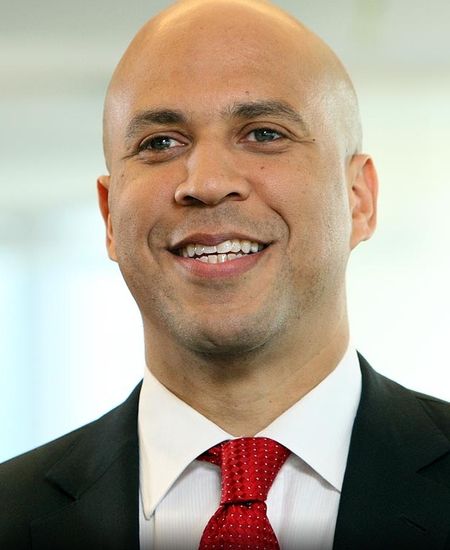
Sen. Cory A. Booker
Sponsored bills
Maddy summaryThis bill reauthorizes an existing program that provides support and treatment services for law enforcement officers experiencing mental health crises. It extends the funding period for this program from 2020-2024 to 2025-2029 under the Omnibus Crime Control and Safe Streets Act. The key mechanism is simply updating the expiration dates in the law to continue current funding without altering the program's scope or eligibility. The bill directly affects law enforcement officers who access these crisis support services through participating agencies.
Maddy summaryThis bill proposes a constitutional amendment to affirm that no person, including the President and other federal officials, is above the law. It would require all officials holding authority under the U.S. government to be subject to ordinary criminal prosecution for both official and unofficial actions. The amendment mandates that general laws apply to the President unless specified otherwise and grants Congress power to enforce this by, for example, extending the statute of limitations for prosecuting a sitting President during their term. If ratified by three-fourths of states, this change would become part of the Constitution, altering how federal law applies to high-level government officials.
Maddy summaryThe NO BAN Act (S 4961) expands federal anti-discrimination protections in immigration law to explicitly prohibit discrimination based on national origin or religion for nonimmigrant visa holders, refugees, and other temporary travelers. It reforms Section 212(f) of immigration law by requiring the President to provide specific, credible evidence to Congress within 48 hours before restricting entry, mandating narrow tailoring of such restrictions, and requiring waivers for family/humanitarian cases. The bill also creates detailed reporting requirements for all entry restrictions, including quarterly updates to Congress and public reports on visa denials, waivers, and refugee admissions. This directly affects travelers, visa applicants, and refugees impacted by presidential entry bans or restrictions, while adding new procedural checks on executive authority.
Maddy summaryThis bill authorizes a Congressional Gold Medal to honor U.S. and Filipino military personnel who defended Bataan, Corregidor, and Attu during World War II, as well as the impacted Saskinax̂ people of Attu who were imprisoned by Japan. The medal, designed by the Secretary of the Treasury, would be presented by congressional leaders and permanently displayed at the Smithsonian Institution's National Museum of American History. Duplicate bronze medals may be sold to cover production costs, with proceeds returned to the U.S. Mint. The bill recognizes historical service through a commemorative medal without creating new benefits or entitlements.
Maddy summaryThe George Floyd Justice in Policing Act of 2024 establishes new accountability measures for law enforcement by requiring data collection on use of force, stops, and racial profiling; creating a national misconduct registry; banning chokeholds and no-knock warrants in drug cases; and mandating body cameras for officers. The bill would affect all Federal, State, Tribal, and local law enforcement agencies receiving federal funding, particularly those participating in Byrne or COPS grant programs. It includes requirements for agencies to collect and report data on stops and searches disaggregated by race, ethnicity, and gender, and to implement training on racial bias and de-escalation techniques. The legislation also creates new reporting requirements for use of force incidents and establishes penalties for agencies failing to comply with these provisions.
Maddy summaryThis concurrent resolution (SCONRES 39) expresses Congress's view that individuals wrongfully or unjustly deported after establishing long-term ties in the U.S. (e.g., raising families, working, or serving as veterans) should have a fair chance to return. It urges the Department of Homeland Security (DHS) to create a centralized, dedicated unit - modeled after DHS’s existing ImmVets program for veterans - to review requests for reentry. The resolution notes current pathways are fragmented, slow, and hard to access, disproportionately harming families and communities, and emphasizes this approach would align with existing DHS authority. (Note: As a concurrent resolution, it has no legal force but aims to guide DHS policy.)
Maddy summaryThis bill provides $5 million annually from 2025 to 2029 to fund 6-week summer reading programs at schools participating in federal summer meal programs. It targets schools where at least 50% of pre-K-3 students are reading below grade level, requiring programs to include library access and literacy activities. States will distribute funds to eligible schools through competitive grants, with schools needing to partner with community organizations to implement the programs. The law focuses on supporting early literacy during summer breaks when learning gaps often widen for students in qualifying schools.
Maddy summaryThis bill caps TRICARE copayments for mental and behavioral health outpatient visits at the same level as primary care visits, applying to all TRICARE beneficiaries (including service members, retirees, and families) regardless of their status. It also temporarily freezes copayment increases for other specialty care services (excluding mental health) at 2021 levels for one year after enactment. The Secretary of Defense must submit a report within one year on the policy’s effects and recommendations to prevent future copayment hikes. The law directly affects military healthcare costs for beneficiaries seeking mental health care under TRICARE.
Maddy summary# Summary of Proposed Employment Rights and Anti-Discrimination Legislation This comprehensive bill proposes significant reforms to address workplace discrimination and harassment, with several key provisions: ## Key Provisions 1. **Expanded Protections**: - Extends protections to independent contractors, interns, volunteers, and trainees (Section 301) - Explicitly prohibits discrimination based on sex, sexual orientation, gender identity, and other protected characteristics 2. **Nondisclosure and Nondisparagement Agreements**: - Prohibits employers from requiring nondisclosure or nondisparagement clauses that cover harassment or discrimination claims (Section 302) - Establishes specific requirements for valid settlement agreements (21-day consideration period, written advice to consult attorney, 7-day revocation period) - Requires enforcement against employers who attempt to enforce prohibited clauses 3. **Arbitration Restrictions**: - Bans mandatory pre-dispute arbitration agreements for work disputes (Section 303) - Requires specific disclosures and waiting periods for post-dispute agreements - Allows civil actions for violations with attorney's fees 4. **Federal Contractor Requirements**: - Requires federal contractors to disclose labor and civil rights violations (Section 304) - Mandates periodic updates on compliance status - Establishes Labor Compliance Advisors within executive agencies 5. **Grant Programs**: - Creates national grants for preventing and addressing discrimination (Section 411-413) - Establishes legal assistance grants for low-income workers (Section 421-423) - Funds state advocacy systems to protect workers' rights (Section 431-436) ## Significance This legislation would substantially increase protections for workers by: - Making it easier to report harassment and discrimination - Preventing employers from silencing victims through restrictive agreements - Creating stronger enforcement mechanisms - Expanding access to legal assistance for vulnerable workers - Holding federal contractors accountable for labor violations The bill represents a major shift in workplace rights law, with implications for nearly all employers in the United States and significant changes to how discrimination claims are handled through legal processes.