

Maddy summaryThis Senate resolution (SRES 782) designates August 4-10, 2024, as "National Farmers Market Week" to symbolically recognize the role of farmers markets. It directly affects farmers markets across the U.S., which support local economies, connect urban and rural communities, and provide access to fresh food - particularly for low-income populations using nutrition benefits. The resolution highlights their economic impact ($1.7 billion in 2020), growth (8,771 markets in 2019), and contribution to sustainable farming and community health, without creating new laws or funding.
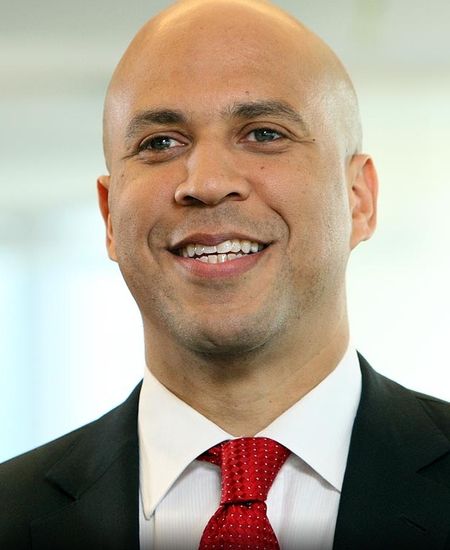
Sen. Cory A. Booker
Sponsored bills
Maddy summaryThe Prescription Drug Affordability and Access Act creates a new Bureau within Health and Human Services to lower prescription drug costs for patients. The Bureau will review drug prices annually, requiring manufacturers to submit detailed pricing data including research costs, profits, international comparisons, and patient impact information. If a drug's price is deemed too high, the Bureau can require manufacturers to lower prices and return excess revenue, or authorize other companies to produce the drug at a lower price. This bill directly affects drug manufacturers, patients, and government health programs like Medicare and Medicaid by giving the Bureau authority to regulate drug pricing.
Maddy summaryThis bill establishes the Destination Reception Assistance Act, creating a federal program to provide medium-term support services to certain immigrants released into the U.S. by Homeland Security. It directly affects individuals granted parole, placed in removal proceedings, or with pending asylum applications ("eligible arrivals"). The program funds local governments and nonprofits to deliver concrete services including housing assistance, healthcare, job training, legal aid for work authorization/asylum applications, childcare, transportation support, and case management. Administered through a New Arrival Services Board and local community boards, it allocates $3 billion annually (2025-2028) to prioritize communities with high concentrations of eligible arrivals facing acute service needs.
Maddy summaryThis resolution recognizes the progress made by the Americans with Disabilities Act of 1990 in advancing independent living and economic self-sufficiency for people with disabilities, while highlighting persistent challenges like high poverty rates, employment barriers, and inaccessible services. It calls on multiple federal agencies - including the Department of Labor, Health and Human Services, and the Federal Communications Commission - to take specific actions, such as developing employment policies, improving accessibility in communications, and expanding home- and community-based services. The resolution urges bipartisan efforts to dismantle systemic barriers and strengthen opportunities for people with disabilities to fully participate in work and community life. As a non-binding resolution, it does not create new laws but serves as a formal statement of congressional intent and a framework for future policy action.
Maddy summary# Summary of the Health Equity and Accountability Act of 2024 This comprehensive healthcare legislation focuses on improving health equity, expanding access to care, and diversifying the healthcare workforce. Key provisions include: 1. **Language Access & Cultural Competence**: Mandates language access services for patients with limited English proficiency, requiring healthcare providers to implement cultural competence training and provide interpretation services. 2. **Workforce Development**: Establishes numerous new programs to increase diversity in healthcare professions, including: - Scholarships and fellowships for underrepresented minorities - Programs targeting historically Black colleges, Hispanic-serving institutions, and other minority-serving institutions - Leadership development programs for underrepresented health professionals - Enhanced training for internationally educated health professionals 3. **Physician Immigration Reform**: Amends immigration laws to: - Extend and modify the Conrad State 30 program for physician retention - Create pathways for foreign-trained physicians to practice in underserved areas - Streamline visa processes for healthcare professionals 4. **Funding Mechanisms**: Establishes the Health Professions Workforce Fund with substantial annual appropriations ($392 million in FY2025, increasing to $552 million by FY2032) to support healthcare education and training programs. 5. **Underserved Areas Focus**: Prioritizes funding for institutions in medically underserved communities and health professional shortage areas, with specific provisions for nursing education and medical schools in underserved regions. 6. **Data Collection & Reporting**: Requires collection and reporting of demographic data to track progress in diversifying the healthcare workforce and improving health outcomes in underserved populations. The legislation aims to address systemic disparities in healthcare access and quality by increasing workforce diversity, improving access to care in underserved communities, and creating more equitable pathways into healthcare careers.
Maddy summaryThe ASSET Act removes asset limits from key federal assistance programs, allowing low-income families to save money without losing eligibility. It eliminates restrictions on savings for Temporary Assistance for Needy Families (TANF), Supplemental Nutrition Assistance Program (SNAP), and Low-Income Home Energy Assistance Program (LIHEAP) benefits. The bill also updates Supplemental Security Income (SSI) resource limits to $20,000 for individuals and $10,000 for couples in 2024, with annual inflation adjustments. These changes directly affect millions of households who previously faced barriers to building financial security while receiving public assistance.
Maddy summaryThe Health Over Wealth Act (S 4804) requires for-profit corporations owning health care entities (such as hospitals, physician practices, and nursing facilities) to disclose detailed financial and operational information to the government. Covered firms must report on debt levels, ownership structures, staffing patterns, political spending, and other metrics to increase transparency about private equity's role in health care. The bill establishes risk mitigation requirements, including escrow accounts for 5 years, and prohibits certain real estate transactions that could weaken health care entities. It also creates a Task Force to monitor private equity's impact on health care access, quality, and equity, with annual reporting requirements to Congress.
Maddy summaryThe Environmental Health in Prisons Act requires Federal, State, local, and Tribal carceral facilities to monitor and publicly report on environmental conditions including air quality, water safety, temperature, and exposure to hazardous materials. It establishes an advisory panel of public health experts and formerly incarcerated people to recommend environmental health improvements, mandates that facilities communicate environmental health information to incarcerated people and staff, and creates grant programs to fund infrastructure upgrades and programs that improve environmental health conditions. The bill prohibits facilities from penalizing people who request environmental health information or report concerns, directly affecting approximately 2 million incarcerated people and staff across the U.S. correctional system.
Maddy summaryThe DINE Act amends the Older Americans Act to integrate "food is medicine" programs into existing services for older adults. It requires screening for eligibility in these programs during routine assessments and adds referrals to them as part of care coordination. Key provisions include incorporating produce prescriptions and medically tailored meals into nutrition education, counseling, and service delivery systems. The bill directly affects older Americans by expanding access to nutrition-based health interventions through existing federal and community programs. It modifies specific sections of the Older Americans Act to include these food-focused approaches without creating new funding streams.
Maddy summaryThe Stop Corporate Capture Act requires agencies to disclose conflicts of interest when reviewing studies submitted by interested parties, including corporations, industry groups, or advocacy organizations. It mandates that agencies make these studies publicly available and consider social equity impacts in rulemaking decisions. The bill establishes an Office of the Public Advocate to improve public participation in the regulatory process and conduct social equity assessments. It also includes penalties for submitting false information to agencies and requires agencies to explain why they withdraw proposed rules. These provisions aim to increase transparency and reduce undue corporate influence in regulatory decision-making.