

Right to IVF Act This bill provides a statutory right to access fertility treatments (e.g., in vitro fertilization). Specifically, under the bill, individuals have the right to access fertility treatments and to make decisions about the use of their reproductive genetic material (e.g., embryos) without limitation or interference. Health care providers and insurers have the right to provide and cover these services, respectively. Manufacturers of applicable drugs or devices also have the right to provide these drugs or devices. The bill supersedes state laws that limit or otherwise interfere with the provision of fertility treatments as set out under this bill, including laws that require medically unnecessary procedures or services in conjunction with fertility treatments or that restrict the ability of individuals to receive fertility treatments based on marital status or sex (including sexual orientation or gender identity). The bill does not affect state health and safety regulations for medical facilities or health care providers that are in accordance with widely accepted and evidence-based medical standards and for which the purpose cannot be achieved in another, nonrestrictive manner. The Department of Justice may bring civil actions against states, individuals, or entities that implement or enforce limitations or requirements that violate this bill. Individuals and health care providers may also bring civil actions. In addition, the bill provides for coverage of fertility treatments under Medicare and Medicaid and for members of the uniformed services and veterans. It also requires private insurers that cover obstetrical services to also cover fertility treatments.
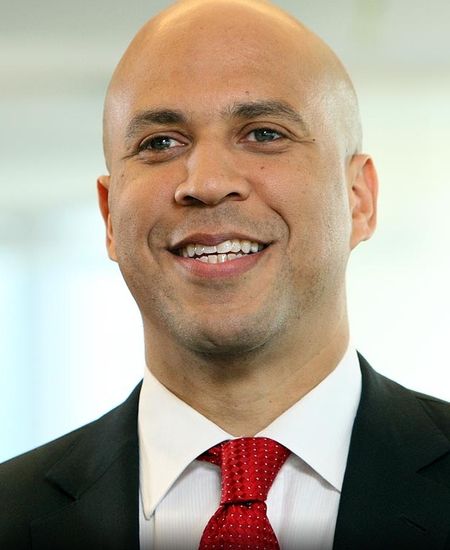
Sen. Cory A. Booker
Sponsored bills
Maddy summaryThis Senate resolution (SRES 820) symbolically supports designating September 21-28, 2024, as "National Estuaries Week" to raise public awareness about estuaries. It highlights estuaries' ecological and economic importance - such as supporting jobs, protecting coastlines, and sustaining biodiversity - without creating new laws or funding. The resolution expresses the Senate's backing for protecting and restoring estuaries but does not impose obligations or alter existing policies. It is a procedural statement, not a substantive legislative measure.
Maddy summarySRES 821 is a symbolic Senate resolution expressing support for designating September 15-21, 2024, as "National Adult Education and Family Literacy Week." It aims to raise public awareness about the importance of adult education, workforce skills, and family literacy programs, which help address challenges like low literacy rates affecting employment, healthcare access, and child development. The resolution encourages public support for existing programs but does not create new funding or policy changes. As a procedural resolution, it has no binding effect.
Maddy summaryThis bill prohibits the Department of Defense from selling or buying military-grade assault weapons and "covered ammunition" (larger-caliber rounds like .223 Remington and 7.62 NATO) in the commercial market. It directly affects the Department of Defense, government-owned weapon plants, and firearms/ammo dealers by requiring dealers to meet strict new standards: holding proper licenses, conducting federal background checks, implementing security measures, limiting individual ammunition sales (500 rounds of covered ammo max per 30 days), and maintaining electronic records. Dealers failing to comply face bans on selling to the government. The bill also mandates annual reports from government plants on commercial sales and requires the Attorney General to update background check systems for ammunition dealers.
Maddy summaryThe CCAMPIS Reauthorization Act (S 5033) reauthorizes federal grants to colleges and universities to support child care for student parents. It provides $500 million annually (2025-2030) for institutions to establish or subsidize campus-based child care, sliding-fee-scale services, or before/after-school programs for eligible student parents. To qualify, students must be enrolled at participating colleges with significant Pell Grant recipients and meet specific financial criteria. Institutions must report on program outcomes, demographics, and quality standards, while prohibiting use of funds for construction (except repairs) or adding extra eligibility barriers beyond Pell Grant status.
Maddy summaryThe Smaller Class Sizes for Students and Educators Act of 2024 authorizes $2 billion in federal grants to help school districts reduce class sizes in kindergarten through third grade at high-poverty public elementary schools. School districts must apply with evidence-based plans to limit classes to 18 students or fewer, focusing on hiring teachers, creating additional classroom space (with limits), and providing professional development. Priority is given to districts serving the most students from low-income families, and grants require annual reporting on progress and outcomes. The bill mandates evaluations of student achievement, teacher working conditions, and program effectiveness, with funds supplementing - rather than replacing - existing education budgets.
Maddy summaryThis bill clarifies that health insurance plans cannot discriminate against patients needing dialysis by making Medicare cover their costs instead of the plan. It specifically prohibits plans from treating dialysis services differently than other health services based on a patient's kidney disease diagnosis or treatment need. The bill amends Medicare law to ensure coverage terms for dialysis patients are not unfairly limited compared to other medical services, while still allowing plans to choose which dialysis providers they include in their networks. It directly affects Medicare beneficiaries with end-stage renal disease (ESRD) and the health insurance plans covering their care.
Maddy summaryThis bill requires the U.S. Department of Agriculture (USDA) to prioritize purchasing meat, poultry, fruits, and vegetables that meet specific domestic sourcing criteria. For meat and poultry, the USDA must buy products labeled "Product of USA" or "Made in the USA" where possible. For fruits and vegetables, purchases must come from the delivery state or an adjacent state, whenever practicable. The bill also mandates that contract awards consider "best value" (not just lowest price) and gives priority to vendors sourcing from small and mid-sized farms.
Maddy summaryS 5025, the FIRE Cancer Act of 2024, establishes cancer prevention programs for firefighters by requiring federal grant funding for multi-cancer early detection screening tests. It authorizes $700 million in grants to cover up to $1,750 per screening test for eligible firefighters. The bill also creates a voluntary program allowing firefighters to share anonymized test results with FEMA and CDC to identify cancer trends, while protecting personal information through de-identified data sharing. This legislation directly affects active and retired firefighters by expanding access to preventative cancer screenings and enabling research into cancer causes in the firefighting profession.
Maddy summaryThis bill (S 5006) redesignates two specific locations within Paterson Great Falls National Historical Park to honor Congressman Bill Pascrell, Jr. It renames the "Great Falls Scenic Overlook Trail Bridge" to "Congressman Bill Pascrell, Jr. Scenic Overlook Trail Bridge" and "Overlook Park" to "Congressman Bill Pascrell, Jr. Overlook Park." All official references in federal laws, documents, or maps will automatically use these new names. The bill is purely commemorative and does not alter park operations, funding, or public access.