

Maddy summaryS 1164, the "Increasing Access to Dental Insurance Act," removes a barrier preventing people from purchasing standalone dental insurance through health insurance marketplaces. The bill amends the Affordable Care Act to prohibit the Secretary from blocking enrollment in dental plans offered via exchanges simply because a person isn't also enrolled in a separate health insurance plan. This change directly affects individuals seeking dental coverage who may not have comprehensive health insurance. The key mechanism is eliminating a prior restriction that required dental plan enrollment to be tied to a health insurance plan.
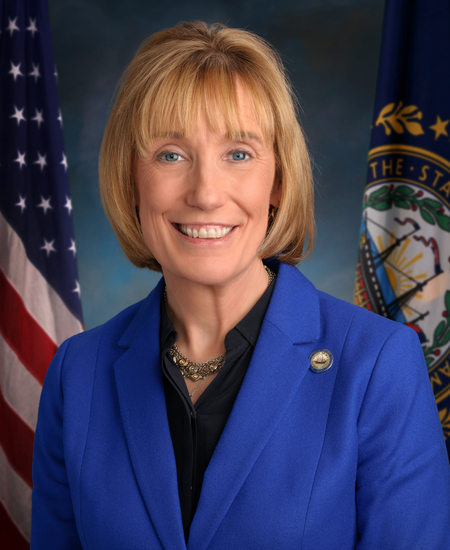
Sen. Margaret Wood Hassan
Sponsored bills
Maddy summaryThis bill requires the U.S. Trade Representative to track industrial subsidies from China’s government and report annually to Congress on subsidies threatening U.S. employment and manufacturing of strategically critical goods (like materials for national security or critical infrastructure). It mandates collaboration with multiple federal agencies, including Commerce, State, Agriculture, and the Small Business Administration, to monitor both existing and planned Chinese subsidies. The reports must identify specific risks and recommend actions to protect U.S. industries, focusing on sectors vital to national or economic security. This directly affects U.S. manufacturers and workers in industries competing with Chinese-subsidized products.
Maddy summaryThis bill, S 1168 (Portable Ultrasound Reimbursement Equity Act of 2025), would expand Medicare coverage to include separate reimbursement for portable ultrasound transportation and setup services, mirroring the existing payment structure for portable X-ray services. It directly affects medical equipment suppliers who provide mobile ultrasound services to Medicare beneficiaries. The bill amends Medicare law to require the Secretary to establish payment rules for portable ultrasound services that are substantially similar to those for portable X-ray services under existing regulations. These changes would take effect for services furnished on or after January 1, 2027.
Maintaining and Enhancing Hydroelectricity and River Restoration Act of 2025 This bill establishes a new investment tax credit in the amount of 30% of the basis of any hydropower improvement property. The bill defines hydropower improvement property as property that adds or improves fish passage at a qualified dam; maintains or improves the quality of the water retained or released by a qualified dam; promotes downstream sediment transport and habitat maintenance; upgrades, repairs, or reconstructs a qualified dam to meet safety and security standards; improves public uses of, and access to, public waterways impacted by a qualified dam; removes an obsolete river obstruction; or places into service an approved remote dam. Further, written approval for hydropower improvement property must be obtained from the Federal Energy Regulatory Commission or state or local officials prior to January 1, 2035. The bill also allows an election to claim the investment tax credit for qualified progress expenses for some types of hydropower improvement property in advance of such property being placed into service. Any investment tax credit amount claimed for qualified progress expenses reduces the amount of the investment tax credit that may be claimed once the hydropower improvement property is placed into service. The bill authorizes certain entities, including tax-exempt and governmental entities, to treat the investment tax credit for hydropower improvement property as a payment of tax and receive a refund of any overpayment (also known as elective pay). Finally, the investment tax credit for hydropower improvement property may be transferred (i.e., sold).
Maddy summaryS 1184 authorizes a joint U.S.-Canada aerial law enforcement program along the shared border, modeled after an existing maritime agreement. The program would involve U.S. agencies (like Customs and Border Protection and the Coast Guard) and Canadian law enforcement, operating within 50 miles of the border - except during emergencies or when required for safety. It mandates strict privacy and civil rights protections, including mandatory training for officers and requirements for congressional notification. The bill also requires a report on drone usage along the northern border within one year, assessing risks to privacy and interagency coordination. No new funding is authorized for this program.
Maddy summarySRES 120 is a ceremonial Senate resolution recognizing the 113th anniversary of Girl Scouts of the United States of America (March 12, 2025). It celebrates the organization’s founder, Juliette Gordon Low, and honors Girl Scouts’ mission of building girls’ courage, confidence, and leadership skills through programs like STEM, outdoor activities, and civic engagement. The resolution has no policy or funding changes - it simply acknowledges the group’s history and impact on over 50 million alumnae. It does not directly affect any individuals or require new government action.
Maddy summaryS 1138 requires U.S. Customs and Border Protection to deploy up to 50 additional scanning systems and hire 100 new agents focused on inspecting vehicles and people traveling *from the U.S. to Mexico*. It mandates that by March 2027, at least 10% of southbound conveyances must undergo inspection, using methods like scanning or physical checks. The bill also requires quarterly reports on seized currency, firearms, and ammunition from outbound inspections, along with annual reports detailing resource use and inspection rates. These provisions apply specifically to the U.S.-Mexico border and expire after five years.
Maddy summaryThe Vessel Tracking for Sanctions Enforcement Act of 2025 (S 1103) establishes a 4-year pilot program to use big data analytics in identifying vessels that may be evading U.S. sanctions or export controls by disabling or manipulating their Automatic Identification System (AIS). The program, run by U.S. Customs and Border Protection at the National Targeting Center, analyzes vessel data like cargo type, ownership, destination, and AIS manipulation patterns to flag high-risk shipments. It requires coordination with Commerce, Treasury, and intelligence agencies, and mandates a report to Congress assessing the pilot's effectiveness and making future recommendations. The bill does not authorize new funding and focuses solely on testing this data-driven approach to detect sanctions evasion.
Maddy summaryThe Paycheck Fairness Act strengthens equal pay protections by modifying the Equal Pay Act of 1963 to require employers to prove that non-sex factors used in pay decisions are job-related, consistent with business necessity, and account for the entire pay difference. It prohibits employers from relying on salary history when setting pay for new hires and enhances protections for workers who discuss wages or file pay discrimination claims. The bill requires the Equal Employment Opportunity Commission to collect and publish compensation data disaggregated by sex, race, and ethnicity to better enforce pay discrimination laws. These provisions directly affect workers in the private and public sectors, particularly women and women of color who face the largest pay gaps. The act also establishes a National Award for Pay Equity to recognize employers making significant efforts to eliminate pay disparities.
Maddy summaryThis bill expands the Work Opportunity Tax Credit to include military spouses. It adds "qualified military spouse" as a new category eligible for the credit, meaning employers who hire spouses of active-duty service members can claim the tax benefit. To qualify, a spouse must be certified by a local agency as married to an Armed Forces member at the time of hire. The change applies to hires occurring after the law's effective date, directly affecting military spouses seeking employment and employers who hire them.