

Maddy summaryThe Increasing Competitiveness for American Drones Act of 2023 requires the Federal Aviation Administration to establish a regulatory pathway for commercial drone operations beyond visual line of sight (BVLOS) within two years. It creates a new Office of Associate Administrator of UAS Integration to oversee drone integration into the national airspace system and establishes a UAS Certification Unit to develop certification processes for drones. The bill extends the FAA's authority to grant exemptions for drone operations until the new rules take effect, requiring risk-based approaches for authorizing operations. This legislation directly affects drone manufacturers, commercial operators, and the FAA by creating new regulatory processes to enhance U.S. competitiveness in drone technology while maintaining safety standards.
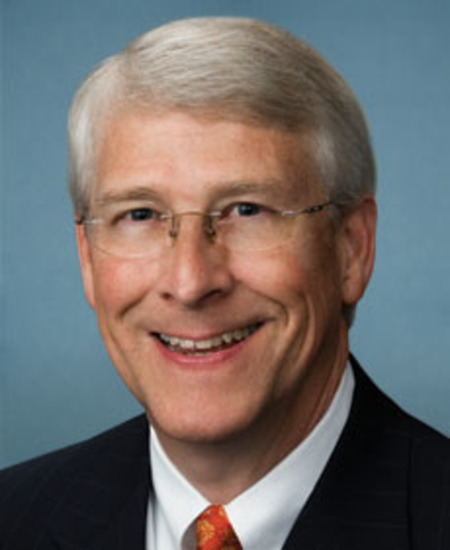
Sen. Roger F. Wicker
Sponsored bills
Maddy summaryS 293, the Fair Access to Banking Act, prohibits large financial institutions (with $10 billion+ in assets) from denying banking services to lawful businesses based on political reasons, bias, or industry category. It requires these "covered banks" to justify service denials using documented, objective risk assessments - not subjective political judgments - and to provide written explanations for denials. The bill directly affects businesses operating legally in industries often targeted by banks (like cannabis or firearms), ensuring equal access to services like loans, credit cards, or payment processing. Violations allow affected businesses to sue for treble damages and attorney fees, with payment networks and credit unions also barred from blocking access based on "reputational risk."
Maddy summaryThe CHOICE Act creates three education programs: (1) it updates DC opportunity scholarships for low-income students to require enrollment in public or private schools for the next school year; (2) it expands parental choice under IDEA for children with disabilities by allowing public or private funds (including tax credits) to cover school costs, while protecting religious school autonomy; and (3) it launches a 5-year military scholarship pilot for dependents living on installations, providing up to $12,000 annually per secondary student (with inflation adjustments) to attend chosen public or private schools, funded at $10 million yearly. The military program uses random selection for oversubscribed applications and requires participating schools to comply with anti-discrimination rules except for religiously affiliated institutions. All programs aim to increase educational options for specific student groups while maintaining state accreditation and parental choice.
Maddy summaryS 251, the "Stop Supreme Court Leakers Act of 2023," makes it a federal crime for current Supreme Court employees or officers to leak specific confidential information. The bill defines confidential information broadly, including internal case notes, draft opinions, communications between justices and staff, and personal details of justices not already public. It prohibits unauthorized disclosure of this information and imposes criminal penalties: up to 10 years in prison for most violations, or a $10,000 fine specifically for leaking internal notes. The law directly affects only current Supreme Court staff, adding a new Section 1522 to Title 18 of the U.S. Code to enforce these protections.
Maddy summaryS 260, the Promoting Access to Diabetic Shoes Act, amends Medicare rules to allow nurse practitioners and physician assistants to certify coverage for specialized diabetic shoes for beneficiaries with diabetes. This change directly affects Medicare patients requiring diabetic footwear by expanding the healthcare providers authorized to meet documentation requirements. The key provision updates Section 1861(s)(12) of the Social Security Act to include these providers where "physician" is currently listed. This simplifies access to covered footwear without altering Medicare benefits or costs.
Maddy summaryThe Rural Physician Workforce Production Act of 2023 creates a new Medicare payment to incentivize medical residency training in rural areas. Hospitals can receive additional funding for residents who spend at least 8 weeks in rural training locations or for residents in programs where over half of training occurs in rural settings. The payment amount is based on updated national medical residency training costs, adjusted annually for inflation. This bill aims to increase the number of physicians trained for rural practice by providing financial incentives to hospitals, critical access hospitals, and sole community hospitals.
Maddy summaryThis bill would allow individuals with valid concealed carry permits from their home state to carry concealed handguns in other states that either permit concealed carry for residents or don't ban it. It requires permit holders to have a government-issued ID, meet federal firearm possession rules, and carry only handguns (excluding machineguns or destructive devices). Carrying would still follow local restrictions in the destination state, such as bans in schools or government buildings. The bill does not change how states issue permits but creates automatic recognition of valid permits across participating states.
Maddy summaryThis concurrent resolution (SCONRES 3) is a symbolic statement affirming religious freedom as a fundamental human right protected under the U.S. Constitution. It specifically recognizes the 237th anniversary of the Virginia Statute for Religious Freedom (enacted January 16, 1786) and affirms that religious freedom allows all people - of any faith or no faith - to live, work, and worship according to their beliefs. The resolution emphasizes that religious freedom is a unifying principle essential to American democracy, citing historical documents like the First Amendment and presidential proclamations. As a non-binding resolution, it does not create new laws or affect any specific group, but serves to publicly affirm this principle on Religious Freedom Day.
Maddy summaryThis Senate resolution designates the week of January 22-28, 2023, as "National School Choice Week." It encourages parents to learn about K-12 education options - including public, charter, private, and homeschooling - and promotes public events to raise awareness about educational choice during that week. The resolution does not create new laws or regulations but formally recognizes the annual observance through symbolic congressional support.
Maddy summaryThis bill prohibits the U.S. Department of Energy from selling petroleum products from the Strategic Petroleum Reserve to any entity owned or controlled by China, or to entities that might later export those products to China. It directly affects the Department of Energy’s management of the reserve and Chinese entities seeking to purchase U.S. oil. The key mechanism requires the Secretary of Energy to block sales to China-linked entities and to ensure any sale does not result in the petroleum being exported to China. This is a direct restriction on existing reserve operations, not a new policy. The bill applies to all current and future sales from the reserve.