

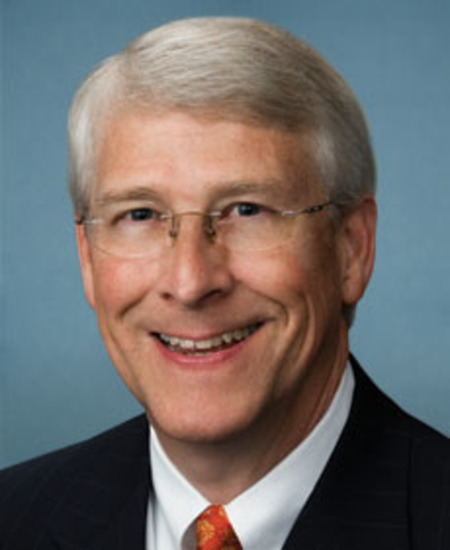
Photo of Roger F. Wicker
R United States Senate · Mississippi

Sen. Roger F. Wicker

Compare
Total votes
1,054
all sessions
Attendance
98%
22 missed
Near the chamber average
With party
92%
of cast votes
Near the chamber average
Bipartisan score
4%
crosses aisle rarely
Near the chamber average
Sponsored
1,307
bills & resolutions
Near the chamber average
Committees
19
assignments
1,307 bills and resolutions

Sponsored bills

Total
1,307
Primary
145
Co-sponsor
1,162
This page
1,307
matching current filters
Co-sponsor S 204
In committee · United States Senate · Co-sponsor
Born-Alive Abortion Survivors Protection Act

Maddy summaryThis bill requires healthcare providers performing abortions to provide the same immediate medical care and hospital admission to any infant born alive during or after the procedure, as they would for any newborn. It mandates reporting of any failure to provide this care to law enforcement and imposes penalties including fines or up to 5 years in prison for violations. Women who undergo abortions may pursue civil lawsuits for damages, including compensation for physical/psychological harm and three times the abortion cost, if providers fail to comply. The law directly affects abortion providers, hospitals, and the women receiving abortion services.

In committee Feb 1, 2023 1 co-sponsor
Co-sponsor S 156
In committee · United States Senate · Co-sponsor
Accountability Through Electronic Verification Act

Maddy summaryThis bill requires all U.S. employers to use E-Verify, an electronic employment verification system, to check the work authorization of all new hires and existing employees. It mandates verification before hiring, with all employers required to comply within one year of enactment, and expands verification requirements to existing employees. The bill increases penalties for non-compliance, including higher civil fines (up to $25,000 per violation) and potential debarment from federal contracts for repeat violations. It also establishes a new Employer Compliance Inspection Center to standardize enforcement and improve accountability for employers who fail to verify employment eligibility.

In committee Jan 31, 2023 1 co-sponsor
Co-sponsor S 160
In committee · United States Senate · Co-sponsor
Sarah's Law

Maddy summaryS 160, titled "Sarah's Law," amends immigration law to require mandatory detention for non-citizens charged with crimes causing death or serious bodily injury. It specifically applies to individuals who entered without inspection, held revoked visas, or fall under certain immigration categories. The bill also mandates that Immigration and Customs Enforcement (ICE) notify crime victims or their families about the alien's identity, immigration status, custody details, and removal efforts. This policy change directly affects non-citizens facing such charges and ensures victims receive ongoing case information.

In committee Jan 31, 2023 1 co-sponsor
Co-sponsor S 161
In committee · United States Senate · Co-sponsor
JOBS Act of 2023

Maddy summaryThe JOBS Act of 2023 expands Federal Pell Grant eligibility to short-term job training programs that provide 150-600 clock hours (8-15 weeks) of instruction aligned with in-demand local industries. It directly affects students enrolled in eligible career-focused programs at institutions of higher education, requiring programs to offer industry-recognized credentials and meet validation standards from employers or sector partnerships. Key provisions include mandatory industry validation of program quality, institutional credit articulation for noncredit programs, and lowering the minimum Pell Grant percentage from 10% to 5% for qualifying students. The bill ensures these programs count toward students’ total Pell Grant eligibility period while maintaining standard Pell Grant terms and conditions.

In committee Jan 31, 2023 1 co-sponsor
Co-sponsor S 186
In committee · United States Senate · Co-sponsor
Prohibiting Abortion on Federal Lands Act

Maddy summaryThis bill prohibits the federal government from promoting, supporting, or contracting with organizations that provide abortions on federal lands or in federal facilities, including national parks, military bases, and courthouses. It directly affects federal agencies and contractors operating on public lands or in government buildings by banning any federal funding, promotion, or contractual relationships with abortion providers. Key provisions define "abortion entity" as any organization performing, referring for, or financially supporting abortions, and prohibit federal actions that expand access to abortion in these settings. The law creates a clear policy restriction on federal involvement in abortion services within government-controlled spaces.

In committee Jan 31, 2023 1 co-sponsor
Co-sponsor S 166
In committee · United States Senate · Co-sponsor
HEALING Mothers and Fathers Act

Helping with Equal Access to Leave and Investing in Needs for Grieving Mothers and Fathers Act or the HEALING Mothers and Fathers Act This bill revises the family and medical leave entitlement and limits funding to certain family planning programs. Specifically, the bill provides family and medical leave due to the spontaneous loss of an unborn child of an employee or spouse of the employee. It also establishes a tax credit for an individual who experiences, during the taxable year, the stillbirth of a child who would have been a qualifying child of the individual for the taxable year if the child had been born live. The bill further prohibits the Office of Population Affairs within the Department of Health and Human Services from providing federal assistance to voluntary family planning programs that (1) perform abortions, (2) provide funding to another entity that performs abortions, or (3) refer patients to abortion providers.

In committee Jan 31, 2023 1 co-sponsor
Co-sponsor S 196
In committee · United States Senate · Co-sponsor
Prohibiting Federal Emergencies for Abortion Act

Maddy summaryThis bill prohibits the President from declaring federal emergencies under three key laws (the National Emergencies Act, Public Health Service Act, and Stafford Act) for purposes related to abortion. Specifically, it blocks emergency declarations meant to promote, support, or expand abortion access, or to take legal action against states that restrict abortion. The bill defines "abortion" as intentionally terminating a pregnancy (with limited exceptions for live birth or health) using instruments, medicine, or devices. It directly affects federal emergency powers, preventing their use to advance abortion policy or challenge state abortion laws. The law does not change existing abortion regulations but restricts how emergency declarations can be utilized.

In committee Jan 31, 2023 1 co-sponsor
Primary SRES 15
In committee · United States Senate · Lead sponsor
A resolution honoring the lives of 2 fallen Mississippi police officers, Sergeant Steven Robin and Officer Branden Estorffe, and expressing condolences to their families.

Maddy summarySRES 15 is a Senate resolution honoring Sergeant Steven Robin and Officer Branden Estorffe, Mississippi police officers who died in the line of duty on December 14, 2022. It expresses the Senate's condolences to their families and colleagues, recognizes their service and dedication, and acknowledges all law enforcement officers who protect communities. The resolution formally commemorates their sacrifice and affirms support for local law enforcement across the country. As a commemorative gesture, it does not create new laws or policies.

In committee Jan 26, 2023 0 co-sponsors
Co-sponsor S 120
In committee · United States Senate · Co-sponsor
Educational Choice for Children Act

Maddy summaryThe Educational Choice for Children Act creates tax credits for individuals and corporations that contribute to scholarship organizations providing educational scholarships. Individuals can claim a credit up to 10% of their adjusted gross income or $5,000, while corporations can claim up to 5% of taxable income. Scholarships are available to students in households earning no more than 300% of the area median income and can be used for public or private school expenses, including religious schools. The bill establishes a $10 billion annual cap on total contributions with funds allocated on a first-come, first-served basis, and requires scholarship organizations to verify student income and distribute scholarships to multiple students. It also prohibits government control over scholarship organizations and schools, ensuring maximum freedom for these organizations.

In committee Jan 26, 2023 1 co-sponsor
Co-sponsor S 105
In committee · United States Senate · Co-sponsor
Children Have Opportunities in Classrooms Everywhere Act

Maddy summaryThis bill would change how federal education funds are distributed by allowing funds to follow students to the schools they attend, rather than being tied to school districts. It provides financial support to low-income students (from households with income ≤130% of poverty level) who attend public, private, or home schools. The bill establishes two types of funding: a "concentration distribution" based on school district poverty rates (ranging from $50-$300) and a "basic distribution" based on family income. Funds would be distributed to the student's school or deposited into their 529 education savings account, with privacy protections for collected data.

In committee Jan 26, 2023 1 co-sponsor
Showing 811 to 820 of 1,307 bills
Previous 1 … 81 82 83 … 131 Next