

Maddy summaryThis joint resolution (SJRES 12) seeks congressional disapproval of the District of Columbia Council’s approval of the Revised Criminal Code Act of 2022 (D.C. Act 24-789). It directly affects D.C. residents and local government, as the resolution targets the District’s newly enacted criminal code. The mechanism is a formal congressional disapproval under the District of Columbia Home Rule Act, requiring passage by both chambers to block the D.C. law from taking effect. The resolution does not alter the D.C. code itself but aims to halt its implementation through federal action.
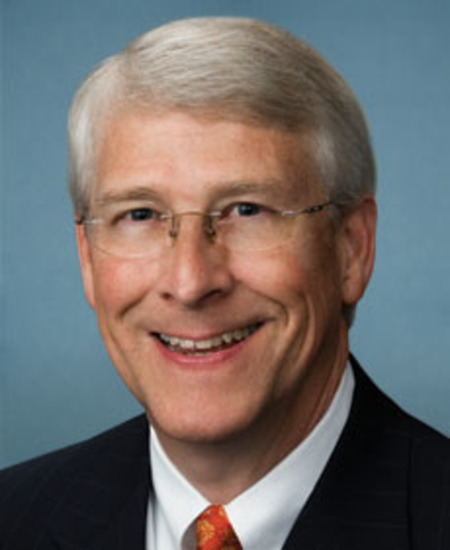
Sen. Roger F. Wicker
Sponsored bills
Maddy summarySRES 45 is a non-binding Senate resolution introduced on February 9, 2023, by a group of senators expressing the Senate's view that the current migration levels at the U.S. southern border constitute a crisis. This resolution does not create new laws or policies, nor does it directly affect any individuals or groups - it serves solely as a symbolic statement of the Senate's position. It contains no concrete policy mechanisms or implementation plans, as resolutions of "sense" are typically used for expressing opinions rather than enacting change. The resolution was referred to the Senate Judiciary Committee but has no legal effect.
Maddy summaryS 375, the Simplifying Grants Act of 2023, requires federal agencies to simplify grant application processes for small local governments. It directly affects "covered local governments" (defined as counties, cities, or towns with populations below the threshold for an urbanized area as determined by the Census). The bill mandates agencies to review and simplify grant requirements within 180 days of enactment, and to publish step-by-step checklists for each grant program. Agencies must also report annually on simplified processes, technical assistance provided, and funding awarded to covered versus other local governments.
WALL Act of 2023 This bill appropriates $25 billion for the construction of a wall on the U.S.-Mexico border and addresses other issues related to immigration. As offsets to this spending, the bill restricts the child tax credit, earned income credits, and lifetime learning credits to those with Social Security numbers and not prohibited from employment in the United States. Also, individuals who file taxes using an individual taxpayer identification number (ITIN) instead of a Social Security number must pay a fee ($300 for each individual on the tax return using an ITIN). The bill restricts eligibility for certain federally-funded benefits, including unemployment compensation, supplemental nutrition assistance, and housing benefits, to those eligible to work in the United States. Agencies administering such benefits must use the E-Verify program to confirm the eligibility of applicants for such benefits. This bill also sets fines for non-U.S. nationals ( aliens under federal law) who improperly enter the United States or overstay their visas.
Maddy summaryS 347, the ANTI-SOCIAL CCP Act, would prohibit U.S. transactions with social media companies deemed to be controlled by "countries of concern" like China, Russia, or Iran. It specifically targets companies meeting criteria such as being based in those countries, having significant foreign ownership, or being subject to foreign influence over data sharing or content moderation - directly affecting platforms like TikTok and its parent company Bytedance. The bill authorizes the President to block all U.S. financial transactions with these companies under existing economic sanctions law (IEPA), effectively preventing their commercial operations in the U.S. market. Exemptions cover intelligence activities and physical goods imports, but the core provision would require immediate action against covered social media firms upon enactment.
Maddy summaryThis bill prohibits the President from blocking or delaying new oil, gas, coal, or mineral leases on federal lands (including national forests, public lands, and the outer continental shelf) without explicit congressional approval. It specifically prevents the President from imposing moratoria on new energy leases or withdrawing federal lands from energy development without an act of Congress. The law applies directly to federal land management decisions, requiring Congress to authorize any action that would restrict energy leasing or development on these lands. This is a procedural change affecting how federal energy leasing and land use decisions are made.
Maddy summaryThis bill amends federal murder law to treat distributing fentanyl that causes death as felony murder. It specifically targets individuals who distribute fentanyl (2+ grams of a mixture containing fentanyl, or 0.5+ grams of its analogues) knowing it contains the substance and causing death. The law adds a new provision stating that distributing fentanyl resulting in death constitutes first-degree murder, punishable by death or life imprisonment. This directly affects fentanyl distributors whose actions lead to fatalities, with the penalty applying when the distributor knew or should have known the substance contained fentanyl or its analogues.
Maddy summaryThis bill excludes certain federal broadband grants from recipients' taxable income, directly affecting internet service providers, local governments, tribes, and other entities receiving qualifying grants under specific programs. Key provisions clarify that grant money from programs like the Infrastructure Investment and Jobs Act's Broadband Equity, Access, and Deployment Program (Section 60102) or State Digital Equity Grants (Section 60304) is not counted as income. It also prevents double tax benefits by disallowing deductions for expenses covered by these grants and reducing the adjusted basis of related property. The rule applies to grants received after March 11, 2021, and covers grants funded through federal broadband initiatives or state/local programs using specific federal funds.
Maddy summaryThis bill creates a new federal crime for individuals who transmit money, property, or other value across state lines with the intent to finance illegal border crossings under existing immigration laws. It imposes penalties including fines equal to the value sent, up to one year in prison, or both for those convicted. The law also adds new grounds for denying entry (inadmissibility) or deporting immigrants who are convicted of this offense, affecting both the financiers and immigrants involved in such activities. The bill directly targets those facilitating unlawful border entry through financial means, with clear penalties and immigration consequences.
Maddy summaryThis joint resolution seeks congressional disapproval of a Department of Labor rule published in the Federal Register on December 1, 2022 (87 Fed. Reg. 73822), which addressed "Prudence and Loyalty in Selecting Plan Investments and Exercising Shareholder Rights." If enacted, it would block the rule from taking effect, directly affecting retirement plan fiduciaries (such as those managing 401(k) plans) who must follow these standards. The resolution uses a specific disapproval process under Chapter 8 of Title 5, U.S. Code, to nullify the rule without altering its content. This is a procedural action targeting the rule's implementation, not a new policy.