

Maddy summarySenate Bill 1627 would require the President to nominate and the Senate to confirm the Inspector General for both the Federal Reserve Board of Governors and the Bureau of Consumer Financial Protection. Currently, these positions may not require Senate confirmation under federal law. The bill amends Title 5 of the U.S. Code to add this confirmation requirement, aligning the appointment process with other federal inspector general roles. This change directly affects how these two financial oversight positions are filled, without altering the inspectors general's duties or authority.
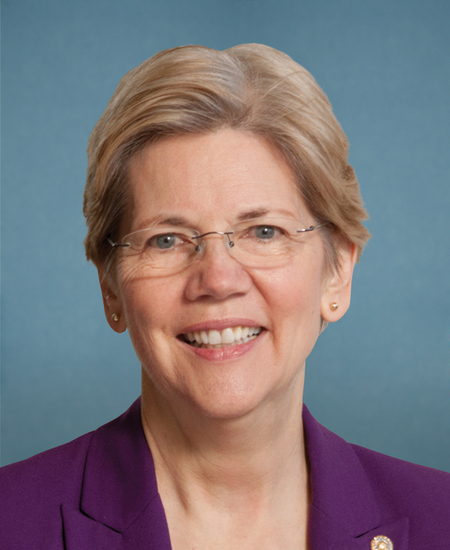
Sen. Elizabeth Warren
Sponsored bills
Modern Emoluments and Malfeasance Enforcement Act or the MEME Act This bill prohibits the President, the Vice President, Members of Congress, those holding Senior Executive Service positions, admirals, generals, and other federal public officials from engaging in or benefiting from the issuance, sponsorship, or promotion of certain assets. The spouse and dependent children of such an official are also covered by the prohibition. Assets covered by the bill are securities, security futures, commodities, digital assets such as cryptocurrency or a meme coin, as well as derivatives, options, warrants, mutual funds, or exchange traded funds of the preceding assets. The prohibition applies to (1) such officials during their term of service and for 180 days prior to and after their service, and (2) the spouse and dependent children of such an official during that same period. Civil and criminal penalties under the bill include disgorging (giving) to the Treasury any profits from prohibited transactions, fines, and imprisonment for up to five years. The bill provides additional penalties for such prohibited activities if they involve bribery or insider trading. The U.S. Office of Special Counsel may also determine that federal employees or officers serving in other positions are covered by the prohibition.
Maddy summaryThis bill (S 1621) reverses recent actions that weakened fair housing enforcement by requiring the Department of Housing and Urban Development (HUD) to repeal a March 2025 rule that eliminated mandatory fair housing compliance reviews. It mandates HUD to define "affirmatively furthering fair housing" to include actively addressing segregation and disparities, extending this duty to all housing programs. The bill also creates a public, quarterly-updated database tracking all fair housing complaints by protected class, type of housing, and resolution status, and requires a report on discrimination risks in digital housing platforms like rental apps and AI-driven mortgage tools. It directly affects HUD, fair housing enforcement agencies, and individuals experiencing housing discrimination based on protected characteristics.
Maddy summarySRES 201 is a non-binding Senate resolution designating the week of May 4-10, 2025, as "National Small Business Week." It honors small businesses and entrepreneurs across all U.S. communities for their economic contributions, citing that small businesses support over 59 million jobs. The resolution recognizes their resilience and celebrates their role in strengthening local economies. This symbolic gesture, consistent with annual presidential proclamations since 1963, does not create new laws or affect any specific group through policy changes.
Maddy summaryThis resolution urges the Secretary of Health and Human Services (HHS) to withdraw a March 2025 Federal Register notice (90 Fed. Reg. 11029) that proposed reducing public comment periods for HHS regulations. It seeks to restore the previous standard of public participation in rulemaking, which HHS had followed for 54 years under the Administrative Procedure Act. The resolution emphasizes that public input is critical for fair policy decisions affecting millions of Americans through HHS regulations, including those impacting beneficiaries, state governments, and health service providers. As a non-binding resolution, it expresses the Senate’s position but does not alter HHS policy.
Maddy summaryThis bill amends the tax code to deny corporations a tax deduction for excessive executive bonuses paid to certain high-level employees. It expands the definition of "covered individual" to include more executives (such as those who performed services after 2024 or were top earners before 2025) and requires companies to meet specific SEC filing criteria. The change applies to tax years beginning after December 31, 2024, making large bonuses non-deductible for affected corporations. The policy directly impacts publicly traded companies that pay significant compensation to covered executives.
This joint resolution terminates the national emergency declared by President Donald J. Trump on April 2, 2025, which imposed a 10% tariff on most imports to the United States and additional duties on specified trading partners.
Maddy summaryThis resolution (SRES 189) is a symbolic Senate measure expressing support for designating April 1-30, 2025, as "Fair Chance Jobs Month." It does not create new law but aims to raise awareness about employment barriers faced by people with criminal records, including systemic hiring restrictions and lack of access to licenses or stable jobs. The resolution urges efforts to dismantle these barriers, expand workforce programs for returning citizens, and promote fair-chance hiring practices. It directly affects formerly incarcerated individuals and employers seeking to hire them, focusing on policy changes like reducing licensing restrictions and connecting job seekers with opportunities.
Maddy summaryThis bill strengthens enforcement of the Animal Welfare Act by giving the Attorney General new authority to sue violators and seek penalties up to $10,000 per day for ongoing violations. It requires dealers and exhibitors to hold valid licenses for animal sales or transport and allows seized animals to be taken by the government if they’re harmed by violations. Fines collected from violations will fund temporary care for animals during legal cases. The law directly affects animal dealers, exhibitors, and enforcement agencies (USDA and DOJ), clarifying that violations include breaches of related rules and regulations.
Maddy summary# Summary of the SHIPS for America Act of 2025 This comprehensive maritime legislation establishes a wide-ranging framework to strengthen the U.S. maritime industry, workforce, and infrastructure. Key components include: ## Shipbuilding and Maritime Infrastructure - Establishes a **Shipbuilding Financial Incentives Program** (Section 501) to support commercial vessel construction - Creates a **National Shipbuilding Research Program** (Section 522) to advance shipbuilding technology - Mandates an **Anticipated Commercial Vessel Construction Survey** (Section 506) to inform industry planning - Establishes a **United States Center for Maritime Innovation** (Section 521) to accelerate technology adoption - Requires a **Maritime Infrastructure Readiness Assessment** (Section 523) ## Workforce Development - Creates a **Merchant Marine Career Retention Program** (Section 606) with an 8-3-1 schedule to maintain mariner qualifications - Provides **Public Service Loan Forgiveness** for Merchant Marines (Section 601) - Establishes **Eligibility for Educational Assistance** (Section 602) for Merchant Mariners - Creates **Reimbursement for Spouse Relicensing Costs** (Section 604) - Implements **Noncompetitive Federal Employment** for Merchant Mariners (Section 605) ## Education and Training - Establishes **Centers of Excellence for Domestic Maritime Workforce Training** (Section 612) - Creates a **Maritime Career and Technical Education Advisory Committee** (Section 613) - Develops a **Military to Maritime Transition Program** (Section 616) - Establishes **International Exchange Programs** for mariners and naval architects (Section 618) - Mandates **Maritime Worker Data Collection** (Section 615) to track industry needs ## Additional Provisions - Requires **Reports on National Defense Reserve Fleet** (Section 509) - Mandates an **Assessment of Commercial Best Practices for Navy Shipbuilding** (Section 511) - Establishes **Military Sealift Command** improvements (Section 513) - Creates a **Maritime Workforce Data Collection System** (Section 615) The legislation is funded through the **Maritime Security Trust Fund** (established under Section 50301(b)) and represents a comprehensive strategy to strengthen U.S. maritime capabilities for national security, economic competitiveness, and workforce development.