

Maddy summaryThis bill, S 1716 (Vision Lab Choice Act of 2025), modifies vision care coverage under health plans by limiting agreements between optometrists and vision plans to two-year terms (with possible two-year extensions) and prohibiting plans from restricting optometrists' choices of labs or suppliers for patient vision care. It directly affects optometrists and health insurance issuers offering limited-scope vision benefits, ensuring they cannot force optometrists to use specific labs or materials. The bill requires annual state enforcement notifications by the Secretary and clarifies that state laws governing vision plans take precedence if they conflict with this law. It does not change overall coverage requirements but focuses on provider choice and contract terms within vision benefit plans.
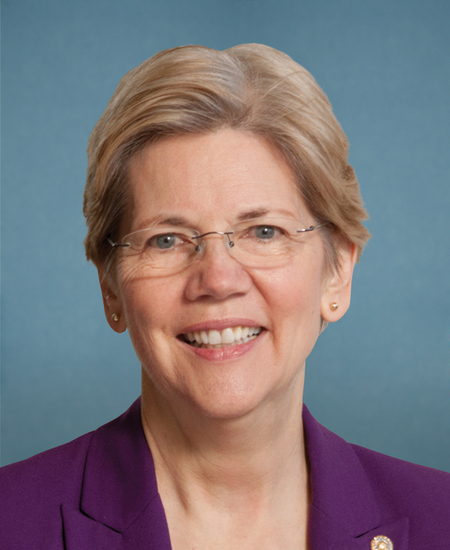
Sen. Elizabeth Warren
Sponsored bills
Maddy summaryThe Nurse Staffing Standards for Hospital Patient Safety and Quality Care Act of 2025 establishes specific minimum nurse-to-patient ratios for different hospital units, such as 1:1 in trauma emergency units and 2:1 in critical care units. Hospitals must develop and annually update staffing plans with nurse input, document actual staffing levels for each shift, and prohibit practices like averaging ratios or mandating overtime. The bill provides protections for nurses who refuse unsafe assignments and prohibits retaliation for reporting staffing violations, with enforcement through Medicare, Medicaid, and other federal health programs. This applies to all hospitals, including those operated by the Department of Veterans Affairs, Department of Defense, and Indian Health Service.
Maddy summarySRES 208 is a symbolic Senate resolution designating May 10, 2025, as "National Asian American, Native Hawaiian, and Pacific Islander Mental Health Day." It supports raising awareness about mental health disparities affecting AANHPI communities, where 65.3% of those needing treatment don’t receive it, and AANHPI youth face high suicide rates. The resolution encourages federal, state, and local health agencies to improve mental health literacy and culturally appropriate care access for AANHPI populations. As a non-binding resolution, it does not create new laws or funding but aims to highlight existing challenges and promote community-focused solutions.
Maddy summaryS 1705, the Chip Security Act, requires U.S. companies exporting specific advanced integrated circuits (used in AI systems and high-performance computing) to install location verification technology before shipping them abroad. It directly affects manufacturers and exporters of chips classified under U.S. export control numbers like 3A090 or 4A090. The bill mandates that these chips include security mechanisms to verify their location and prevent diversion or tampering, with companies needing to report suspicious activity like unauthorized location changes. The Commerce Secretary must implement these requirements within 180 days and conduct annual assessments to update security standards. This aims to strengthen compliance with export laws and protect national security by securing chip supply chains.
Maddy summaryS 1668 prohibits senior U.S. government officials - including the President, Vice President, Members of Congress, and Senate-confirmed appointees - from issuing, sponsoring, or endorsing cryptocurrencies, tokens, or stablecoins for profit. It also bans acquiring similar financial interests through derivatives or investment funds, while allowing normal public market trading. Violations face civil penalties of up to 10% of the financial interest's value or profits gained, and criminal charges if losses exceed $1 million or personal financial gain occurs. The law applies during official service and for one year after leaving office.
Maddy summaryThe Pursuing Equity in Mental Health Act (S 1448) modifies federal grant programs to prioritize organizations serving racial and ethnic minority communities for mental health funding, increasing annual grant allocations from $60 million to $80 million starting in 2026. It mandates a National Institutes of Health study within 9 months of enactment to identify mental health disparities in minority groups, assessing impacts of trauma and bias, and requires a report with specific recommendations. The bill also establishes new training requirements for health professionals (including social workers, psychologists, and counselors) to develop culturally competent practices addressing mental health disparities. Additionally, it authorizes $20 million annually for 2026-2031 to fund a public outreach strategy reducing stigma and promoting culturally appropriate mental health services, alongside $150 million yearly for NIH clinical research on health disparities.
Maddy summaryS 1650, the VA Employee Fairness Act of 2025, modifies collective bargaining rules for Veterans Health Administration (VHA) employees. It removes existing subsections (b), (c), and (d) from Section 7422 of Title 38 and redesignates the current subsection (e) as (b). This change directly affects VHA health care workers who negotiate with management over wages, hours, and working conditions. The bill clarifies that these modifications do not impact the Secretary's existing authority over incentive pay and expedited hiring under Section 706 of Title 38.
Maddy summaryThis bill bans the commercial provision of conversion therapy - defined as paid attempts to change a person's sexual orientation or gender identity - as it is deemed ineffective and harmful. It directly affects therapists, clinics, and any commercial entity offering such services, while exempting gender transition support and non-discriminatory counseling. Key mechanisms include prohibiting paid conversion therapy, banning deceptive advertising (e.g., claiming it’s harmless), and empowering the Federal Trade Commission and state attorneys general to enforce penalties. The law focuses on preventing fraud by stopping profit-driven practices with no scientific basis, aligning with professional consensus on the risks.
Maddy summarySRES 206 is a symbolic Senate resolution supporting National Nurses Week, to be observed May 6-12, 2025. It recognizes nurses’ contributions to healthcare, highlights their role as patient advocates and leaders in public health, and acknowledges their impact across all stages of life. The resolution encourages the public to observe the week with recognition and activities but does not create new laws or alter policies. It directly honors the nursing profession, which includes over 4.9 million registered nurses in the U.S., without imposing any requirements on government or institutions.
Maddy summaryS 1628, the Improving Access to Nutrition Act of 2025, eliminates work requirements for the Supplemental Nutrition Assistance Program (SNAP). The bill directly affects approximately 6.1 million people currently subject to SNAP work requirements, including many Black and Hispanic individuals, families with children, and people with health barriers that prevent compliance. It amends the Food and Nutrition Act of 2008 by removing subsection (o) that enforced work requirements and making related administrative adjustments. This change aims to prevent benefit reductions or terminations for vulnerable households during the pandemic, addressing findings that work requirements disproportionately impact communities of color and those facing health or homelessness challenges. The bill takes effect 180 days after enactment.