

Assault Weapons Ban of 2025 This bill makes it a crime to knowingly import, sell, manufacture, transfer, or possess a semiautomatic assault weapon (SAW) or large capacity ammunition feeding device (LCAFD). The prohibition does not apply to a firearm that is (1) manually operated by bolt, pump, lever, or slide action, except for certain shotguns; (2) permanently inoperable; (3) an antique; (4) only capable of firing rimfire ammunition; or (5) a rifle or shotgun specifically identified by make and model. The bill also exempts from the prohibition the following, with respect to a SAW or LCAFD: importation, sale, manufacture, transfer, or possession related to certain law enforcement efforts, or authorized tests or experiments; importation, sale, transfer, or possession related to securing nuclear materials; and possession by a retired law enforcement officer. The bill permits continued possession, sale, or transfer of a grandfathered SAW, which must be securely stored. A licensed gun dealer must conduct a background check prior to the sale or transfer of a grandfathered SAW between private parties. The bill permits continued possession of, but prohibits sale or transfer of, a grandfathered LCAFD. Newly manufactured LCAFDs must display serial number identification. Newly manufactured SAWs and LCAFDs must display the date of manufacture. The bill also allows a state or local government to use Edward Byrne Memorial Justice Assistance Grant Program funds to compensate individuals who surrender a SAW or LCAFD under a buy-back program.
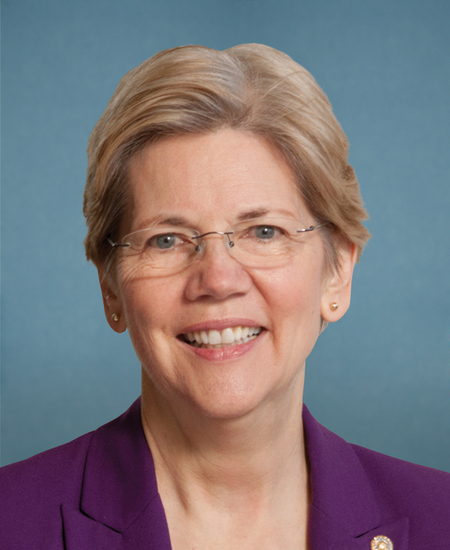
Sen. Elizabeth Warren
Sponsored bills
Maddy summaryThe Equality Act (S 1503) amends existing civil rights laws to explicitly prohibit discrimination based on sexual orientation and gender identity in employment, housing, public accommodations, credit, and jury service. It expands the definition of "sex" in federal civil rights laws to include sexual orientation and gender identity, clarifying that discrimination based on these factors is prohibited under current law. The bill directly affects individuals, businesses, government entities, and service providers by requiring compliance with these expanded anti-discrimination protections. It does not create new rights but makes clear that existing protections against sex discrimination already cover sexual orientation and gender identity, as affirmed by the Supreme Court in Bostock v. Clayton County. The legislation aims to provide consistent nationwide protections against discrimination that LGBTQ+ people have historically faced in key areas of public life.
Maddy summaryThe Medicare for All Act would establish a government-run health insurance program providing comprehensive coverage to all U.S. residents, replacing current private insurance, Medicare, and Medicaid. The program would cover all medically necessary services including hospital care, prescription drugs, dental, vision, mental health, and reproductive care without patient cost-sharing (except for limited prescription drug cost-sharing under specific conditions). It would prohibit private insurers from selling duplicate coverage and require employers to stop providing duplicate benefits, while allowing supplemental coverage for additional services not included in the core benefits package. The bill includes a transition period with immediate coverage for children and a gradual phase-in for full implementation, with benefits first available for most individuals in 2027. The program would be funded through a new Medicare for All Trust Fund, consolidating current health care program revenues.
Maddy summaryThis bill prohibits data brokers from selling, reselling, licensing, trading, or otherwise sharing military servicemembers' personal information (such as names, addresses, or service details) with foreign adversaries or entities controlled by them. It requires data brokers to include contractual safeguards in agreements to prevent recipients from further sharing this information with covered nations. The Federal Trade Commission and state attorneys general can enforce these rules through civil actions to stop violations and seek remedies for affected servicemembers. The bill also mandates a congressional report within one year to assess enforcement and potential expansions of the protections.
Maddy summaryThis bill (S 1519) designates approximately 1.56 million acres of the Arctic National Wildlife Refuge in Alaska as wilderness under federal law. It permanently protects this specific area from development like oil drilling or road construction by adding it to the National Wilderness Preservation System. The designation directly affects the refuge's management, ensuring this coastal plain ecosystem remains preserved in its natural state.
Maddy summarySRES 172 is a symbolic Senate resolution designating the week of April 11-17, 2025, as the eighth annual "Black Maternal Health Week," established by the Black Mamas Matter Alliance, Inc. It aims to raise national awareness about the severe maternal health disparities affecting Black women and birthing people in the U.S., citing data showing Black women are 2-3 times more likely to die from pregnancy-related causes than white women. The resolution does not create new laws or allocate funding but formally recognizes systemic inequities, such as the 2023 maternal mortality rate of 50.3 deaths per 100,000 live births for Black women, and emphasizes the need for culturally responsive care. It serves as a platform to amplify community-led efforts and policy solutions, like the Black Maternal Health Momnibus Act, without implementing direct policy changes.
Maddy summaryThis resolution designates the week of April 19-27, 2025, as "National Park Week" in the U.S. Senate. It encourages the public to responsibly visit, experience, and support national parks across the United States. The resolution highlights the National Park System’s role in preserving natural and cultural resources while acknowledging its economic impact and recreational value. It does not create new laws or alter funding, focusing solely on recognition and public engagement.
Maddy summaryThe PROSPECT Act creates grants to improve childcare access for student parents attending community colleges and minority-serving institutions. It provides access grants for free, high-quality childcare for up to 500,000 children under age 3, requiring centers to offer non-traditional hours, disability accommodations, and culturally responsive care. Impact grants will expand childcare supply through training, mentorship, and funding for providers in underserved areas, while pipeline grants support early childhood educator preparation programs to grow the childcare workforce. The bill mandates that childcare centers prioritize low-income student parents, maintain staff wages comparable to elementary educators, and provide accessible care for children with disabilities. These grants aim to reduce barriers to college completion for student parents while strengthening the infant and toddler childcare workforce.
Maddy summaryThe Child Care Nutrition Enhancement Act of 2025 increases federal reimbursements for meals served in child care settings. It adds a 10-cent per meal and supplement reimbursement for providers participating in the Child and Adult Care Food Program, effective after the bill's enactment. This change directly affects licensed child care centers, family day care homes, and group day care providers who receive federal nutrition funding. The bill modifies existing reimbursement rules under the National School Lunch Act without creating new programs or eligibility requirements.
Maddy summaryS 1445, the Stop Arctic Ocean Drilling Act of 2025, prohibits the U.S. government from leasing or authorizing oil and gas exploration, development, or production in Arctic areas of the outer Continental Shelf. The bill directly affects federal agencies, specifically the Secretary of the Interior, by blocking new leases or extensions for oil and gas activities in these sensitive Arctic waters. It amends the Outer Continental Shelf Lands Act to add a permanent prohibition, overriding existing laws, with the Arctic defined per the 1984 Arctic Research and Policy Act. This bill would prevent future drilling permits in the Arctic Ocean region without requiring new congressional action.