

Maddy summaryThis bill removes immigration status barriers to health care for lawfully present immigrants and those with Federally authorized presence (like deferred action). It requires states to cover all lawfully present individuals in Medicaid and CHIP, expands ACA exchange eligibility for undocumented people with authorized presence, and allows states to opt into covering undocumented children in CHIP. Key provisions amend the Social Security Act to eliminate citizenship requirements for Medicaid/CHIP and treat Federally authorized presence as equivalent to lawfully present for ACA subsidies. The bill does not automatically cover all undocumented people but creates a state option to extend coverage to undocumented individuals meeting income criteria.
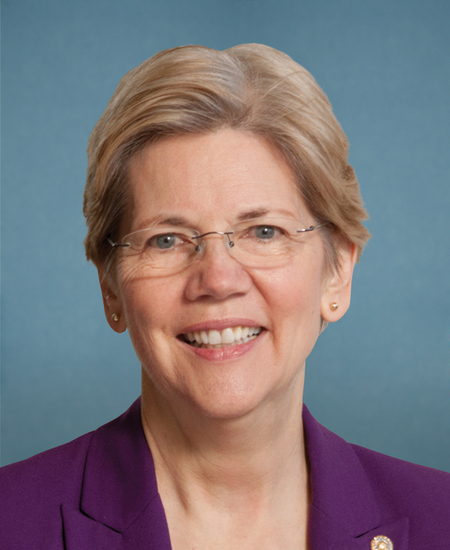
Sen. Elizabeth Warren
Sponsored bills
Maddy summaryThe GUARD Veterans' Health Care Act (S 2145) requires Medicare Advantage plans and prescription drug plans to reimburse the Department of Veterans Affairs (VA) for health care services provided to veterans enrolled in those plans. The bill establishes a clear reimbursement process with a 45-day payment timeline, interest for late payments, and penalties for noncompliance, including triple damages for willful failures to pay. It also modifies VA's authority to recover costs for care provided to veterans with non-service-connected disabilities from third parties like insurance companies. These provisions apply to Medicare Advantage and prescription drug plan years beginning on or after January 1, 2026.
Maddy summaryThe SECURE Act creates a new pathway for certain foreign nationals to adjust to lawful permanent resident status without leaving the United States. It primarily affects individuals who have been continuously present in the U.S. for at least three years and qualify under Temporary Protected Status (TPS), including those who previously had TPS or were granted deferred enforced departure. The bill allows eligible applicants to apply for permanent residency, provides work authorization while applications are pending, and protects the confidentiality of application information. It also includes provisions for spouses and children of qualifying applicants to adjust their status, and requires new reporting for countries whose TPS designation is terminated. The law includes specific eligibility requirements related to criminal background checks and continuous physical presence.
Maddy summaryThis bill requires for-profit colleges receiving federal student aid to generate at least 15% of their revenue from non-government sources. It defines allowable revenue streams (like tuition, campus-based educational activities, and certain contracts) while excluding most federal aid, scholarships from affiliated sources, and book fees. Colleges must report their revenue sources annually to Congress, and failure to meet the 15% threshold would suspend federal aid eligibility for two years. The law amends the Higher Education Act's 85/15 rule to clarify eligibility for institutions seeking federal student aid.
Maddy summaryThe Wall Street Tax Act of 2025 imposes a new transaction tax on securities trading in the U.S. It applies to purchases on U.S. exchanges or involving U.S. persons, and to derivative contracts meeting specific criteria. The tax rate starts at 0.02% for transactions in 2026-2027, gradually rising to 0.1% after 2029, based on the fair market value of the security or derivative payment. Excluded are initial security issuances and short-term debt (under 100 days). The tax is paid by exchanges, brokers, or directly by U.S. traders depending on the transaction type, effective after December 31, 2025.
Maddy summaryThis Senate resolution (SRES 285) designates July 16, 2025, as "Glioblastoma Awareness Day." It aims to raise public awareness about glioblastoma, a highly aggressive and deadly brain cancer affecting thousands annually, and honors those impacted by the disease. The resolution encourages greater public understanding of glioblastoma's challenges and supports ongoing research efforts like the Glioblastoma Therapeutics Network.
Maddy summaryS 2087, the "No War Against Iran Act," prohibits the use of federal funds for any military action in or against Iran without explicit congressional approval. It requires Congress to either declare war or pass specific new authorization for such action after this bill's enactment, overriding prior authorizations like the Iraq AUMF. The bill does not block self-defense actions if Congress later authorizes them under the War Powers Resolution, but it maintains existing reporting and consultation requirements for the executive branch. This directly affects the President and Pentagon, requiring congressional consent before funding military operations targeting Iran.
Maddy summarySCONRES 14 is a symbolic congressional resolution urging the executive branch to establish a U.S. Commission on Truth, Racial Healing, and Transformation. It does not create the commission itself but calls for its formation to examine historical racial injustices affecting people of color, including slavery, discriminatory housing policies, and systemic inequities in healthcare, education, and voting rights. The commission would aim to address the root causes of racial division and promote efforts to eliminate persistent racial inequities. This resolution is procedural and does not impose binding requirements on the government.
Maddy summaryThe Keeping Obstetrics Local Act focuses on improving access to obstetric care in rural and underserved communities. It requires states to study costs of maternity services and mandates Medicaid payments for obstetric care at eligible hospitals to be at least 150% of Medicare rates (starting in 2027), with increased federal funding. The bill also requires 12-month continuous coverage for pregnant individuals under Medicaid and CHIP, establishes health homes for coordinated maternal care, and creates special payments for low-volume obstetric hospitals to prevent closures. Additionally, it requires hospitals to provide advance notice of obstetric unit closures and collects detailed data on labor and delivery services, directly affecting rural hospitals, pregnant individuals, and maternal health care providers.
Maddy summaryThe Insurrection Act of 2025 establishes specific conditions under which the President may deploy military forces domestically to address insurrections, rebellions, or widespread violence that overwhelm state and local authorities. It requires the President to consult Congress, issue a proclamation ordering lawbreakers to disperse, and submit a detailed report before deployment, with congressional approval needed within 7 days. The bill specifically protects voting rights by requiring that military deployment to address voting rights violations must comply with the Voting Rights Act of 1965. It also prohibits using National Guard members on training or other duty for domestic deployments. This legislation directly affects the President, Congress, state authorities, and military operations.