

Maddy summaryThe HCBS Relief Act of 2025 increases federal funding for Medicaid home and community-based services (HCBS) by 10 percentage points (capped at 95%) for participating states during fiscal years 2026-2027. It directly affects states that submit approved applications, Medicaid beneficiaries receiving HCBS, and home health workers by requiring states to use funds to raise wages/benefits for HCBS workers, reduce waiting lists, support family caregivers, and improve service quality. Key provisions mandate that states detail specific activities (like wage increases, paid leave, and equipment purchases) in applications, ensure funds supplement rather than replace state spending, and report on outcomes by 2029. The bill aims to strengthen HCBS access and workforce stability without changing Medicaid eligibility rules.
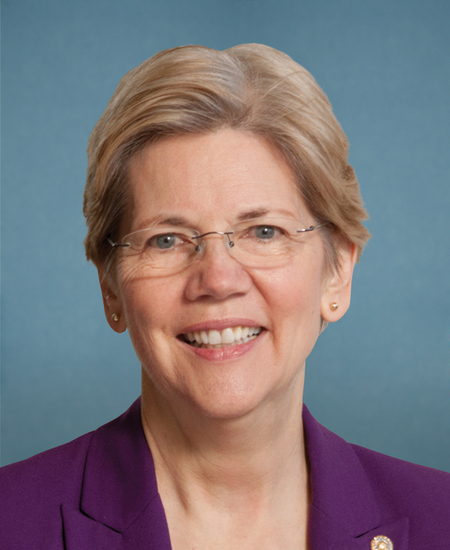
Sen. Elizabeth Warren
Sponsored bills
Maddy summaryThe Disaster Relief Medicaid Act creates a new Medicaid program for survivors of major disasters declared after January 1, 2027. It provides simplified eligibility during a two-year relief coverage period (starting when the disaster is declared), allowing people in affected areas to access medical assistance without meeting standard income requirements. The law includes provisions for continuous eligibility, mental health services, home and community-based care, and 100% federal funding for these services. States must provide streamlined applications and issue special Medicaid cards valid for the entire relief period. It also includes specific protections for children born to survivors and pregnant individuals during the disaster period.
Maddy summaryThis bill removes an age limit that previously restricted continuous Medicaid and CHIP coverage to children under 19. It changes the rules to apply 12-month continuous enrollment protections to all enrollees, regardless of age, by replacing "child" and age-specific language with "individual" throughout the program rules. The key mechanism is amending federal law to eliminate the requirement that beneficiaries must be under 19 to qualify for uninterrupted coverage. This directly affects all current and future Medicaid and CHIP participants, including adults and older children. The changes take effect in 2026.
Maddy summaryS 2035, the "Protect IVF Act," establishes federal rights to access and provide fertility treatment, including IVF, under widely accepted medical standards defined by the American Society for Reproductive Medicine. It directly affects patients seeking fertility care, health care providers offering IVF services, health insurance issuers covering such care, and manufacturers of fertility-related drugs or devices. The bill preempts state laws that restrict IVF access in ways inconsistent with medical standards - such as mandating unnecessary procedures, limiting telemedicine, or imposing discriminatory barriers - and allows federal court enforcement against violating state actions. This focuses on protecting existing access rather than creating new benefits or altering insurance coverage requirements.
Maddy summaryThis bill prohibits colleges and universities from requiring students to waive their right to sue in court through enrollment agreements. It blocks institutions from including forced arbitration clauses or other restrictions (like limiting choice of law, jury trials, or court locations) in contracts with students. The law amends the Higher Education Act to ensure students can pursue legal claims against schools directly in court, rather than through private dispute resolution. It applies to all enrollment agreements between students and institutions of higher education, effective one year after enactment.
Maddy summaryS 2006, the Fit to Serve Act, prohibits the U.S. military from discriminating against service members or applicants based on gender identity. It directly affects all current and prospective members of the Armed Forces by banning specific discriminatory actions, including denying medically necessary health care, requiring service in a sex assigned at birth, or separating members due to gender identity (including gender dysphoria diagnosis). The bill amends Title 10 of the U.S. Code to add new protections, explicitly stating that the military cannot deny service, reenlistment, or health coverage based on gender identity. These changes apply uniformly across all branches and service statuses, ensuring equal treatment under military policy.
Maddy summaryThis bill requires the Financial Crimes Enforcement Network (FinCEN) and the Small Business Administration (SBA) to coordinate outreach to small businesses about existing beneficial ownership reporting requirements under the Corporate Transparency Act. It mandates joint efforts to disseminate information through SBA resource partners (like small business development centers), provide multilingual materials, host educational events, and combat fraudulent schemes related to reporting. The coordination focuses on helping small businesses that must report beneficial ownership information to comply with current law, which aims to prevent money laundering and other illicit activities. The bill does not create new reporting requirements but ensures clearer communication and support for affected small businesses.
Maddy summaryThis bill expands Medicare coverage to include audiology services (hearing and balance assessments, and treatment starting in 2027) for beneficiaries. It allows qualified audiologists to provide these services directly without requiring a physician referral or supervision, beginning January 1, 2027. Medicare will pay 80% of the lesser of the actual charge or the fee schedule amount for these services, and audiologists will be recognized as eligible providers in certain clinics. The changes apply to services furnished on or after January 1, 2027.
Maddy summaryThis bill amends the Communications Act to clarify that "franchise fee" means only monetary assessments paid to local authorities for cable or community television services. It removes the word "includes" and adds "other monetary" before "assessment" in the definition. This technical change ensures franchise fees are strictly defined as cash payments, not other types of fees or non-monetary obligations. It directly affects cable operators and local governments that collect these fees under existing law. The bill makes no new policy changes but refines the legal definition for clarity.
Maddy summaryS 1965, the "Protect Vulnerable Immigrant Youth Act," removes visa caps for special immigrant juveniles under U.S. immigration law. It directly affects vulnerable immigrant youth who qualify as "special immigrants" due to abuse, neglect, or abandonment by their parents. The bill amends two key sections of the Immigration and Nationality Act to add a new category "J" for these individuals, eliminating numerical limits that previously restricted their access to employment-based visas. This change allows them to bypass standard visa quotas, making it easier for them to legally work and remain in the U.S. without facing annual visa caps.