

Maddy summaryThis bill establishes federal standards for unemployment insurance to increase consistency and support during economic downturns. It sets minimum requirements for benefit duration (26 weeks), wage replacement (75% of earnings), and maximum benefit amounts, while expanding eligibility for individuals separated due to compelling reasons like family care or workplace violence. The bill creates a new Jobseeker Allowance program providing weekly payments to unemployed individuals actively seeking work, with higher payments during periods of elevated unemployment. States would administer these programs with full federal funding for extended benefits and specific administrative support for the new allowance. The changes would take effect for unemployment claims beginning on or after January 1, 2027.
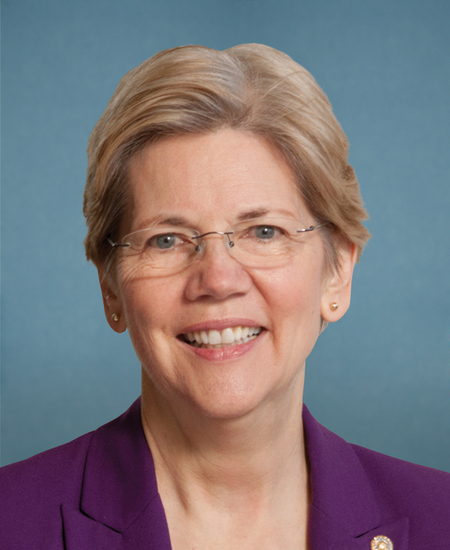
Sen. Elizabeth Warren
Sponsored bills
Maddy summaryThis bill establishes a framework for states to create their own universal health care systems by applying for waivers to replace or supplement federal health programs. States would need to demonstrate they can provide comprehensive coverage that meets or exceeds federal standards, cover at least 95% of residents within 5 years, and include specific protections for Indian health care. The federal government would redirect funds that would have gone to federal programs to the states for implementation, with states required to submit annual reports and undergo a 5-year review to maintain the waiver.
Maddy summaryThe Tribal Access to Clean Water Act of 2025 provides federal funding to improve water infrastructure on Tribal lands and for the Native Hawaiian community. The bill authorizes $100 million annually for water and waste facility loans and grants, $500 million for sanitation facilities construction through the Indian Health Service, and $100 million for operation and maintenance of water systems, all from fiscal years 2026 through 2030. It also provides $30 million annually for technical assistance to help Tribes access funding and develop sustainable water systems. The bill aims to address the lack of clean water access, which affects nearly half of all households on Tribal lands. The funding requires no matching contribution from Tribes and prioritizes facilities most in need of assistance.
Maddy summaryThis symbolic resolution (SCONRES 16) recognizes the persistent wage gap affecting Black women in the U.S., specifically noting they earn just 66 cents for every dollar paid to White, non-Hispanic men for full-time work. It highlights that Black women face compounded racial and gender-based pay discrimination, with data showing the gap would take over 200 years to close at current rates. The resolution does not create new laws but formally acknowledges the economic impact on Black women - such as lost lifetime earnings and reduced family financial security - and reaffirms congressional support for equal pay principles. It was introduced to coincide with Black Women’s Equal Pay Day (July 10, 2025), using Census and EEOC data to underscore the disparity.
Maddy summaryS 2239, the "Improving Access to Prenatal Care for Military Families Act," allows pregnant service members and their dependents to enroll in TRICARE Select health coverage immediately upon pregnancy, treating it as a qualifying event (like a job change or separation) rather than requiring them to wait for other life events. The bill establishes a 5-year pilot program starting within 180 days of enactment, requiring the Secretary of Defense to implement this change and report annually to Congress on enrollment trends. These reports must detail enrollment changes by month and by specific circumstances, such as separation from duty or pregnancy itself. The bill directly affects military families seeking timely prenatal care under TRICARE Select, aiming to streamline access without altering existing eligibility rules.
Maddy summarySRES 312 is a non-binding Senate resolution designating June 2025 as "LGBTQ Pride Month" to honor the LGBTQ community's historical struggles and contributions to U.S. society. The resolution expresses symbolic support for LGBTQ rights and highlights ongoing challenges like discrimination in housing, employment, and healthcare, without creating new laws or policies. It serves as a formal acknowledgment by the Senate to promote awareness of LGBTQ history and advocacy, but has no legal effect on government actions or individual rights. The resolution was introduced by multiple senators and includes a preamble detailing key milestones in LGBTQ equality efforts.
Maddy summaryThis bill requires defense contractors to provide the Department of Defense (DoD) with fair access to repair parts, tools, and technical information for military equipment under new contracts. It mandates that contractors agree in writing to share these resources on terms equivalent to those offered to authorized repair providers. The law applies to all new procurement contracts for digital electronic equipment and aims to enable third-party repairs by removing barriers like restricted access to repair materials. A report on implementation must be submitted to Congress within one year.
Maddy summaryThe Break the Cycle of Violence Act establishes federal grants to fund community-based violence intervention programs that aim to reduce gun violence through evidence-based strategies. It creates a National Community Violence Response Center to coordinate efforts and provide technical assistance, while directing funding to communities disproportionately affected by violence, particularly those with high homicide rates. The bill includes provisions for hospital-based violence intervention programs, trauma-informed services, and job training programs for opportunity youth (ages 16-25 not in education or employment) to address root causes of violence. Funding for these programs totals $300 million in 2026, increasing to $700 million annually through 2033 for the Department of Health and Human Services, plus $1.5 billion for job training programs through the Department of Labor.
Maddy summaryThis bill prohibits defendants in federal criminal cases from using a victim's LGBTQ+ sexual orientation, gender identity, or expression as a legal excuse for violent crimes like assault or murder. It directly affects defendants who attempt to justify violence by claiming the victim's identity provoked them, and it protects LGBTQ+ victims by preventing their identities from being used to reduce sentences. The law bans such defenses entirely, except when evidence of the defendant's past trauma is admitted under standard federal evidence rules. It also requires the Attorney General to annually report on federal prosecutions involving violence against LGBTQ+ individuals motivated by bias. This is a concrete policy change to end the use of discriminatory defenses in federal court.
Maddy summaryThe Senate resolution SRES 306 supports designating June 26 as "LGBTQI+ Equality Day" to commemorate three landmark Supreme Court rulings on that date: *Lawrence v. Texas* (2003, ending criminalization of same-sex intimacy), *United States v. Windsor* (2013, striking down DOMA), and *Obergefell v. Hodges* (2015, guaranteeing same-sex marriage). It encourages public celebrations to educate about ongoing LGBTQI+ discrimination while acknowledging these court victories were not enough to eliminate barriers. The resolution is symbolic - non-binding and non-enforceable - focusing on raising awareness rather than creating new laws. It explicitly calls for future legislation to address discrimination in areas like employment, housing, and public accommodations.