

Maddy summaryThe TREATS Act amends the Controlled Substances Act to allow telehealth evaluations as an alternative to in-person medical evaluations for prescribing certain controlled substances. Specifically, it permits one telehealth evaluation (conducted via real-time audio/video systems meeting Social Security Act standards) instead of an in-person visit when prescribing FDA-approved medications for substance use disorder treatment (schedules III-V). This directly affects healthcare providers who prescribe these medications, expanding their ability to use telehealth for initial patient assessments. The change maintains the requirement for at least one evaluation (either in-person or telehealth) while updating the process to include telehealth options for this specific treatment context.
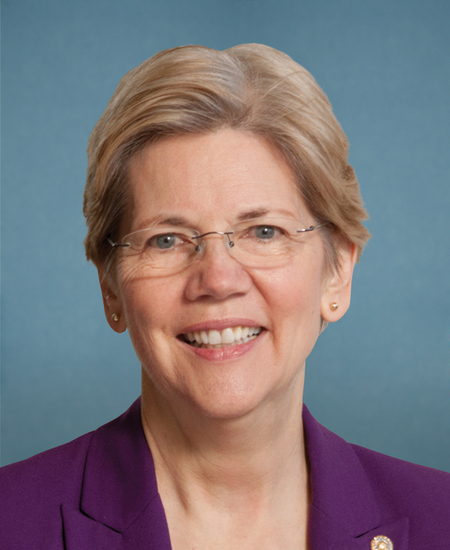
Sen. Elizabeth Warren
Sponsored bills
Maddy summaryThis bill ensures federal employees, contractors, and military personnel affected by a government shutdown starting October 1, 2025, receive their regular pay and benefits during the shutdown period. It appropriates funds to cover standard pay, allowances, and benefits for "covered individuals" until appropriations are enacted (the "termination date"). The bill also prohibits agencies from implementing layoffs or placing employees on administrative leave for more than 10 workdays during the shutdown. It applies retroactively to September 30, 2025, and charges the costs to future appropriations.
Maddy summaryThis bill ensures uninterrupted food assistance benefits for SNAP recipients during a government funding gap. If Congress fails to pass full funding for the Department of Agriculture by September 30, 2025, the bill directs the Treasury to provide necessary funds to keep SNAP benefits flowing without interruption. It also covers missed benefits retroactively from September 30, 2025, through the bill’s enactment date. The funding stops once Congress enacts actual fiscal year 2026 appropriations for the Department of Agriculture. This directly affects approximately 40 million low-income individuals and families who rely on SNAP benefits.
Maddy summarySRES 452 designates the week beginning October 19, 2025, as "National Character Counts Week" to promote character education. The resolution encourages schools, families, youth organizations, and communities to focus on core values like trustworthiness, respect, responsibility, and caring through events and activities during that week. It does not create new laws or requirements but calls on interested groups to observe the week with appropriate programs. The bill directly affects educational institutions and community organizations that choose to participate in awareness efforts. This is a symbolic resolution with no binding policy changes.
Maddy summarySRES 450 is a symbolic Senate resolution supporting the designation of the second Monday in October 2025 as "Indigenous Peoples' Day" to honor Indigenous contributions and history. It does not create a new federal holiday but encourages public observance and recognizes the work of Indigenous communities. The resolution specifically urges the Senate to honor Indigenous Peoples' contributions, support their cultural awareness, and express backing for federal recognition of this day. This resolution directly affects federal recognition efforts, building on existing state and local observances by over 200 municipalities and 17 states. It is a non-binding expression of support, not a policy change.
Maddy summaryS 2994, the Voter Purge Protection Act, prevents states from removing voters from registration lists based on non-voting or failure to respond to mail. It requires states to use verified evidence - like death records or permanent out-of-state moves - for removals, not just non-voting history. Voters removed must receive 48-hour notice with reinstatement options, and states must publicly announce list maintenance efforts. The bill also allows voters to update their address through election day at polling locations or central sites, ensuring continued eligibility after moving within the same state. This directly protects voters who might otherwise be incorrectly purged due to administrative errors or lack of contact.
Maddy summaryThis bill provides temporary relief to federal workers during government shutdowns by pausing specific civil obligations. It directly affects federal employees (including contractor employees) who are furloughed or working without pay, suspending actions like evictions, mortgage foreclosures, student loan collections, tax payments, and insurance lapses during the shutdown and for 30 days afterward. Key mechanisms include court-ordered stays for rent, mortgages, and loans; automatic student loan deferment; tax payment deferrals; and protection against insurance policy termination due to unpaid premiums. The relief applies only to civil matters (not criminal cases or child support) and requires court involvement for certain actions.
Maddy summarySRES 422 is a non-binding Senate resolution recognizing polycystic ovary syndrome (PCOS) as a serious health condition affecting many women and girls. It formally supports designating September 2025 as "PCOS Awareness Month" to raise public and medical awareness about PCOS and its related health risks, including infertility, diabetes, heart disease, and mental health challenges. The resolution urges improved diagnosis, treatment, and research but does not create new laws or allocate funding. Introduced by Senators Warren, Fischer, Blumenthal, and others, it serves solely as an awareness tool without legal force.
Maddy summaryThis bill requires federal agencies to adjust contract prices for contractors affected by government funding lapses (like shutdowns), ensuring contractors can cover costs for employees who were furloughed, laid off, or had reduced hours. It mandates that contractors receive reimbursement for paying employees at their standard rate during the lapse or restoring paid leave used instead of work. The reimbursement is capped at $1,442 per week (pro-rated for part-time workers), and contractors must provide proof of costs to the agency. Agencies must report to Congress within a year on how many contractor employees were impacted and how compensation was handled.
Maddy summaryThis bill prohibits the U.S. Treasury's Exchange Stabilization Fund from providing financial support to Argentina's government or financial markets. It specifically blocks the use of the fund for currency swaps, purchasing Argentine debt, or any credit instruments intended to bail out Argentina. The restriction applies until December 10, 2027, and requires any existing contracts violating this rule to be terminated within seven days of the bill's enactment. The law directly affects the Treasury Department's use of its financial tools, not Argentina itself.