

Maddy summarySRES 428 is a Senate resolution recognizing Hispanic Heritage Month from September 15 to October 15, 2025. It formally acknowledges the cultural heritage, historical contributions, and economic impact of Latino communities across the United States. The resolution urges all Americans to observe the month through programs and activities celebrating Latino achievements. It does not create new laws, funding, or obligations but serves as a symbolic recognition of Latino contributions to U.S. society.
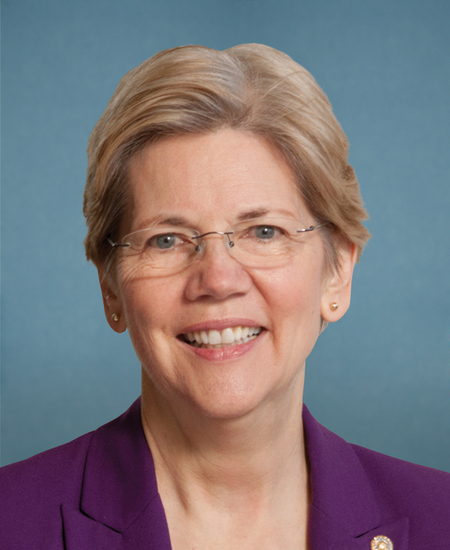
Sen. Elizabeth Warren
Sponsored bills
Maddy summaryThe Child Care for Every Community Act establishes a national program to provide universal, high-quality child care and early learning services for all children not yet required to attend school, regardless of family income. The bill creates a system where designated "prime sponsors" (such as states, localities, or nonprofits) must provide comprehensive services including health, educational, nutritional, and social support with full-day (10+ hours) and year-round care. It requires fees to be based on family income (capping at 7% of income), ensures no family is denied services due to inability to pay, and mandates specific quality standards for programs and staff qualifications. The bill also includes special provisions for children with disabilities, dual language learners, homeless children, and children from Native American communities, with the federal government covering 90% of costs (100% for specific groups) while requiring states to maintain their own funding levels for child care programs.
Maddy summaryS 2956, the Used Car Safety Recall Repair Act, requires manufacturers to reimburse dealers for used vehicles with unresolved safety recalls. If a manufacturer fails to provide a remedy within 60 days of a recall notice, they must pay dealers 1% of the vehicle's fair market value per month (prorated daily) until repairs are made or payments reach the vehicle's full value. The bill prohibits dealers from selling, leasing, or loaning used vehicles with active safety recalls until repairs are completed, unless specific exceptions apply (e.g., recall information wasn't available at sale time). It directly affects dealers selling more than five vehicles annually and used car buyers, ensuring safety fixes are addressed before transactions. The law takes effect one year after enactment.
Maddy summaryThis resolution (SRES 418) expresses the U.S. Senate's support for designating September 20-27, 2025, as "National Estuaries Week." It does not create new laws or funding but aims to raise public awareness about the ecological and economic importance of estuaries. The resolution highlights estuaries' role in supporting jobs, economic output, and coastal protection, while acknowledging ongoing threats like pollution and habitat loss. It is a symbolic gesture directed at the public, government officials, and organizations working to protect estuaries.
Maddy summarySRES 416 is a Senate resolution designating September 2025 as "Sickle Cell Disease Awareness Month" to raise public awareness about sickle cell disease (SCD). It expresses support for educating communities nationwide on SCD - impacting an estimated 100,000 people in the U.S., primarily in Black and African American communities - alongside the need for research, early detection, treatments, and preventative care. The resolution does not create new laws or allocate funding but encourages public programs and events during September 2025 to highlight SCD-related health resources.
Maddy summaryThe PAAF Act automatically grants U.S. citizenship to internationally adopted children of U.S. citizen parents who were adopted before age 18 and were living in the U.S. under lawful admission before age 18. For adoptees living outside the U.S. but meeting these criteria, citizenship is granted upon lawful entry into the country. The bill exempts these individuals from standard immigration inadmissibility grounds (such as health or criminal issues) when entering, though they must pass a criminal background check. This applies only to adoptees who did not have U.S. citizenship before the bill's enactment.
Maddy summarySRES 408 is a commemorative resolution designating September 20, 2025, as "National LGBTQ+ Servicemembers and Veterans Day." It honors lesbian, gay, bisexual, transgender, and queer (LGBTQ+) individuals who served in the U.S. military despite historical discrimination, including policies like Don’t Ask, Don’t Tell and bans on transgender service. The resolution acknowledges past harms, such as discharges based on sexual orientation or gender identity, and urges federal agencies to address ongoing inequities in benefits and healthcare access. It does not create new laws or alter policies but formally recognizes contributions and regrets historical injustices. This is a symbolic gesture to celebrate LGBTQ+ military service and promote awareness of ongoing challenges.
Maddy summaryThis resolution (SRES 405) symbolically designates September 22-28, 2025, as "Asian American and Native American Pacific Islander-Serving Institutions Week" to honor institutions serving Asian American, Native Hawaiian, and Pacific Islander students. It recognizes these institutions' role in enrolling over 46% of such students despite representing only 7.1% of U.S. higher education institutions. The resolution encourages eligible schools to seek funding and promotes public awareness of their contributions through activities during the designated week. It has no funding or policy changes - only a symbolic acknowledgment of these institutions' educational impact.
Child Care Access Means Parents In Schools Reauthorization Act or the CCAMPIS Reauthorization Act This bill reauthorizes through FY2031 and revises the Child Care Access Means Parents in School Program. The program awards grants to support the participation of eligible low-income parents in postsecondary education through the provision of campus-based child care services. Among other revisions to the program, the bill increases the minimum and maximum grant amounts, allows grant funds to be used for additional purposes (e.g., child care subsidies and support services), and specifies additional grant application requirements.
Maddy summaryThis bill provides $5 million annually (2026-2030) to states for improving stillbirth data collection and research, directly affecting state health departments and public health officials. It requires states to collect deidentified stillbirth data - including risk factors - using existing systems like fetal mortality reviews, while ensuring strict privacy compliance. The bill also allocates $1 million yearly to develop standardized data collection guidelines and public educational materials about stillbirths, with input from medical professionals and bereavement organizations. It mandates a public HHS report within five years containing these guidelines and educational resources to improve data consistency and awareness. The legislation focuses on enhancing data quality for research and public health, without altering medical care or insurance coverage.